A gray Sunday afternoon, a non-negotiable craving for chocolate — that’s exactly where this cake enters the scene. No need for special equipment or an hour of preparation. Just a mixing bowl, a whisk, and 15 minutes before popping it in the oven.
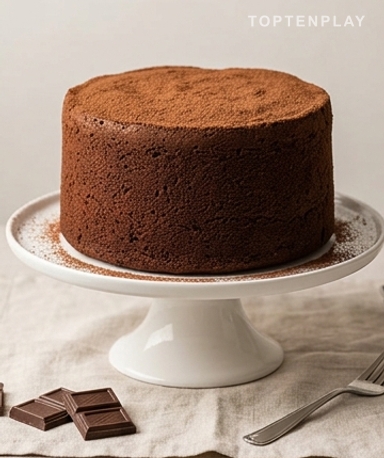
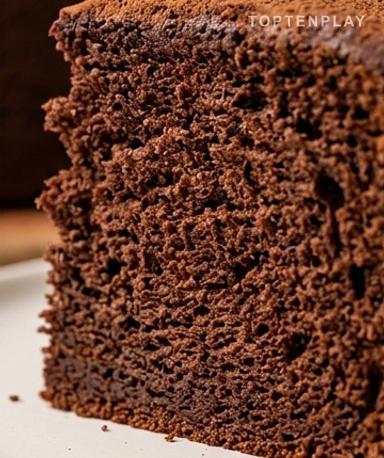
When you take this cake out of the oven, it fills the entire kitchen with the scent of warm, almost bitter cocoa that tickles your nose even before it’s sliced. The crust is a deep brown, almost mahogany. Underneath, the crumb is disconcertingly tender — it yields to the fork without resistance, moist and tight in just the right way. Every bite has that chocolate flavor that lingers on the palate, not too sweet, honest and direct.
Why you’ll love this recipe
Ingredient Notes
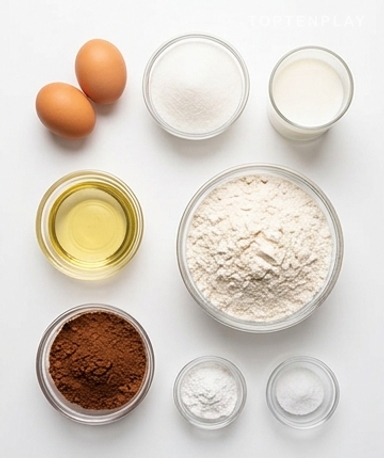
No need for fancy ingredients — just good cocoa, well-whisked eggs, and a little technique.
- Unsweetened cocoa : This is what decides the character of the cake. Use Van Houten or Valrhona if you want something truly intense. Basic supermarket cocoa works, but the result will be flatter in taste. 40g is the dose that gives depth without tipping into bitterness.
- The eggs : Three whole eggs, at room temperature — they rise better than cold eggs. And really whisk them for at least 3-4 minutes: that’s what makes the cake swell, not the baking powder alone. Eggs are the engine of this recipe.
- Oil or butter? : The recipe offers both, but for an everyday cake that lasts, sunflower oil wins. It retains moisture in the crumb much longer than butter. Butter gives more flavor, but the cake starts to dry out by the next day.
- Baking powder : A full packet, sifted with the flour. If it forms lumps in the batter, you’ll have uneven rising spots and the cake won’t rise uniformly. 10 seconds of sifting avoids this kind of surprise.
Whisk until it really changes color
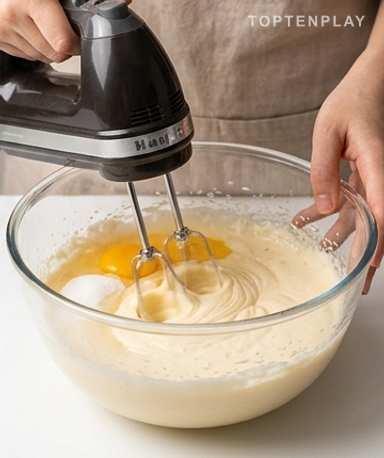
This is the step most people botch. You crack the eggs, add the sugar, and whisk. But for how long? Until the mixture goes from bright yellow to off-white, doubles in volume, and forms a thick ribbon when you lift the whisk. By hand, it takes 4 to 5 minutes. With an electric mixer, 2 minutes is enough. It’s this airy foam that makes the cake rise. Take the time to do it well — everything else is secondary if you miss this.
Incorporate the powders without breaking everything
Sift the flour, cocoa, baking powder, and salt into another bowl — it takes 30 seconds and avoids cocoa lumps that resist the whisk. Add this mixture in three parts to the egg-sugar preparation, lifting gently with a spatula from bottom to top. No vigorous whisking here. Movements must be slow so as not to crush the air bubbles you just created. The final batter is fluid, smooth, and a shiny dark brown that flows slowly from the spatula when lifted.
Oven at 170°C — not a degree more
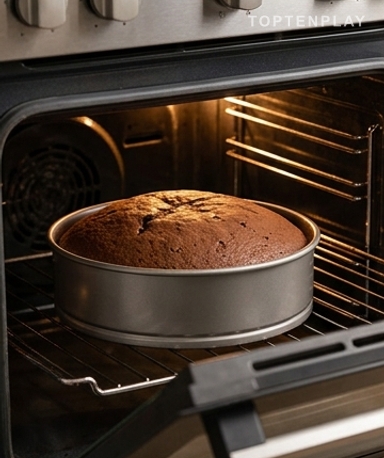
A 22 cm pan, buttered and floured or lined with parchment paper. No larger, otherwise the cake spreads and doesn’t rise. Oven preheated to 170°C — not 180, not 190. At this temperature, the heat is gentle enough for the cake to rise progressively without crusting too quickly on top. Pour the batter, slide the pan into the center of the oven, close the door. 35 to 40 minutes. To test, poke a knife in the middle: it should come out with a few moist crumbs stuck to it, but no liquid batter.
Don’t cut it right away
Let it cool for 15 minutes in the pan before removing it. And another 15 minutes on a wire rack before cutting. If you cut it too early, the crumb is still fragile — it crushes under the knife and sticks. As it cools, the cake stabilizes. The crumb tightens slightly and takes on that half-melting, half-airy texture we’re looking for. Patience is worth it.
Tips & Tricks
- Add a teaspoon of instant coffee dissolved in warm milk — it amplifies the chocolate taste without making the cake taste like coffee. A pastry chef’s trick that really changes the depth of the result.
- Replace 60 ml of milk with 60 g of plain yogurt for an even moister cake. The crumb is slightly tighter, but the moisture holds better over time.
- Do not put the cake in the refrigerator until it is completely cooled — condensation softens the crust and gives it a bland taste. Wait until it’s at room temperature, then wrap it well.
Why didn’t my cake rise?
The number one cause is botched egg whisking. You really need to whisk the eggs and sugar until the mixture whitens and doubles in volume — at least 3-4 minutes by hand. Second possible culprit: an oven that’s too hot, which makes the surface crust too quickly and blocks the rise.
Can I replace the oil with butter?
Yes, 120g of melted butter replaces 120ml of oil exactly. The cake will have more flavor with butter, but it will be less moist the next day. For a cake that lasts, sunflower oil is the best choice.
How long does this cake keep?
2 to 3 days at room temperature under a dome or well-wrapped in plastic wrap. Up to 5 days in the refrigerator, but wait until it’s completely cooled before putting it in the fridge. It also freezes very well, sliced, for up to 2 months.
Can I make this cake without an electric mixer?
Absolutely — a hand whisk is enough. You just need to be patient for the egg whisking step: count on 4 to 5 minutes of sustained effort to get a foamy and well-aerated mixture. The result is identical.
My cake is too dry. What happened?
Two probable reasons: the oven was too hot or the cooking time too long. At 170°C and 35-40 minutes, the knife should come out with a few moist crumbs, not totally clean. A totally dry knife = overcooked cake. Next time, start checking at 33 minutes.
Can I add chocolate chips or nuts?
Yes, no problem. Up to 80g of chocolate chips or 50g of hazelnut powder can be incorporated directly into the batter before baking. For chips, coat them lightly in flour before adding — they won’t sink to the bottom.
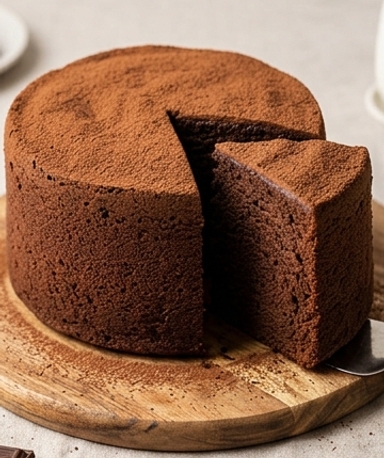
Ultra Moist Chocolate Cake
French
Dessert
A tall and airy chocolate cake, with a melting crumb that stays moist for several days. Ready in less than an hour, using pantry staples.
Ingredients
- 3 eggs (at room temperature)
- 150g granulated sugar
- 120ml sunflower oil (or 120g melted butter)
- 120ml milk
- 200g flour
- 40g unsweetened cocoa powder
- 10g baking powder (1 packet)
- 1 pinch salt
- 1 teaspoon vanilla extract (optional)
Instructions
- 1Preheat the oven to 170°C. Butter and flour a 22 cm round pan.
- 2In a large bowl, whisk the eggs with the sugar for 4 to 5 minutes until the mixture whitens, doubles in volume, and forms a thick ribbon.
- 3Add the oil (or melted butter) and the milk. Mix gently until combined.
- 4In another bowl, sift together the flour, cocoa, baking powder, and salt.
- 5Incorporate the dry ingredients in three parts into the preparation, lifting gently with a spatula — do not overmix to keep the air.
- 6Pour the batter into the pan and bake for 35 to 40 minutes. A knife inserted in the center should come out with some moist crumbs, without liquid batter.
- 7Let cool for 15 minutes in the pan, then unmold onto a wire rack. Wait another 15 minutes before slicing.
Notes
• Storage: 2 to 3 days at room temperature well-wrapped, up to 5 days in the refrigerator. Freezes sliced for up to 2 months.
• Flavor tip: dissolving 1 teaspoon of instant coffee in warm milk intensifies the chocolate without shifting the taste into coffee.
• Moister variation: replace 60ml of milk with 60g of plain yogurt. The crumb is denser and stays moist longer.
Nutrition Facts (per serving, estimated)
| 310 kcalCalories | 6gProtein | 38gCarbs | 15gFat |