$6.25 billion in philanthropic pledges, but benefit caps create a new arithmetic problem
Philanthropic commitments are already flowing into the program. Michael Dell, founder of Dell Technologies, and his wife Susan pledged $6.25 billion to Trump Accounts, according to CNBC. Children born between 2016 and 2024 who live in a ZIP code where the median income is $150,000 or less could each receive $250.

Other pledges are being made at the state level. Ray Dalio, founder of investment firm Bridgewater Associates, and his wife Barbara committed $250 per qualifying child in Connecticut under the same income-based criteria. Brad Gerstner, CEO of Altimeter Capital and one of the architects of the Trump Accounts initiative, pledged $250 to qualifying children under age 5 in Indiana. Micron Technology also pledged $250 per account for children in communities where the memory chip maker operates.
For the roughly 27,000 foster children who receive Social Security survivor benefits or Supplemental Security Income, however, a separate arithmetic challenge emerges. Treasury Secretary Scott Bessent announced on June 11 that states would be able to direct those federal benefits into Trump Accounts. The average monthly survivor benefit for a child under 18 is approximately $1,181, and the average SSI benefit among children under 18 is roughly $874 monthly.
Because survivor benefits deposited into a Trump Account count toward the $5,000 annual cap, any excess would need to be held in a separate account. No guidance has yet been released on how SSI would be treated within the Trump Account framework, leaving a critical gap in the rules for some of the most financially precarious children in the program.
Only 28 states have stopped diverting foster children’s federal benefits — and means-testing at 18 remains unresolved
A longstanding practice complicates the picture further: many state child welfare agencies have historically intercepted foster children’s Social Security and SSI benefits to offset their own costs. As of last year, only 11 states had policies in place to preserve survivor benefits for foster children. In mid-December, the Administration for Children and Families notified the remaining 39 governors to stop diverting those payments.

Since that directive, the number of states that have agreed not to intercept survivor benefits has grown to 28, according to HHS. Only a small number of states currently refrain from taking SSI. Whether additional states will change their practices — and whether they will route those assets into Trump Accounts — remains unclear.
A separate and potentially consequential question involves what happens to Trump Account assets when a former foster child applies for means-based services as an adult. While a Trump Account is not counted when determining SSI eligibility before age 18, it is uncertain how those assets would be assessed for any means-tested programs once the individual crosses that threshold.
«If a Trump Account gets in the way of them continuing to receive resources at [age] 18 or 21, whatever their state’s threshold is, that’s an unintended consequence that makes their situation worse,» Eby warned. Despite those open questions, he expressed cautious optimism about the program’s direction: «We just want to make sure that, as intended, these funds change the trajectory of someone who experienced the child welfare system.»
The Treasury Department has yet to release guidance on how SSI deposits would be handled within Trump Accounts, leaving states without a clear framework as they begin opening accounts for foster children. Advocates are also watching whether the remaining states that still intercept survivor benefits will fall in line following HHS’s December directive — and whether federal or state authorities will address the means-testing question before the first cohort of account holders turns 18. For Hatcher and others in the child welfare field, the next legislative or regulatory window will be the moment to push for broader withdrawal flexibility, which they argue is essential if the accounts are to deliver on their promise for youth aging out of care.
Suggested Posts
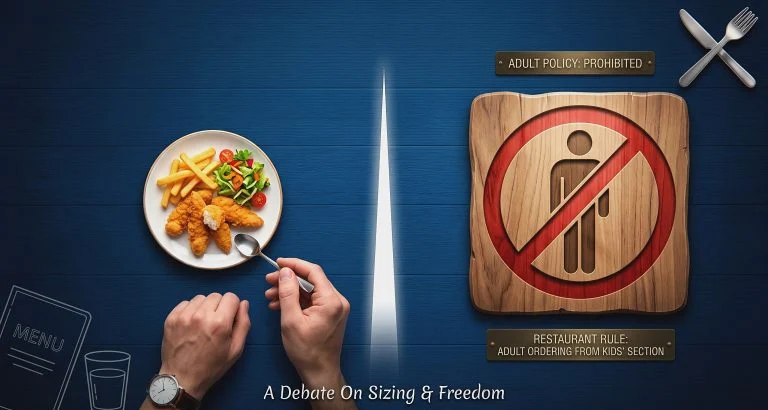
Kids’ meals for adults: the restaurant debate over portions and price
A simple question — "Is that for a child?" — has sparked a genuine debate in the restaurant world. When adults want to order…