The pot starts singing softly, with the onion melting in the oil and that scent of seared meat filling the whole kitchen. Traditional beef stew is the ultimate weekend dish: not complicated, but it demands time.
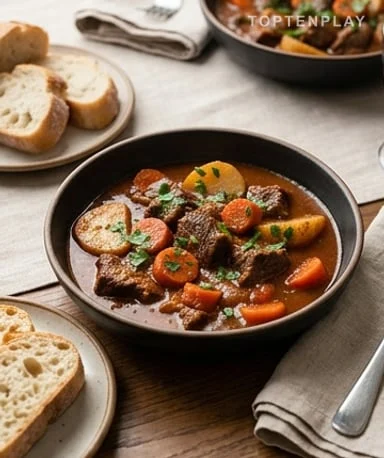
After a while, the sauce becomes darker, almost glossy, and the carrots release a subtle sweetness into the broth. The potatoes round out in the pot, the meat relaxes, and the bay leaf perfumes everything without overpowering. You only hear a gentle, steady simmer, never an aggressive boil. This slow rhythm gives tender meat and a sauce that clings just right to the spoon.
Why you’ll love this recipe
Ingredient Notes

Beef for braising, carrots, potatoes, garlic, onion, and real broth: nothing complicated, but good cuts are important.
- Beef for braising : It provides the base of the dish and becomes tender through long cooking. Choose chuck, brisket, or round, with some connective tissue and gelatin; lean cuts end up dry and flat.
- Onion : It builds the aromatic foundation with a slightly sweet mildness. Sauté until fragrant and translucent, without burning, or bitterness will linger in the sauce.
- Carrots : They add color, a touch of sweetness, and a tender texture that balances the beef. Cut into thick chunks so they hold their shape after two hours of cooking.
- Potatoes : They make the dish more hearty and lightly thicken the sauce by releasing some starch. Use a variety that holds up during cooking, or replace some with parsnip for a sweeter, rustic note.
- Tomato paste : It adds depth, slight acidity, and a warmer color to the sauce. Cook it with the meat for a minute before adding liquid: its flavor becomes rounder and less raw.
- Beef broth : It gives substance to the stew and prevents a flat sauce. A low-salt broth is preferable, as the sauce reduces slowly; otherwise, use water with extra garlic, bay leaf, and paprika.
Take the time to sear the meat well
Start by cutting the beef into large, even chunks, then pat them dry if the surface is damp. In hot oil, the meat should sizzle loudly as soon as it hits the pot: that’s the sign it’s browning instead of releasing its juices. Don’t overcrowd the pot, because crowded pieces will steam and lose the brown crust that gives flavor to the sauce. When all sides are nicely colored, with a warm, almost roasted smell, you’ve already laid half the character of the stew.

Let the aromatics infuse without burning
Once the meat is browned, add the onion, garlic, tomato paste, and paprika and cook briefly in the pan drippings. The bottom of the pot becomes redder and stickier, and the smell shifts from raw garlic to something sweeter. Stir well to coat the meat, but keep the heat medium: burnt paprika turns bitter very quickly. This short cooking before adding the broth awakens the spices and gives a deeper sauce without needing too many ingredients.
Maintain a gentle, steady simmer
Pour in the broth, add the bay leaf, then reduce the heat to a bare simmer. The surface should barely tremble, with a few slow bubbles around the edges, not boiling like a hurried soup. This is important because too high a heat toughens the meat and clouds the sauce. During the weekend, it’s the perfect moment to let the pot work while the kitchen fills with the aroma of vegetables, beef, and stewed tomatoes.
Add the vegetables so they stay generous
Carrots and potatoes should be cut large enough to withstand cooking without turning into mush. They’ll absorb some of the juice, take on bay and beef flavors, and release just enough starch to thicken. If you prefer firmer vegetables, add the potatoes a bit later, after the first hour of cooking. The right sign is when the sauce coats a spoon, the carrots are glossy, and a knife point easily enters the potatoes.
Serve after a short rest
When the meat falls apart at the fork, turn off the heat and let the pot rest for about ten minutes. The sauce settles, becomes more homogeneous, and the pieces retain their juices better when served. Taste only at this point to adjust salt and pepper, as the reduction may have concentrated the seasoning. In a shallow bowl with some fresh parsley, the contrast of dark sauce, orange carrots, and melting potatoes is the whole charm of the dish.

Tips & Tricks
- Salt sparingly at first, then adjust at the end, because the broth reduces and can concentrate salt faster than you think.
- If the sauce seems too thin, let it simmer for a few minutes without the lid: evaporation will thicken it without adding flour.
- If the meat is still firm after the indicated time, extend the cooking on low heat, because braising cuts become tender with time, not with stronger boiling.
- Prepare the stew the day before if possible, because a night in the fridge allows flavors to meld and the sauce to become rounder.

Which cut of beef should I choose for a traditional stew?
Choose chuck, brisket, or round. These cuts have enough collagen to become tender after long cooking, while lean cuts risk drying out.
Why is my beef still tough after cooking?
It probably hasn’t cooked long enough or the heat was too high. Lower the heat, add a little broth if needed, and continue cooking until the meat easily falls apart with a fork.
Can I prepare this beef stew the day before?
Yes, and it’s often even better. A night in the fridge allows the sauce to thicken slightly and the flavors to meld more.
How do I thicken the sauce without flour?
Let it simmer for a few minutes without the lid to reduce the liquid. Potatoes also release some starch, naturally helping the sauce become more coating.
What can I substitute for potatoes?
You can use parsnips, turnips, or even sweet potatoes in large chunks. Add them later if you want them to keep a firm texture.
Traditional Beef Stew
French
Stew
A beef stew simmered in a pot, with tender chunks, melting carrots, potatoes, and a sauce flavored with paprika, garlic, and bay leaf.
Ingredients
- 800g beef for braising, cut into large chunks
- 1 medium onion, finely chopped
- 2 medium carrots, cut into chunks
- 2 medium potatoes, cut into large chunks
- 2 garlic cloves, minced
- 2 tablespoons tomato paste
- 3 tablespoons olive oil
- 600ml beef broth
- 1 bay leaf
- 1 teaspoon sweet or smoked paprika
- 1 teaspoon salt, to adjust
- 1/2 teaspoon ground black pepper
Instructions
- 1Cut the beef into large, even chunks and pat them dry with paper towels if needed.
- 2Heat the olive oil in a large pot, then sauté the onion until translucent.
- 3Add the beef chunks and brown on several sides, without overcrowding the pot.
- 4Stir in the garlic, tomato paste, paprika, salt, and pepper, and cook for 1 to 2 minutes.
- 5Add the carrots and potatoes, stirring to coat with the pan juices and spices.
- 6Pour in the beef broth, add the bay leaf, cover, and simmer on low heat for 1 1/2 to 2 hours.
- 7Check doneness: the meat should be tender and the vegetables soft. Cook a few more minutes if needed.
- 8Let rest for 10 minutes off the heat before serving hot.
Notes
• Do not let the stew boil vigorously: a gentle simmer gives more tender meat.
• The dish is even better reheated the next day over low heat.
• Add a little broth during cooking if the sauce reduces too quickly.
Nutrition Facts (per serving, estimated)
| 520 kcalCalories | 39gProtein | 29gCarbs | 28gFat |