📌 Tonsil stones: these foul-smelling white deposits are caused by bacteria and can be treated at home
Posted 12 January 2026 by: Admin
Tonsil Stones: These Mysterious Calculi That Poison Your Breath
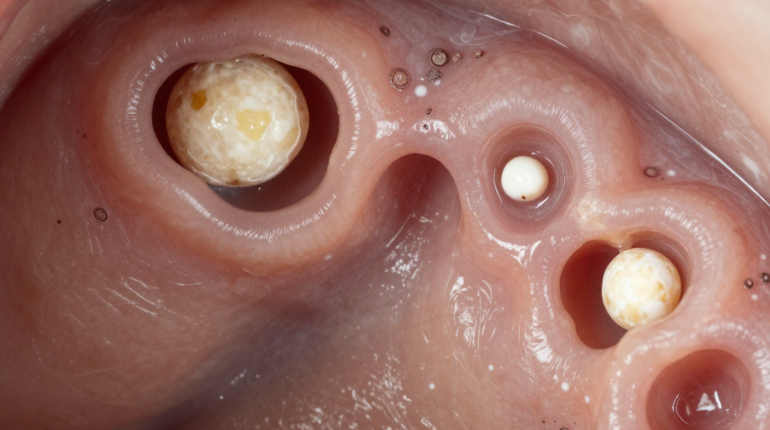
These small whitish masses that sometimes appear at the back of the throat have a precise scientific name: tonsilloliths, or tonsil stones. Their formation follows a well-documented biological process: microscopic food particles, dead cells, and mucus accumulate in the crypts – those natural folds that pit the surface of the tonsils. Bacteria quickly colonize this trapped organic debris.
The transformation then begins. Minerals present in saliva – calcium, phosphorus, magnesium – gradually permeate this decaying matter. Layer after layer, the deposit solidifies until it forms a hard concretion. The result: stones whose size varies considerably, from a nearly invisible grain of rice to a perfectly palpable pea.
The frequency of appearance differs radically from one person to another. Some individuals develop only a handful in their lifetime. Others discover new stones every week, in an apparently uninterrupted cycle. This variation is explained by the unique anatomy of each pair of tonsils: the deeper and more numerous the crypts, the more refuge debris finds to mineralize.
This little-known phenomenon nevertheless affects millions of people, who often ignore the exact origin of their chronic discomfort. The formation of these stones reveals, above all, a disturbing reality: conventional oral hygiene never reaches these remote areas where bacterial chemistry operates with impunity.
The Origin Of This Unbearable Odor: The Science Behind The Stench
The characteristic pestilence of tonsilloliths is not accidental. The anaerobic bacteria that colonize these stones – microorganisms thriving without oxygen – produce volatile sulfur compounds during their metabolism. These same gaseous molecules release the recognizable smell of rotten eggs: hydrogen sulfide, methyl mercaptan, dimethyl sulfide.
The olfactory intensity far exceeds that caused by garlic or onion. A single stone of a few millimeters is enough to foul the breath for several hours, creating persistent social embarrassment that tooth brushing never manages to eliminate. This resistance is explained simply: the brush does not reach the tonsil crypts where the responsible bacteria ferment.
Floss and conventional mouthwashes fail for the same reason. These solutions target the teeth, tongue, and gums – totally ignoring the retro-lingual area where the stones nestle. The sulfur compounds continue their diffusion into the oral cavity, making halitosis chronic and disconcerting for those who nevertheless maintain rigorous hygiene.
This stubborn bad breath is often the first clue revealing the presence of tonsilloliths. As long as the stones remain lodged in their crypts, no standard cleaning technique can neutralize their bacterial source. Understanding this biochemical mechanism explains why so many people desperately seek solutions without ever identifying the true origin of their problem.
8 Warning Signs And Profiles At Risk
This persistent breath that resists brushing is the cardinal symptom, but seven other clues help identify tonsilloliths. A metallic taste in the back of the throat occurs for no apparent reason. The constant sensation of a foreign body lodged at the back of the mouth prompts frequent swallowing. White or yellowish spots dot the surface of the tonsils, sometimes visible in the mirror.
Ear discomfort often puzzles: the nerves connecting the throat and the ear transmit tonsil pain to the ear canal. Some experience recurrent inflammation of the tonsils without a declared infection. Others cough or clear their throat and expel these tiny, foul-smelling whitish masses. Swallowing becomes painful during the formation of large stones.
Large or deeply cryptic tonsils favor the accumulation of debris. Teenagers and young adults statistically present more tonsilloliths. Chronic post-nasal drip or repeated sinusitis fuels the process by dumping mucus and bacteria into the tonsil crypts. A history of frequent childhood tonsillitis creates scars that widen these natural pockets.
This combination of symptoms and predisposing factors allows for a diagnosis without consultation. Identifying these signs represents the first step toward effective management, as recognizing the problem conditions the adoption of appropriate preventive measures.
Management Protocols And Daily Prevention
This recognition of symptoms opens the way to concrete solutions. Manual removal requires caution: a clean cotton swab or a low-pressure irrigator is sufficient when the stones are near the surface. Gentleness is paramount to avoid tissue irritation. A warm saltwater gargle immediately follows extraction.
Nighttime prevention demonstrates superior effectiveness to curative treatment. Gargling every evening with warm saltwater dissolves nascent debris. Gentle oral irrigation clears the crypts without trauma. Constant hydration keeps saliva fluid, preventing mouth dryness that favors formation. Tongue cleaning eliminates sulfur-producing bacteria. Nasal rinses control post-nasal drip in predisposed subjects.
A homemade spray is gaining popularity: 200 ml of warm water, a teaspoon of salt, three to four drops of grapefruit seed extract or food-grade mint essential oil. Application three to four times daily toward the tonsil area. Users report a loosening of the stones within a few days.
Stones exceeding 5-6 mm, bleeding during removal, unilateral swelling, or repeated infections require consultation. A specialist offers adapted durable options. But the gargle-irrigation-hydration routine produces tangible results for the majority: fresh breath and reduction of formation in less than a week. The body has its own capacity for elimination, provided it is given the right conditions.