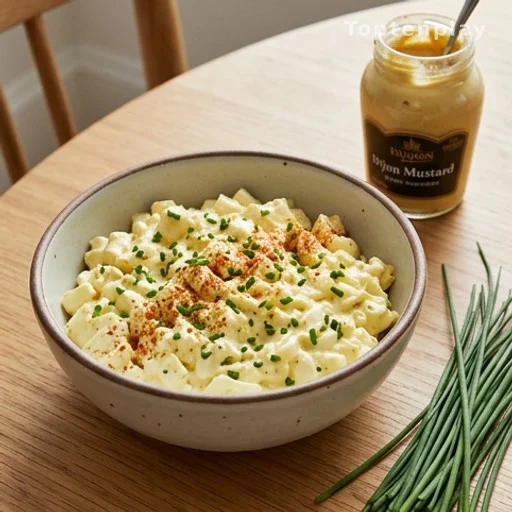
The crunch layer comes from ¼ cup finely diced celery, 2 tablespoons finely diced red or sweet Vidalia onion, and 1 tablespoon of fresh chives or dill. These three ingredients provide texture, a mild sweetness, and a herbaceous note that keeps the salad from tasting flat.
Seasoning is deliberately minimal: ¼ teaspoon each of kosher salt and freshly cracked black pepper, plus a pinch of paprika for color and a hint of warmth. The restraint is intentional — the goal is to let the egg and mustard flavors carry the dish.
For a lighter result, the recipe suggests replacing half the mayonnaise with plain full-fat Greek yogurt, which introduces a tangier profile without sacrificing creaminess. Pasture-raised eggs are recommended specifically for their «most vibrant, orange yolks and the highest nutrient profile».
Why egg salad is having a moment
Egg salad has long been a staple of home cooking across the United States, valued for its low cost and high protein content. As interest in brain health and nutrient-dense eating has grown, eggs have attracted renewed attention from nutritionists — particularly for their choline content, which remains one of the most underconsumed nutrients in the Western diet.
Exactly 11 minutes: the boiling method that changes the result
The cooking process begins with eggs placed in a single layer in a saucepan, covered with cold water by about an inch. The water is brought to a rolling boil over high heat — and the moment it reaches a full boil, the heat is turned off entirely.
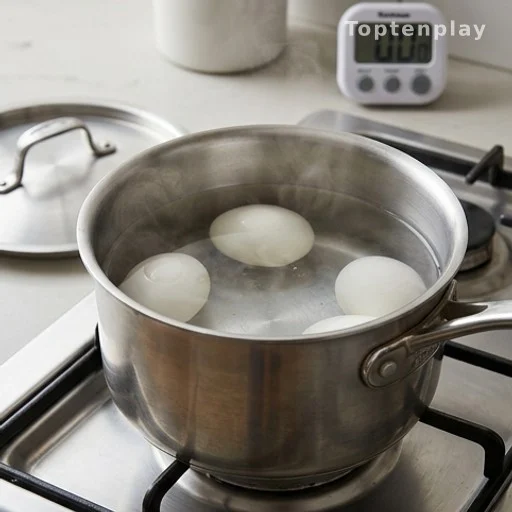
The pan is then covered with a tight lid and left to sit for exactly 11 minutes. This off-heat method uses residual steam to finish cooking the eggs gently and evenly, without the aggressive heat that causes overcooking.
Timing matters here. Too few minutes and the yolk remains runny; too many and the chemistry inside the egg begins to work against you — which is precisely what the next step is designed to prevent.
The ice bath: why skipping it ruins the yolk
Immediately after the 11-minute rest, the eggs are transferred into a bowl of ice water. This step — known as an ice bath shock — stops the cooking process instantly by dropping the egg’s internal temperature in seconds.