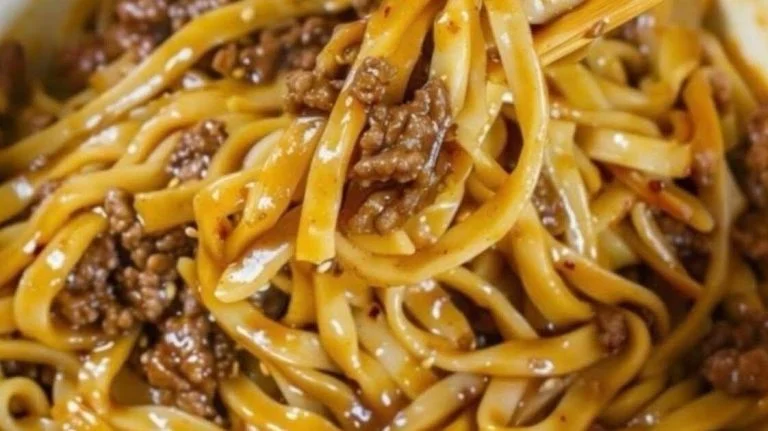
Garlic hitting a hot pan makes exactly the sound you hope for—that brief sizzle that promises the whole kitchen will smell amazing within ten seconds. These sweet-spicy garlic beef pasta start from that moment and land on the plate in 30 minutes with a lacquered, glossy sauce that coats every spaghetti without drowning them. A weekday meal that thinks it’s a weekend meal.
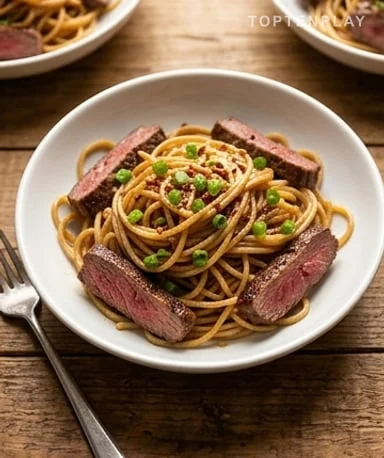
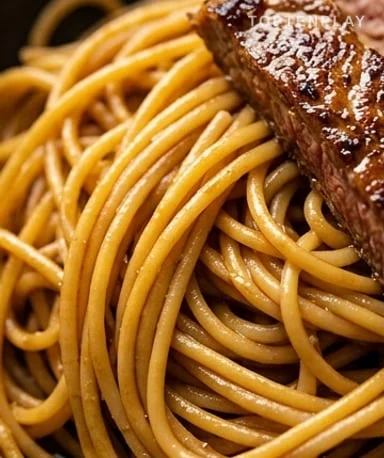
On the plate, the sauce is a deep amber brown, almost lacquered, with tiny red pepper flakes floating on the surface. The steak strips have slightly caramelized edges—that precise moment when honey took the heat and hardened just enough. The pasta is well-coated, not drowned, and the smell blends grilled garlic, reduced honey sweetness, and that umami soy sauce base that makes you think the dish simmered for two hours. It didn’t need to.
Why you’ll love this recipe
Ingredient Notes
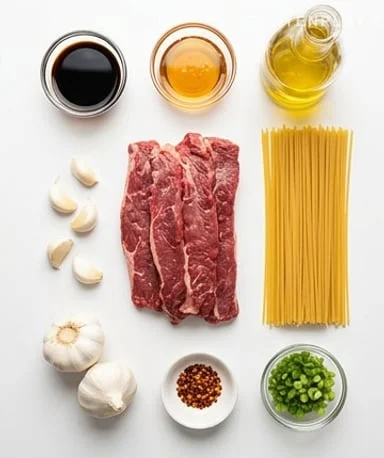
Steak, fresh garlic, soy sauce, honey, and red pepper flakes—everything you need for a characterful plate, gathered at a glance.
- Steak (flank or sirloin, 340 g) : Flank steak is the ideal choice here: well-marbled, full of flavor, and genuinely tender if sliced correctly against the grain—perpendicular to the muscle fibers. This single precaution shortens those fibers and turns potentially tough meat into something melt-in-your-mouth. Sirloin is more forgiving but pricier for a result that doesn’t change much in such a saucy dish.
- Soy sauce (60 ml) : It does two things at once: it salts and it brings umami, that deep flavor that makes the sauce seem long-cooked. Regular soy sauce works perfectly. If you’re sensitive to salt, use the reduced-sodium version—the finished sauce will be less intense but balanced differently by the honey. Coconut aminos yield a sweeter, slightly less salty result.
- Honey (2 tablespoons) : Its role goes beyond softening the chili. Under heat, it lightly caramelizes and thickens the sauce, giving it that recognizable lacquered texture. Maple syrup works as a direct substitute with a slightly woodier profile. Avoid overly runny honey—choose a thicker flower honey that holds up better during cooking.
- Fresh garlic (4 cloves) : Fresh minced garlic burns quickly over high heat—30 seconds in hot oil is enough to release its aroma, and beyond that it turns bitter and taints the whole sauce. Watch the color rather than the clock: as soon as it’s golden and the smell is intense, move to the next step. In a pinch, half a teaspoon of garlic powder works, but it lacks that aromatic crackle during cooking.
- Red pepper flakes (½ teaspoon) : The strength of flakes varies hugely between brands—half a teaspoon gives a background warmth without becoming the main event. Taste your sauce before serving and adjust. You can also substitute finely minced fresh chili for a greener, less burning heat.
- Pasta cooking water : This is the ingredient everyone reflexively throws away before remembering they need it. The dissolved starch in this water acts as a natural binder: it emulsifies the sauce, gives it body, and helps it cling to the pasta. Always reserve a full cup before draining—you may not use it all, but you’ll be glad to have it on hand.
Al dente pasta: non-negotiable
Start with the pasta water—it sounds obvious, but it’s actually the step that conditions everything else, because you’ll cook the pasta while the steak is prepped in parallel. The water must be generously salted, more than you think: a tablespoon of salt per two liters of water is the minimum for the pasta to have flavor before it even touches the sauce. Cook it al dente, meaning still with a slight resistance in the center when bitten—remove it one to two minutes before the time indicated on the package. It will finish cooking in the pan with the hot sauce, and if it arrives already perfectly cooked at this stage, it will be too soft on the plate. Before draining, dip a cup into the cooking water and set it aside. It’s this gesture—often forgotten—that will allow you to adjust the sauce texture later.
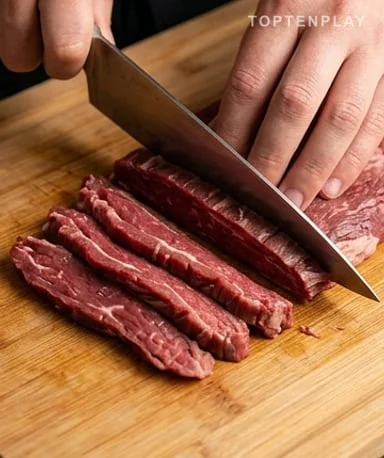
The steak wants heat, not patience
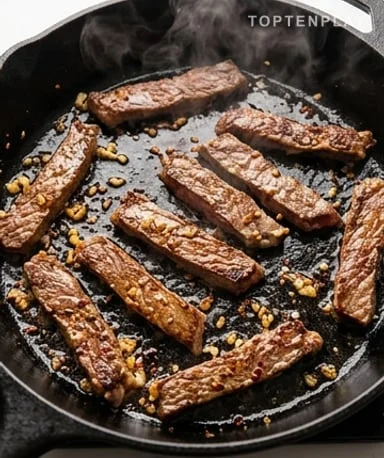
Cut the steak into thin strips strictly following the grain rule: look at the surface of the meat, spot the small parallel lines, and cut perpendicular to them. This single cutting decision changes everything about the final chew. The pan must be really hot before adding the fat—a drop of water thrown in should evaporate immediately with a sizzle. Place the strips in a single layer without crowding: an overloaded pan drops the temperature, the steak releases its juices and boils rather than sears, and you lose all that browned crust that concentrates flavor. Two to three minutes is enough, flipping halfway. The slightly crispy, caramelized edges you see forming—that’s where flavor builds. Remove the steak and set it aside—it will finish in the sauce in a few minutes.
Three ingredients make a real sauce
In the same pan, without washing it, add the minced garlic and red pepper flakes directly into the steak cooking juices. The smell that rises in the first seconds is intense—a spicy heat mingled with garlic that starts to blonde in the flavorful fat. That’s exactly what we’re after, but not beyond: at thirty seconds the garlic is golden and aromatic, at one minute it’s bitter. Return the steak to the pan, pour in the soy sauce and honey together, and stir while scraping the bottom to lift all the caramelized residues—that’s where the sauce gets its deep amber color and aromatic profile. Add two or three tablespoons of cooking water to thin it all out. The starch in this water immediately starts to bind the sauce as the heat continues to work.
Assembly: where the sauce becomes the dish
Pour the pasta directly into the pan and toss energetically—not gently, really toss, so that every strand is coated. The sound changes: from dry sizzling to the wet slap of pasta coating as it hits the pan walls. If the sauce seems too thick or the pasta starts sticking together, add a ladleful of additional cooking water and keep tossing over medium heat. If instead it seems too thin, leave it for thirty seconds without touching—the starch will finish working. Taste before serving: is the sweet-savory balance right? If too sweet, a few drops of soy sauce corrects. Too salty, a touch of honey or a spoonful of water. Garnish with sliced scallions just before serving—they bring a fresh crunch that cuts through the sauce’s richness and wakes up the whole dish.
Tips & Tricks
- Always slice the steak against the grain, never with the fiber direction: shortened fibers become tender to chew, while in the wrong direction they remain long and tough—no cooking can compensate for a bad cutting direction.
- Don’t overcrowd the pan for the steak: a single layer ensures dry searing at high temperature. Two layers and the steam released by the meat drops the temperature, the steak boils in its juices, and the caramelized crust never forms.
- Reserve the cooking water before draining, not after: once in the sink it’s lost. This water contains dissolved starch that emulsifies the sauce and makes it silky without any other binder.
- Taste the sauce before adding the pasta, not after: that’s when corrections are precise and effective. Once the pasta is incorporated, the flavors dilute slightly and you need more substance to regain balance.
What is the best cut of beef for this recipe?
Flank steak is the reference: nicely marbled, flavorful, and tender if sliced against the grain. Sirloin also works and is more forgiving of approximate cooking, but it costs more for an equivalent result in such a saucy dish. Avoid braising cuts like chuck or cheek—they require long cooking that this recipe does not provide.
How to adjust the spiciness level to taste?
Half a teaspoon of red pepper flakes gives a background warmth without dominating. For a mild dish, reduce to a quarter teaspoon or omit entirely—the sauce remains very good. For a more pronounced heat, increase to a level teaspoon or add fresh minced chili, which gives a brighter, less burning heat than dried flakes.
Can this dish be prepared in advance?
Sauced pasta does not hold up well: it continues to absorb sauce and becomes pasty upon reheating. If you want to save time, prepare the sauce and steak separately in advance, then cook the pasta and assemble everything at the last minute—it takes five minutes. Leftovers can be reheated in a pan with a splash of water to loosen the sauce.
Doesn’t the soy sauce make the dish too salty?
With the quantities given, the soy sauce is balanced by the honey and pasta cooking water. If you are salt-sensitive, use the reduced-sodium version—the sauce structure remains the same but the intensity decreases. In any case, taste before serving: it’s much easier to correct at this stage than once the pasta is on the plate.
Can I replace the beef with another protein?
Yes, and the sauce handles the change very well. Thinly sliced chicken breast works perfectly—cook for three to four minutes per side. Peeled shrimp are even faster, two minutes suffice. For a vegetarian version, firm tofu slices previously dried with paper towels sear well and absorb the sauce flavors.
Why reserve the pasta cooking water?
The cooking water contains dissolved starch released by the pasta during cooking. This starch acts as a natural emulsifier: it binds the soy sauce and honey with the fat to create a silky texture that clings to the pasta without any added binder. Without this water, the sauce remains liquid and slides to the bottom of the plate rather than coating.
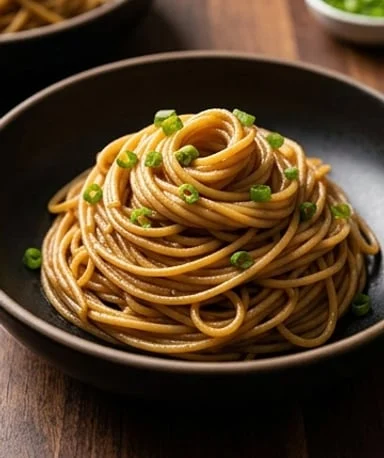
Sweet-Spicy Garlic Beef Pasta
Asian-Fusion
Pasta
Pan-seared pasta with seared steak strips, a glossy soy-honey-garlic sauce, and a touch of red chili. Ready in 30 minutes, one pan.
Ingredients
- 225 g spaghetti or fettuccine
- 340 g flank steak or sirloin, thinly sliced against the grain
- 4 garlic cloves, minced
- 60 ml soy sauce (regular or reduced-sodium)
- 2 tbsp honey
- ½ tsp red pepper flakes (adjust to taste)
- 2 tbsp olive oil or avocado oil
- 2 scallions, sliced (for garnish)
- salt and freshly ground black pepper
Instructions
- 1Bring a large pot of generously salted water to a boil. Cook the pasta al dente according to package directions, removing it 1-2 minutes early. Before draining, reserve a cup of cooking water and set aside.
- 2While the pasta cooks, slice the steak into thin strips perpendicular to the muscle fibers. Season with salt and black pepper.
- 3Heat the oil in a large skillet over high heat until shimmering. Add the steak strips in a single layer without crowding and sear for 3-4 minutes, flipping halfway, until edges are golden. Remove the steak and set aside.
- 4In the same skillet over medium-high heat, add the minced garlic and red pepper flakes to the drippings. Sauté for 30 seconds, stirring constantly, just until the garlic is golden and fragrant.
- 5Return the steak to the skillet. Pour in the soy sauce and honey, stirring and scraping the bottom to release caramelized bits. Add 3 tablespoons of pasta cooking water and let the sauce come together for 1 minute over medium heat.
- 6Add the drained pasta directly to the skillet and toss vigorously until well coated. If the sauce is too thick, add more cooking water a tablespoon at a time. Taste and adjust seasoning.
- 7Divide among plates and garnish with sliced scallions. Serve immediately.
Notes
• Against the grain: Look at the lines on the steak’s surface and slice perpendicular to them. This is the only technique that guarantees tender meat, regardless of the cut’s quality.
• Leftovers: Store in the refrigerator for up to 2 days in an airtight container. Reheat in a skillet over medium heat with a splash of water to loosen the sauce.
• Gluten-free: Replace soy sauce with coconut aminos and use gluten-free pasta. The sauce profile will be slightly sweeter.
• For a heartier dish: Add a handful of fresh spinach or sliced zucchini to the skillet after the steak, before the sauce.
Nutrition Facts (per serving, estimated)
| 450 kcalCalories | 30 gProtein | 50 gCarbs | 15 gFat |