Store-bought ginger ale is a fraud. It’s just sugary carbonated water with some random ginger flavoring, sold in half-empty cans. Making your own takes twenty minutes and you’ll never go back.
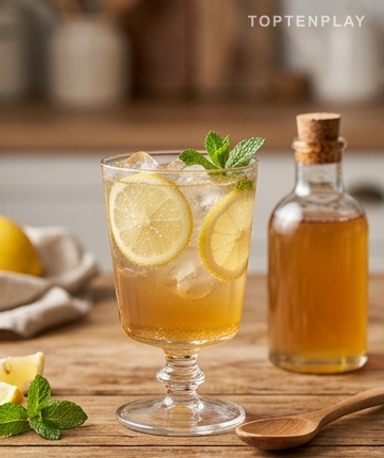
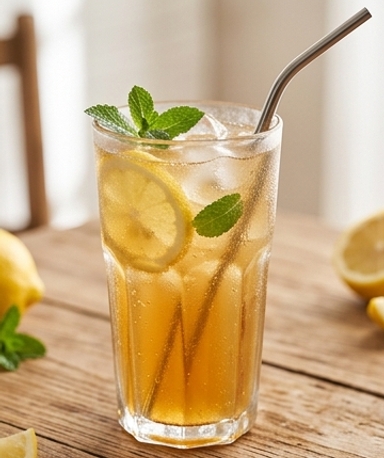
In the glass, it looks like liquid amber—a golden honey hue that rises from the bottom when you pour the sparkling water. Fine columns of bubbles drift upward. You can smell the fresh ginger even before the glass reaches your lips: sharp, almost peppery, with that subtle tangy lemon undertone. And when you drink it, the sensation is crisp and clean, without the sticky syrupiness that ruins industrial versions.
Why you’ll love this recipe
Ingredient Notes
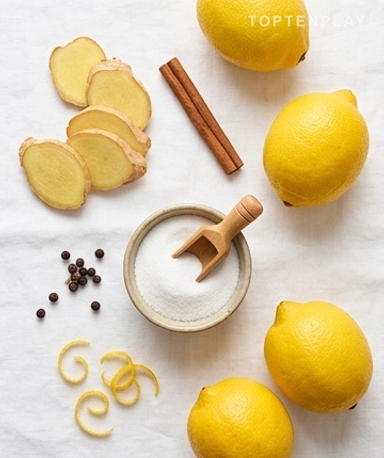
All the ginger syrup ingredients: fresh ginger, lemons, cinnamon, black pepper, and stevia.
- Fresh ginger : Choose a firm root, not wrinkled or soft to the touch. The younger and thinner the root, the less fibrous it will be—this matters because even though we strain it, an old woody root will give a harsher taste. No need to peel it perfectly: a quick scrape with a tablespoon is enough to remove the skin.
- Daddy Brown Stevia : The original recipe uses this specific brand because the ‘brown’ version brings a very slight caramelized note that mellows the whole thing. Other white stevias work but sometimes leave a slight bitterness at the finish. Start with the indicated amount, and adjust for the next batch if you want it more or less sweet.
- Organic lemon : The zest is the key part. A non-organic lemon here is a bad idea—pesticides concentrate in the skin. Remove the zest before juicing, using a fine rasp or a peeler. You want the yellow part, not the bitter white pith.
- Cinnamon stick : Just one is enough. Its role is subtle but real: it rounds out the ginger’s heat and adds a gentle warmth in the background. Ground cinnamon instead? No. It clouds the syrup and gives it a floury taste.
- Sparkling water : It must be very cold at the time of assembly. Lukewarm sparkling water loses half its bubbles the moment it touches the syrup. Keep it in the refrigerator until the last moment.
Why I’ll never buy bottled ginger ale again
There is a fundamental difference between industrial ginger ale and this one. The former contains barely 0.1% ginger extract. This one, you simmer for twenty minutes and the smell alone—that warm, peppery, slightly lemony scent that fills the whole kitchen—tells you it’s in another category. The brown stevia avoids the sticky sweet soda vibe. And the lemon brings a sharp acidity that structures the whole flavor. It’s not a health drink in the marketing sense—it’s just a real drink, with real ingredients.
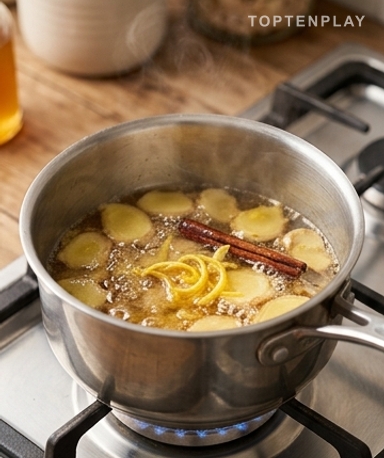
The syrup: twenty minutes of low heat and you’re done
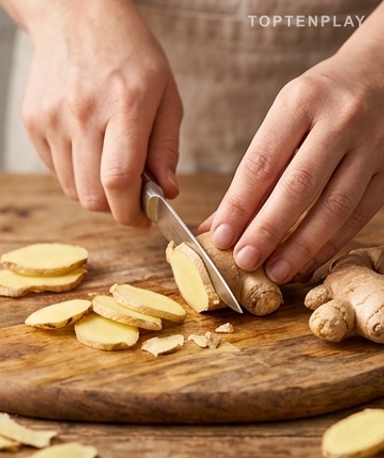
Slice the ginger into thin rounds—one to two millimeters—or grate it coarsely if you want a more intense syrup. Put everything in a saucepan: ginger, lemon zest, cinnamon, peppercorns, cold water. Bring to a boil, then lower the heat. The liquid should simmer gently, not bubble like a soup. After fifteen minutes, the kitchen will smell frankly of ginger—almost sharp in the nostrils, with warm cinnamon notes behind it. Off the heat, add the stevia and stir until completely dissolved. Let it cool to room temperature before adding the lemon juice, then strain well through a fine sieve.
The part everyone fails: cooling properly
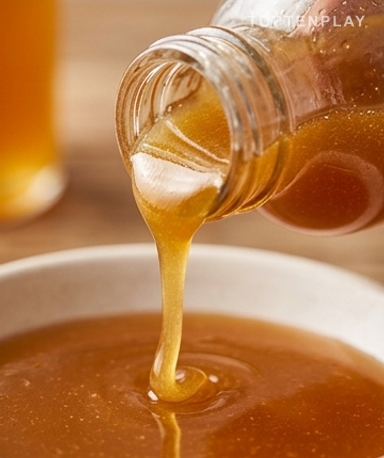
This is where people rush. A still-warm syrup placed in a bottle continues to ‘cook’ slightly and can lose its finesse. Wait until it is at room temperature—place your wrist on the pan and you should feel no heat. Only then do you add the squeezed lemon juice. The acidity is preserved better this way, without dissipating in the heat. Once filtered, the syrup has this very light golden-brown color, like a fluid blond caramel. Pour it into an airtight glass bottle and it will keep for two weeks in the fridge without any problem.
Assembly—and no, you can’t fail this
Three to four tablespoons of syrup in a large glass, ice cubes, and very cold sparkling water poured slowly along the edge to preserve the bubbles. Stir once or twice, no more. A slice of lemon, or lime if you have it. The proportion of syrup is up to you—some want ginger that stings at the back of the throat, others prefer something more delicate. Start with three spoons, taste, and adjust. That’s the true freedom of a homemade drink.
Tips & Tricks
- If you want an even more intense syrup, add grated ginger instead of slices—the contact surface is larger and the infusion is more powerful. Perfect for winter or if you really want to feel the heat.
- The syrup freezes very well in small cubes in an ice tray. Take out the amount you need and it’s always fresh. This also works to flavor a hot tea or lemonade.
- Black peppercorns are not optional—they add a background heat completely different from ginger, lasting longer on the palate. But if you really don’t have any, the result is still good.
How long does the ginger syrup keep?
The syrup keeps for up to two weeks in the refrigerator in an airtight glass bottle. Beyond that, it may start to ferment slightly—if you notice an acidic smell or unusual bubbles, it’s time to make a new batch.
Can I replace stevia with regular sugar?
Yes, replace the 80g of brown stevia with 150g of regular brown sugar, which dissolves just as well when hot. The result will be sweeter and slightly thicker. The caloric values will be much higher, but the taste will be excellent.
My syrup is cloudy after straining, is that a problem?
No, it’s normal if you grated the ginger—fine fibers pass through an ordinary sieve. For a clear syrup, strain it twice or use a cheesecloth (fine muslin) instead of a sieve. The taste is identical in both cases.
Can I use ginger powder instead of fresh?
It is possible but strongly discouraged. Ginger powder produces a harsher, less aromatic syrup without the floral notes of fresh ginger. If you really only have that, use one level tablespoon for 100g of fresh ginger and strain very carefully.
How do I adjust the intensity of the heat?
Two levers: the amount of ginger in the syrup (more ginger = stronger), and the amount of syrup in the glass (3 spoons for subtle, 5 spoons for a real throat-kick). I suggest starting with the basic recipe and increasing the ginger in the next batch if you want more punch.
Is this syrup only for ginger ale?
Not at all. A spoon in hot tea makes a very well-balanced ginger-lemon tea. You can also put it in lemonade, a smoothie, or even over plain yogurt. It’s a versatile syrup that’s worth making in double quantities.
Sugar-Free Homemade Ginger Ale
International
Drink
A sparkling homemade ginger ale made from a syrup of fresh ginger, lemon, and cinnamon, sweetened with stevia. Ready in 20 minutes, infinitely better than bottled versions.
Ingredients
- — For the ginger syrup —
- 100g fresh ginger, peeled and cut into thin rounds
- 500ml water
- 80g brown stevia (Daddy type)
- 2 lemons (juice, about 80ml)
- 1 organic lemon (finely grated zest)
- 1 cinnamon stick
- 3 to 4 black peppercorns
- — For each glass —
- 3 to 5 tbsp ginger syrup (depending on desired intensity)
- 200ml very cold sparkling water
- ice cubes
- slices of lemon and lime for garnish
Instructions
- 1Peel the ginger and cut into thin rounds (1-2mm) or grate coarsely for a more intense syrup.
- 2Place ginger, lemon zest, cinnamon stick, and peppercorns in a saucepan with 500ml cold water.
- 3Bring to a boil, then reduce heat and simmer covered for 15 to 20 minutes.
- 4Remove from heat, add the brown stevia and stir until completely dissolved.
- 5Allow to cool completely to room temperature, then stir in the juice of the two lemons.
- 6Strain finely through a sieve or cheesecloth and pour into an airtight glass bottle.
- 7To serve: pour 3 to 5 tablespoons of syrup into a glass with ice cubes, top with cold sparkling water, stir gently and garnish with a lemon slice.
Notes
• Storage: the syrup keeps for up to 2 weeks in the refrigerator. It can also be frozen in cubes in an ice tray for on-demand use.
• Intensity Tip: 3 spoons give a light and refreshing ginger ale, 5 spoons result in a very spicy kick. Adjust to taste.
• Hot Version: a tablespoon of syrup in a cup of hot water makes an excellent homemade ginger-lemon tea.
Nutrition Facts (per serving, estimated)
| 15 kcalCalories | 0gProtein | 3gCarbs | 0gFat |