📌 Star Fruit: Why the leaves surpass the fruit in traditional benefits
Posted 10 March 2026 by: Admin
The Little-Known Virtues Of Star Fruit Leaves
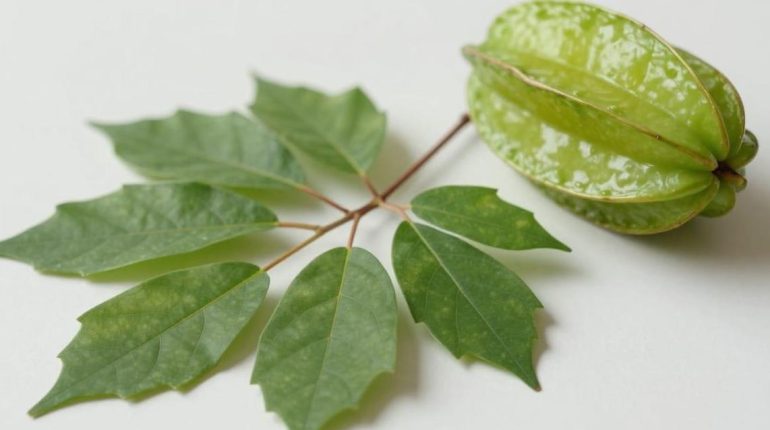
Behind the popularity of the star fruit and its stellar silhouette lies a botanical secret that few know: its leaves. While the bright yellow fruit sits prominently on tropical market stalls, the leaves of Averrhoa carambola remain in the shadows, unknown to the general public. Yet, for generations, traditional medicines of Southeast Asia have used them for their remarkable therapeutic properties.
Initial scientific analyses confirm what healers knew intuitively: these leaves concentrate powerful antioxidants, significant amounts of vitamin C, and natural anti-inflammatory compounds. This wealth of active principles explains why some rural communities continue to pass down ancestral recipes involving exclusively the foliage, never the fruit.
Modern ethnobotanists are now rediscovering this neglected plant alternative. While the star fruit fascinates with its aesthetics and tangy flavor, its leaves offer documented but largely untapped therapeutic potential. Preliminary clinical observations reveal that bioactive compounds extracted from the foliage exhibit mechanisms of action distinct from those of the fruit, opening unexpected perspectives.
This dissociation between culinary popularity and medicinal value perfectly illustrates how certain natural resources remain underutilized despite their accessibility. Star fruit leaves embody this ethnobotanical treasure that oral traditions have preserved, simply waiting for modern science to validate their therapeutic relevance.
Traditional Applications: Muscles, Digestion And Circulation
This triple therapeutic action passed down through centuries explains the persistence of star fruit leaves in traditional pharmacopoeias. Local healers prescribe them along three distinct axes, each corresponding to specific bodily needs.
For muscle relief, infused leaves serve as a base for relaxing baths and warm compresses. Rural communities apply these preparations directly to the neck, shoulders, and lower back, areas strained during agricultural work. The plant compounds released by heat penetrate tired tissues, offering simultaneous mechanical and chemical relief.
The second use concerns the digestive system. The natural tannins and plant fibers present in the foliage act on occasional gastric discomfort. Traditional practitioners recommend these infusions for mild digestive disturbances, exploiting the astringent properties of the leaves to restore intestinal balance. This application remains particularly widespread in Indonesia and Malaysia, where cold decoctions accompany heavy meals.
Finally, several traditions associate these leaves with cardiovascular well-being. The antioxidants contained in the foliage are thought to play a role in maintaining optimal blood circulation. This belief, though empirical, is now finding initial validation in preliminary research on phenolic compounds identified in leaf extracts.
This centuries-old holistic approach demonstrates how a single plant can address various bodily issues, a fundamental principle of ancestral medicine.
Instructions For Use: Decoction And External Applications
The transmission of this ancestral knowledge involves precise gestures, codified over generations. The preparation method determines the effectiveness of the active principles released by the star fruit leaves.
To make a traditional decoction, bring one liter of water to a boil in a stainless steel or ceramic pot. Once the boiling point is reached, add 10 to 15 previously washed fresh leaves. Immediately reduce the heat to maintain a constant simmer for 20 to 30 minutes. This gentle extraction allows the bioactive compounds to migrate into the water without being denatured by excessive heat.
The liquid gradually turns jade green, a visual sign of the increasing concentration of chlorophyll and tannins. Then filter the preparation through a fine sieve. The resulting liquid is consumed lukewarm, one to two cups daily according to Malay and Indonesian traditions.
The softened leaves are not thrown away. Lightly crushed, they form the base of therapeutic compresses. Wrap them in a clean cloth, then apply the still-warm poultice to painful areas for 15 to 20 minutes. This external method maximizes direct contact with joints and deep muscles.
For a complete relaxing bath, pour the entire decoction into the bathwater. The 15 to 20-minute immersion transforms this ritual into a global body treatment, a practice still observed in some Asian spas specializing in traditional phytotherapy.
Essential Precautions And Limitations Of Use
This ancestral practice, however, requires imperative medical vigilance. Star fruit leaves, like the fruit, contain oxalates in significant concentration. These microscopic crystals normally pass through the renal system without issue in healthy individuals, but become formidable toxins for people with kidney disorders.
Nephrologists document cases of acute neurotoxicity related to star fruit consumption in dialysis patients or those suffering from chronic kidney failure. Oxalates then accumulate in the blood, causing mental confusion, seizures, or even coma in extreme situations. This medical contraindication naturally extends to the leaves, whose chemical composition remains close to the fruit.
Before any therapeutic use, a complete renal assessment is necessary. Serum creatinine, glomerular clearance, and a search for a family history of kidney stones constitute the diagnostic minimum. People on anticoagulant treatment should also consult, as certain plant compounds interfere with blood clotting.
This traditional knowledge never replaces conventional medical care. Star fruit leaves are part of a complementary well-being approach, not a clinically validated curative protocol. The boundary between folk remedy and evidence-based medicine remains drawn by scientific rigor and professional supervision.
Prudence thus becomes the first of therapeutic virtues, transforming an ancestral gesture into a responsible and enlightened practice.