Craving a dish that feels like a terrace in Naples without spending the afternoon in the kitchen? Spaghetti alle vongole does exactly that: few ingredients, quick cooking, and that briny aroma as soon as the clams open. The secret is not to overdo it—keep the sauce short, shiny, and full of flavor.
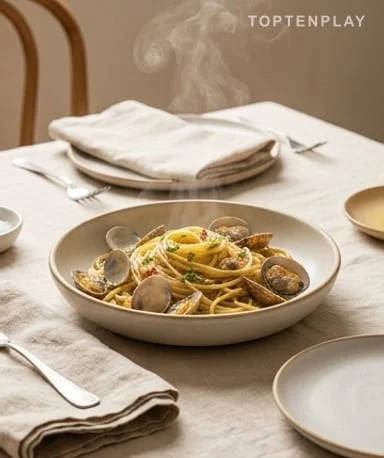
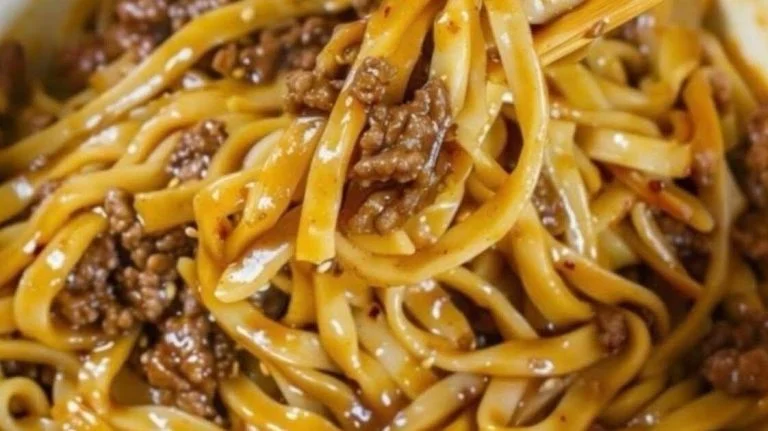
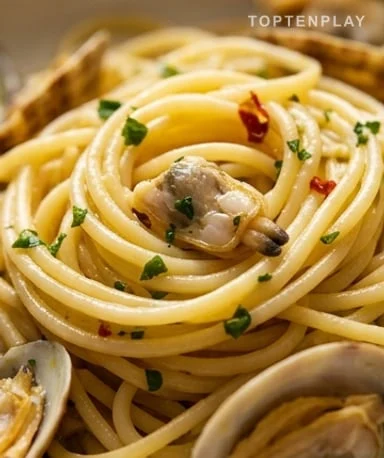
On the plate, the pasta should glisten without swimming, with a few open shells like little salty spoons. The garlic gently warms in the oil, parsley brings a fresh green scent, and the clams release a clear juice that smells unmistakably of the sea. When the spaghetti are well coated, you can almost hear the shells rustling in the pan. It’s simple, but it has style.
Why you’ll love this recipe
Ingredient Notes
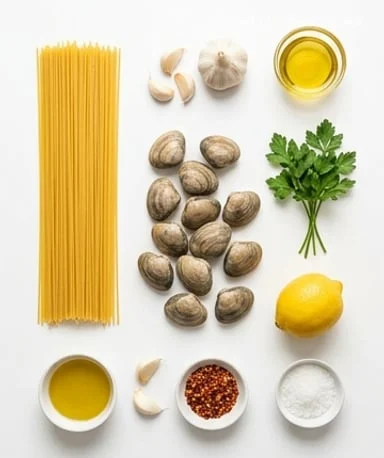
The trio that really matters: good clams, fresh garlic, flat-leaf parsley. The rest should stay discreet.
- Spaghetti : They carry the sauce and catch the clam juice between the strands of pasta. Choose good-quality spaghetti, ideally slightly rough, and replace with linguine if you want a wider, more supple bite.
- Clams : They provide the main flavor of the dish, with a naturally salty and briny juice. Choose tightly closed clams with a fresh sea smell, and substitute with cockles or well-thawed frozen vongole if you don’t have a good fishmonger.
- Garlic : It perfumes the oil from the start, but must not burn, otherwise it becomes bitter and dominates. Use firm cloves, finely sliced or just crushed if you want a milder flavor.
- Olive oil : It acts as a binder between the clam juice and pasta starch. Choose a fruity but not too pungent oil, as a very green oil can overpower the shellfish.
- Flat-leaf parsley : It brings a clean freshness that brightens the salty side of the dish. Save the thin stems to flavor the pan and add the chopped leaves at the end to keep their bright color.
- Cooking water : It perfectly replaces any addition of alcohol and helps the sauce become coating thanks to the starch. Keep it well salted and add it little by little until the spaghetti are glossy, not soggy.
Rinse thoroughly
Clams need a real rinse, not a distracted pass under water. Put them in cold water, gently stir them, then remove any that are broken or remain open when tapped. This step avoids the grit that crunches under your teeth—the kind of detail that ruins a beautiful plate in seconds. They should smell of clean sea, not the harbor bottom, and their shells should lightly click together when you move them.
Infuse the oil
Heat the olive oil over medium heat with the garlic, and let it infuse without coloring too quickly. You’re looking for a round, almost sweet smell, not that burnt note that hits the nose and makes the sauce aggressive. If you add chili, do it here so it spreads without dominating. The bottom of the pan should remain clear and shiny, with the garlic gently sizzling rather than frying violently.
Open the clams
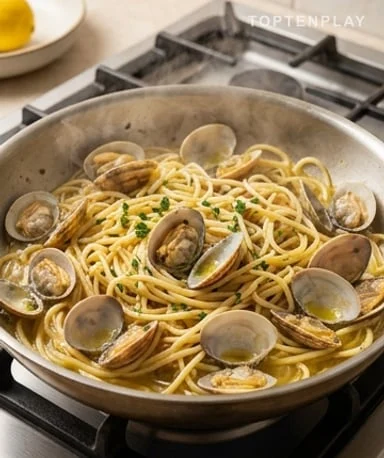
Add the clams to the hot pan, cover, and let the steam do its work. In a few minutes, the shells open with little dry clicks, and the juice starts to mix with the oil. Don’t overdo it, or the flesh becomes firm and loses that tender, almost pearly quality. Clams that remain closed after cooking are not negotiable: remove them.
Bind the pasta
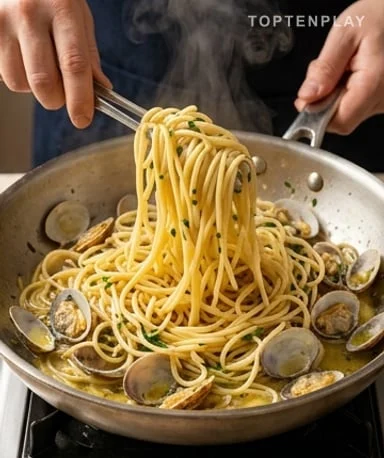
Cooking the spaghetti just under al dente is important because they finish in the pan. Transfer them with a small ladle of cooking water, then toss vigorously so the starch clings to the clam juice. You should see the sauce become shinier, like a light veil around the pasta. If it’s dry, add a bit of cooking water; if too liquid, let it reduce for a few moments while stirring.
Serve hot
Spaghetti alle vongole doesn’t like to wait. Add the parsley at the last moment, toss once more, then serve on warm plates to keep the sauce smooth. A squeeze of lemon can brighten the dish, but go light so as not to mask the clam flavor. At the table, the pasta should be fragrant, salty, with a slippery texture but never greasy.
Tips & Tricks
- Salt the pasta water moderately because the clam juice already brings real salinity and can make the dish too salty.
- Always keep a cup of cooking water before draining the spaghetti, as it’s what allows you to loosen the sauce without diluting flavor.
- Don’t brown the garlic, as its bitterness comes out very quickly in such a simple recipe and overpowers the clams.
- Serve as soon as the pasta is bound, because the short sauce tightens as it cools and the spaghetti become sticky.
How to avoid sand in spaghetti alle vongole?
Soak the clams in a large bowl of cold salted water for 1 to 2 hours, then rinse them several times. Discard any that are broken or remain open after a light squeeze.
Can I use frozen clams?
Yes, provided you thaw them gently in the refrigerator and drain well. The flavor will be a bit less vivid than with fresh clams, but the recipe remains quite good.
Why finish the pasta in the pan?
The spaghetti absorb the clam juice and the starch from the cooking water helps bind the sauce. That’s what gives the glossy, supple texture without needing to add anything else.
What if some clams don’t open?
You must remove them and not serve them. A clam that remains closed after cooking has no place on the plate.
How to avoid a too-dry sauce?
Always keep a cup of pasta cooking water before draining. Add it little by little to the pan until the spaghetti are well coated and glossy.
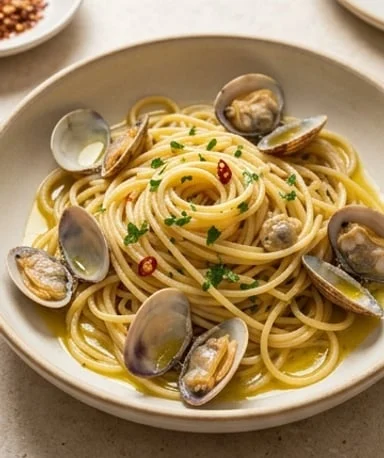
Spaghetti alle vongole, clam pasta from Southern Italy
Italian
Main course
A quick, elegant seafood pasta with clams, garlic, parsley, and a short sauce bound with cooking water.
Ingredients
- 400g spaghetti
- 1kg fresh clams
- 4 garlic cloves
- 5cl olive oil
- 1/2 bunch flat-leaf parsley
- 1 small fresh red chili or 1 pinch dried chili
- 1 lemon
- 1 tablespoon coarse salt for the pasta water
- 1 pinch black pepper
Instructions
- 1Soak the clams in cold salted water for 1 to 2 hours, then rinse thoroughly to remove sand.
- 2Bring a large pot of salted water to a boil and cook the spaghetti 2 minutes less than the package directs.
- 3Meanwhile, heat the olive oil in a large pan with the finely sliced garlic and chili. Let it infuse without browning the garlic.
- 4Add the clams, cover the pan, and cook for 3 to 5 minutes, until the shells open.
- 5Remove any clams that remain closed, then add the drained spaghetti to the pan with a ladle of cooking water.
- 6Toss vigorously for 1 to 2 minutes to bind the clam juice, oil, and pasta starch.
- 7Add the chopped flat-leaf parsley, a little pepper, and a few drops of lemon if you want a brighter touch.
- 8Serve immediately, while the pasta is hot, glossy, and well coated.
Notes
• Don’t over-salt the sauce: the clams already bring a real brininess.
• Garlic should stay blond, never brown, otherwise it becomes bitter.
• Linguine can replace spaghetti without changing the spirit of the dish.
• For a milder version, omit the chili or replace it with a little black pepper.
Nutrition Facts (per serving, estimated)
| 520 kcalCalories | 24gProtein | 78gCarbs | 14gFat |