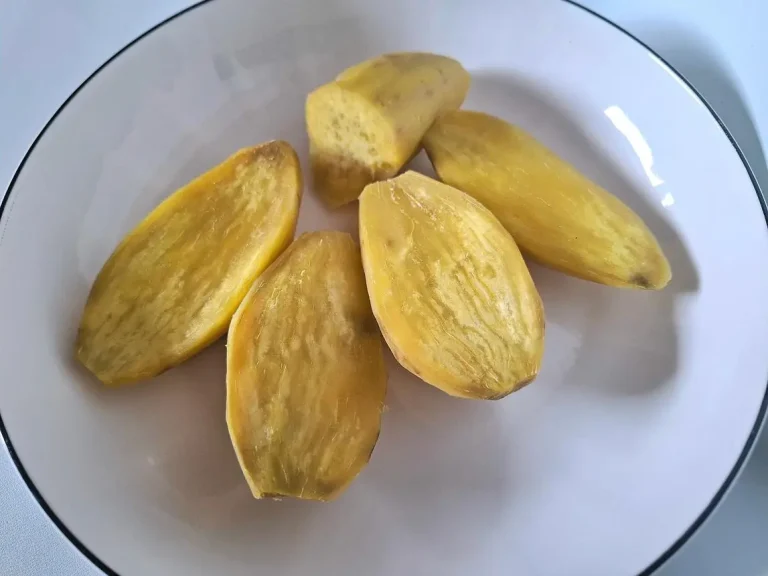
I’ve tested dozens of trendy wellness juices. Most are either too sweet, tasteless, or reserved for those with a professional blender and an hour to spare. This one isn’t. Soursop and tomato — two ingredients we completely underestimate — and five minutes flat.

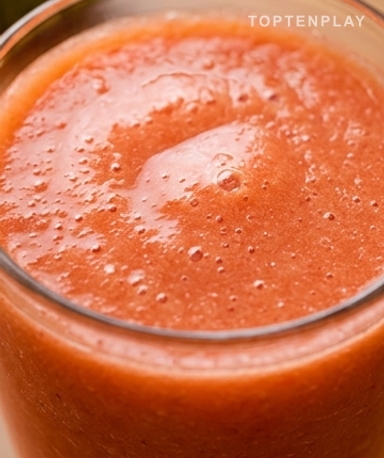
In the glass, the color is surprising: a warm coral, somewhere between watermelon and mango. The scent is first the tomato — fresh, almost herbaceous — then the soursop takes over with that tropical fragrance, slightly tangy, a bit like a cross between pineapple and lime. At the first sip, the texture is velvety, thick without being heavy, with a light fiber that reminds you you’re drinking something real. Not a concentrate, not a syrup — real fruit.
Why you’ll love this recipe
Ingredient Notes
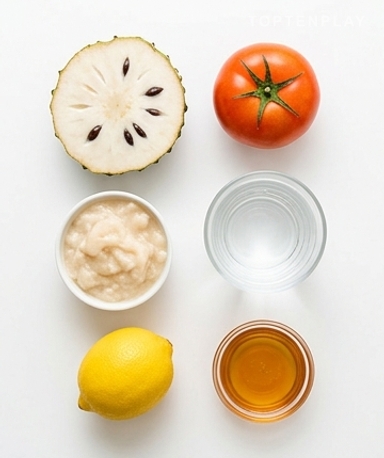
Soursop, ripe tomato, water, lemon, and honey: that’s all you need for this drink.
- Soursop (Corossol) : This is the boss. We use the pulp — that white, fibrous, and fragrant flesh that you collect by removing the black seeds by hand. If you can’t find it fresh (rare outside tropical grocery stores), frozen pulp works very well. Found in bags at West Indian or African grocers. Don’t confuse it with passion fruit — soursop is significantly less acidic and creamier.
- Ripe tomato : Not a hard thing out of the fridge. It should be soft under your fingers, with skin that is starting to peel slightly. This is what brings body and a light vegetable acidity that counterbalances the sugar of the soursop. A large seasonal tomato, beefsteak or heirloom — perfect. Avoid cherry tomatoes, too little flesh for what we want.
- Honey or lemon (optional) : Taste before adding anything. If the soursop is very ripe, it’s already sweet and you don’t need anything. A squeeze of lemon wakes everything up if the juice feels flat — it’s often the right move rather than honey, which can make it heavy.
Soursop — intimidating for no reason
The first reaction when seeing a fresh soursop: hesitation. The green skin covered in small soft spines, the weird shape, the surprising weight. In reality, it’s one of the simplest fruits to work with. The inside is a creamy white flesh with elongated black seeds that are removed by hand — they detach cleanly, without effort. The smell that escapes as soon as you open it is immediate: tropical, sweet, almost heady, as if you were opening a bag of exotic candy. If you’re using frozen pulp, let it thaw for 20 minutes at room temperature. Cold and soft — not yet frozen solid, but not at room temperature for two hours either.
The part everyone misses: why we add tomato
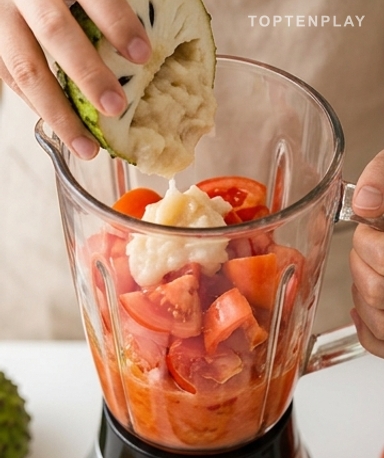
We don’t add tomato to make a gazpacho. It’s there to balance. Soursop alone can quickly become cloying if the fruit is very ripe — its flesh is dense and excessively fragrant. The tomato breaks that. It brings a slight vegetable bitterness, water, and that coral hue that makes the juice frankly appetizing. Cut it into coarse wedges — no need to remove seeds, the blender handles it. The skin can stay too, it goes through no problem.
Why I stop blending after 45 seconds
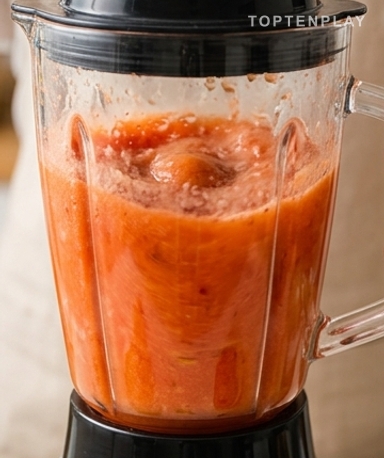
Pour the soursop pulp into the blender first, then the tomato wedges on top, and the water last. Blend for 30 to 45 seconds. The sound changes as you blend: first a dull crackle — the tomato breaking — then a steady, consistent hum when everything is smooth. That’s the moment you need to listen for. No need to go further: blending too long heats the juice and you lose that immediate fresh side. Taste, then adjust — a spoonful of honey if it’s too sharp, a dash of lemon if it’s too sweet.
Tips & Tricks
- Drink it within the hour after preparation. Soursop juice oxidizes quite quickly — the color goes from coral to dull beige and the taste loses its depth. Prepare only what you are going to consume.
- If you want a lighter texture, pass the juice through a fine sieve by pressing with the back of a spoon. You get a clearer, almost translucent liquid. If you want maximum flavor and fiber, drink it as is — both versions have their fans.
- In summer, put the fruits in the refrigerator 30 minutes before preparing the juice. No ice cubes — they dilute and flatten the taste. It’s better to start with well-chilled ingredients from the beginning.
How long can this juice be kept in the refrigerator?
Ideally, drink it within an hour of preparation. Soursop pulp oxidizes quickly, and the juice loses its coral color and much of its freshness after a few hours. If you absolutely must prepare it in advance, keep it in an airtight jar in the fridge and consume it within 12 hours maximum.
Can I use frozen soursop pulp?
Yes, it’s actually the most practical solution. Frozen pulp can be found in bags in West Indian or African grocery stores. Let it thaw for 20 minutes at room temperature before using — the taste is very close to fresh, and the nutritional qualities are well preserved.
I can’t find soursop in my area — what can I replace it with?
Soursop is difficult to substitute perfectly because its flavor profile is unique. The closest combination: half pineapple pulp + half mango flesh. The result is different but remains pleasant with the tomato. Guava pulp also works if you can find it.
Is a standard blender enough or do I need a powerful appliance?
An entry-level blender is more than enough. Soursop pulp and tomato are soft ingredients that blend easily in 30 to 45 seconds. No need for a professional blender — even an old 30-euro model does the job.
Can the base recipe be sweetened or modified?
Absolutely. A spoonful of honey if the mixture is too sharp, a squeeze of lemon juice if it’s too sweet. You can also add a small piece of fresh ginger before blending for a warm, tonic note. Some enjoy a pinch of cinnamon — it works surprisingly well with soursop.
Can I strain the juice to remove the fibers?
Yes. Pour the blended juice into a fine sieve while pressing with the back of a spoon — you’ll get a clearer liquid, lighter on the palate. If you keep the fibers, the texture is thicker and more filling. Both versions are good; it’s a matter of personal preference.
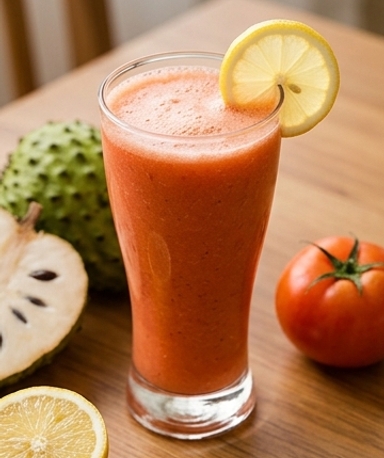
Soursop and Tomato Drink
Caribbean
Drink
A fruity and vitamin-packed juice made from soursop pulp and ripe tomato, ready in 5 minutes with a simple blender.
Ingredients
- 200g soursop pulp (fresh or frozen/thawed)
- 1 (about 150g) well-ripened tomato
- 250ml water
- 1 tablespoon honey (optional)
- ½ lemon, juice only (optional)
Instructions
- 1If using fresh soursop, remove the black seeds by hand and extract only the white flesh.
- 2Cut the tomato into coarse wedges, without removing the skin or seeds.
- 3Pour the soursop pulp into the blender, add the tomato wedges on top, then the water.
- 4Blend for 30 to 45 seconds until you get a smooth and consistent juice.
- 5Taste and adjust: add honey if it’s too acidic, lemon juice if it’s too sweet.
- 6Serve immediately in a large glass.
Notes
• For a lighter and more fluid texture, pass the juice through a fine sieve before serving.
• Frozen soursop pulp (sold at West Indian and African grocery stores) is an excellent substitute for fresh fruit.
• Ideally consume within the hour — soursop oxidizes quickly beyond that, altering the color and taste.
Nutrition Facts (per serving, estimated)
| 130 kcalCalories | 3gProtein | 31gCarbs | 1gFat |