We often think that an impressive cake requires precise technique, serious equipment, and a free afternoon. In reality, this one plays much more subtly: good apples, a simple batter, well-measured cinnamon, and an oven that does the rest.
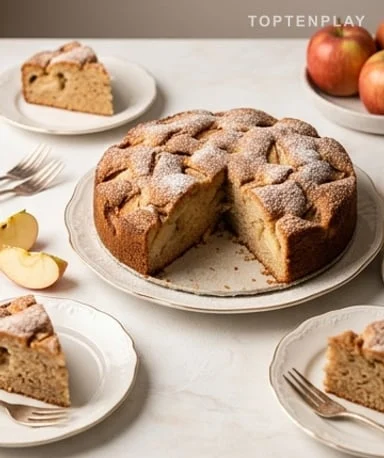
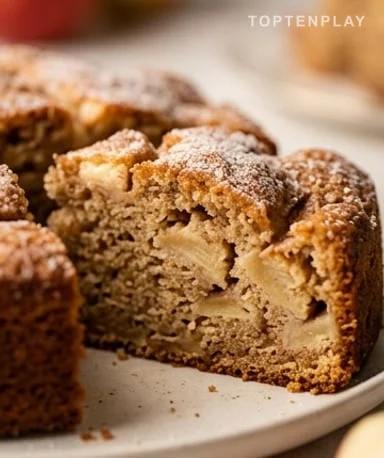
When it comes out of the oven, the top is golden, slightly cracked, with a thin sugary crust that catches the light. When you cut the first slice, the blade goes through a tender crumb and lands on soft, still juicy apple pieces. The smell is clear: warm butter, cooked fruit, sweet cinnamon, something very homemade without being heavy. This is exactly the kind of cake that sets a mood even before it reaches the plate.
Why you’ll love this recipe
Ingredient Notes
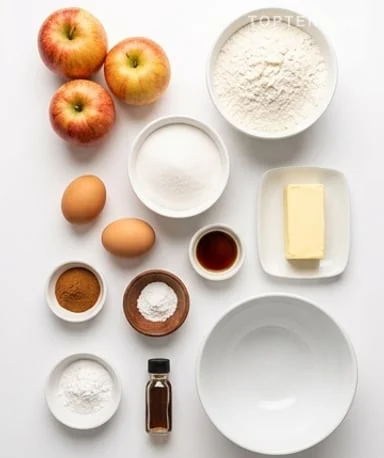
Apples, cinnamon, and pantry basics: nothing complicated, but you need good fruit.
- Apples : They provide the juice, the flavor, and the soft pieces in the crumb. Choose apples that hold up a bit during baking, like Golden, Gala, or Pink Lady; if they are very juicy, cut them slightly larger so they don’t disappear.
- Cinnamon : It gives the cake warmth and enhances the apple flavor without overpowering it. Use cinnamon that is still very aromatic; if the jar smells faint when you open it, you’ll need to add more or replace it.
- Flour : It structures the batter and allows the cake to hold together when sliced. Classic wheat flour works very well; for a gluten-free version, use a baking blend meant for cakes rather than a single dense flour.
- Eggs : They bind the batter, add softness, and help the cake rise properly. Take them out a bit before starting: at room temperature they mix better and the batter becomes more even.
- Butter or neutral oil : Butter brings a rich taste and the smell of warm pastry, while oil often gives a softer crumb the next day. If you choose oil, use a neutral one so as not to cover the cinnamon.
- Sugar : It sweetens the batter, helps the top brown, and creates that pleasant little crust. You can replace part of the white sugar with brown sugar for a deeper, almost caramelized note.
Apples must remain visible
Cut the apples into medium-sized pieces rather than tiny dice, because an apple cake should really offer bites of fruit. Too small, the pieces melt into the batter and you lose that juicy surprise when slicing. If they brown slightly while you prepare the rest, it’s not serious: once baked, they’ll take on a very appetizing honey color. Also keep a few thin slices for the top if you want a nicer look, but don’t overload the surface, otherwise the batter won’t rise as well in the center.
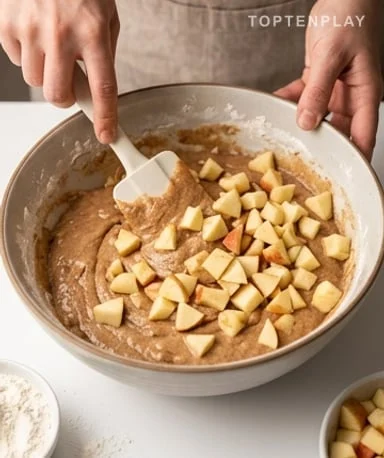
The batter gains nothing from being rushed
Mix the dry ingredients on one side, the wet ingredients on the other, then combine them just enough to no longer see flour. The batter should be thick, satiny, with a sweet cinnamon smell already arriving before baking. If you over-whisk, you develop the flour structure and the cake can become tight, almost elastic. A spatula does the job very well here: it allows you to incorporate the apples without crushing them and without turning the batter into a heavy mass.
Cinnamon should speak, not shout
Add the cinnamon with enough conviction to perfume the entire batter, but without trying to cover the apples. The good indicator is the smell: it should be warm and clear when you lean the bowl towards you, not sharp or dusty. If you like rounder flavors, a touch of vanilla can soften the whole and give a more pastry-like impression. However, avoid stacking too many different spices, because this cake works precisely because it remains legible.
The oven does the real work
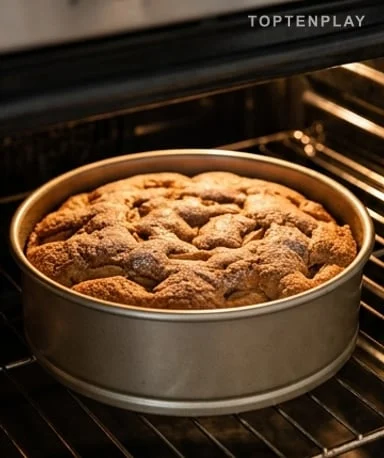
Pour the batter into a buttered or lined mold, smooth the surface quickly, then bake without waiting too long. During baking, the edges start to brown before the center, and a smell of warm apple mixes with the sugar that slowly caramelizes. If the top colors too quickly, lightly cover with a sheet of parchment paper, because a too-dark top can give unnecessary bitterness. The cake is ready when the blade comes out almost dry, with only a few moist crumbs: completely dry often signals overbaking.
Rest really changes the slice
Let the cake cool in its mold before moving it, even if the smell makes you want to dive in right away. When hot, the crumb is still fragile and the apple pieces release steam, which can break the slice if you cut too quickly. After twenty to thirty minutes, the texture stabilizes, the top remains slightly crispy and the inside keeps a gentle warmth. Served warm, it’s soft and fragrant; served the next day, it becomes more tender, with the cinnamon better settled.
Tips & Tricks
- Don’t cut the apples too small: they must keep juice and a real presence in the mouth, otherwise the cake loses contrast.
- Stop mixing as soon as the flour disappears: the less you work the batter, the softer and lighter the crumb after baking.
- Test doneness at the center of the cake, not the edges: the edges always cook faster and can give a false impression of readiness.
- Let it cool before serving: the steam redistributes in the crumb, the slices hold together better, and the cinnamon aroma seems rounder.
Which apples to use for this cake?
Golden, Gala, Pink Lady, or Reine des Reinettes work very well, as they become tender without turning into compote. Avoid overly floury apples, which give a somewhat dry texture.
Why is my apple cake too dense?
Most often, the batter was overmixed after adding the flour. You must stop as soon as no dry traces remain, even if the batter is not perfectly smooth.
Can I prepare this cake the day before?
Yes, and it’s even very good the next day, because the cinnamon has time to perfume the entire crumb. Keep it well covered at room temperature if it’s not too hot.
How do I know if the cake is properly baked?
Insert a blade into the center: it should come out with a few moist crumbs, but no raw batter. If the top browns too quickly before the center is done, lightly cover with parchment paper.
Can I replace the butter?
Yes, you can use 80 ml of neutral oil instead of the 100 g of butter. The taste will be a bit less rich, but the crumb will remain very moist.
Can I freeze this cake?
Yes, cut it into slices once completely cooled, then wrap them individually. To serve, let thaw at room temperature and pass the slice for a few minutes in a gentle oven to regain a pleasant texture.
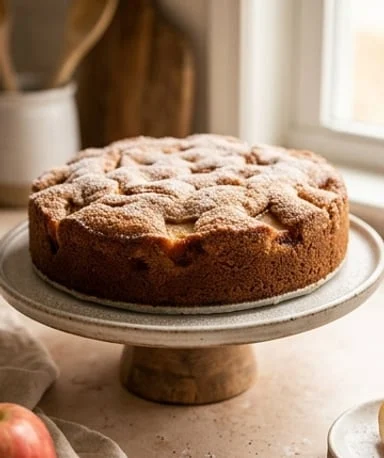
Soft Apple and Cinnamon Cake
French home-style
Dessert
A simple, fragrant, and very moist cake, with soft apple pieces and a fine golden cinnamon crust.
Ingredients
- 3 medium apples
- 200g flour
- 130g sugar
- 100g melted butter
- 3 eggs
- 80ml milk
- 11g baking powder
- 2 tsp ground cinnamon
- 1 tsp vanilla extract
- 1 pinch salt
- 1 tbsp brown sugar for the top
Instructions
- 1Preheat the oven to 180°C. Butter a 22 cm round mold or line it with parchment paper.
- 2Peel the apples if you prefer a softer texture, then cut them into medium pieces.
- 3In a bowl, mix the flour, baking powder, cinnamon, and salt.
- 4In another bowl, whisk the eggs with the sugar until the mixture is lighter and slightly frothy.
- 5Add the melted butter (cooled slightly), milk, and vanilla, then mix quickly.
- 6Incorporate the dry ingredients into the wet ingredients with a spatula, just enough to obtain a homogeneous batter.
- 7Add the apple pieces and gently fold to distribute them without overworking the batter.
- 8Pour the batter into the mold, smooth the surface, and sprinkle with brown sugar.
- 9Bake for 35 to 40 minutes, until the top is golden and a blade inserted in the center comes out without raw batter.
- 10Let cool for 20 minutes before unmolding, then serve warm or at room temperature.
Notes
• For a lighter crumb, avoid overmixing after adding the flour.
• If the apples are very juicy, cut them into slightly larger pieces so they hold up.
• The cake keeps for 2 days at room temperature, well covered.
• You can replace the butter with 80 ml of neutral oil for an even softer texture.
Nutrition Facts (per serving, estimated)
| 315 kcalCalories | 5gProtein | 45gCarbs | 12gFat |