A smell of braised beef filling the house from morning, a shredding that happens almost by itself with a fork, a toasted bread that crunches before yielding to the juice — that’s the French dip. This American sandwich that borrows its name from France without really belonging to it is, in its slow cooker version, one of the simplest and most satisfying recipes you can make on a Sunday.
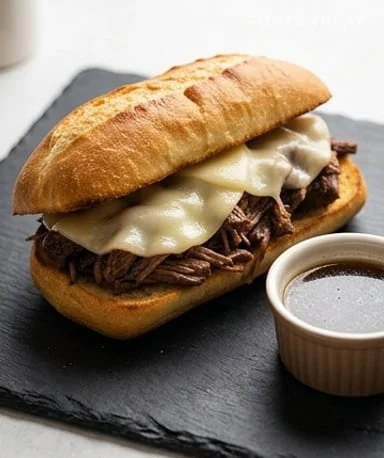
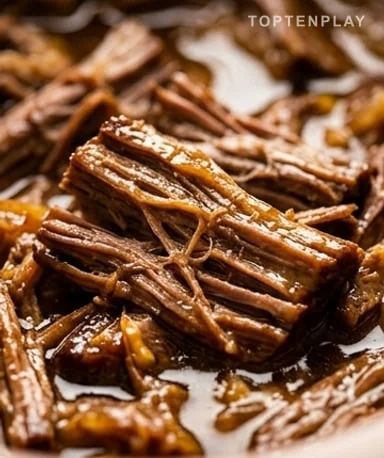
The chuck falls apart into long amber strands, soaked in the dark broth and melted onions that simmered with it for hours. The edges caramelize slightly in the heat of the pot, giving the meat that golden-brown hue that promises character. The bread, meanwhile, waits toasted: crispy on the surface, soft inside, ready to absorb a good dip of au jus without falling apart. It’s a generous, no-fuss dish that tastes exactly what it says.
Why you’ll love this recipe
Ingredient Notes
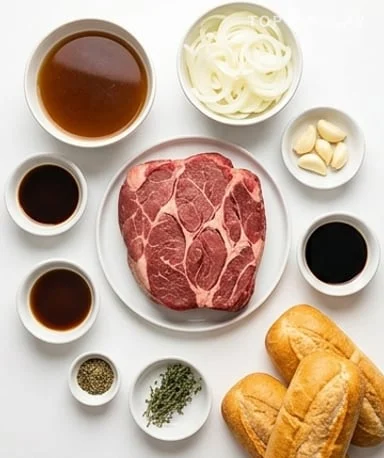
Everything you need: a nice chuck roast, simple aromatics, and a hearty broth. The slow cooker does the rest.
- Beef chuck (1.5 to 1.8 kg) : This is the key cut, and the choice is not trivial. Chuck is a worked shoulder, rich in collagen — it’s precisely this collagen that melts during long cooking and gives that characteristic tenderness. Avoid overly lean cuts like top round: without intramuscular fat, the result will be dry and fibrous. Take it with a bit of visible marbling, it’s a good sign.
- Beef broth (250 ml) : It forms the base of the final au jus, so its quality matters. An overly salty industrial broth will dominate all other flavors during 8 hours of cooking. Prefer homemade broth if you have some, otherwise a good quality cube diluted in hot water. Don’t add more: the meat releases a lot of juice while cooking, 250 ml is enough.
- Worcestershire sauce (2 tablespoons) : It adds an umami layer impossible to replicate otherwise: a mix of vinegar, molasses, and tamarind that deepens the meat flavor without being directly noticeable. If you don’t have any, a mix of soy sauce and a touch of balsamic vinegar can work as a substitute, but the original is worth it.
- Onions (1 large onion, finely sliced) : They are not there for crunch. After 8 hours of cooking, they completely melt into the juice and give it a natural sweetness that balances the broth’s saltiness. Slice them finely so they truly dissolve — thick rings might stay in pieces and change the texture of the au jus.
- Soy sauce (1 tablespoon) : It plays the same role as salt, but with more complexity. In combination with Worcestershire, it amplifies the meaty taste without being distinctly identifiable. Opt for regular soy sauce, not the sweet Japanese version which would alter the dish’s balance.
- Crusty bread (like baguette or rustic bread) : The bread is not a minor detail: it must be sturdy enough to support the shredded beef without disintegrating upon contact with the juice, but porous enough to absorb the au jus when dipped. A day-old baguette, slightly stale, is ideal. Soft sandwich breads are to be avoided — too soft, they become an indigestible sponge.
Sear the meat before cooking (optional, but it changes everything)
The slow cooker alone cannot create the Maillard reaction — that surface caramelization that gives meat its most complex flavors. By searing the chuck for a few minutes on each side in a hot pan with a drizzle of oil, you build a golden crust whose juices will dissolve into the broth over the following hours. The oil should be slightly smoking before adding the meat, and the first thing you’ll hear is a loud, brief sizzle: that’s a good sign. Leave it for 3 to 4 minutes per side without touching — if you move the roast too early, it sticks and the crust stays stuck to the pan. Once browned on all sides, deglaze with a bit of broth to collect all the brown bits stuck to the bottom of the pan: pour this liquid into the slow cooker, nothing should be lost.
Assemble the pot in the right order
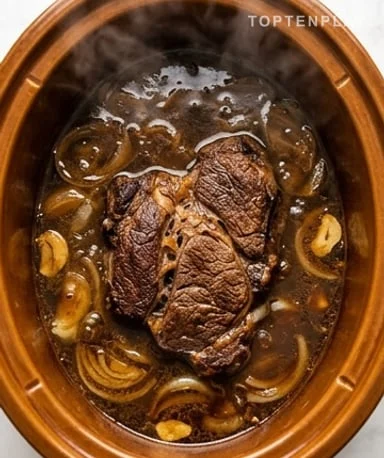
Start by placing the sliced onions at the bottom of the pot — they will cook directly under the meat and soak up its juices while protecting the bottom from any sticking. Place the roast on top, then add the minced garlic, broth, Worcestershire, soy sauce, and dried thyme. The liquid should not cover the meat entirely: halfway up is plenty, the trapped steam under the lid does the rest. Season lightly with salt at this stage — the sauces and broth already bring salt, and it’s easier to adjust at the end than at the beginning.
How to know it’s ready after eight hours
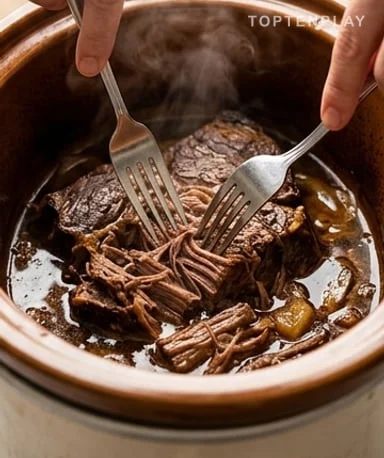
After 8 hours on low (or 4 hours on high), the chuck should fall apart with simple fork pressure. If you have to force it, cook for another 30 to 45 minutes — it’s not done yet. Properly cooked meat slides into long amber strands, almost shiny, that have absorbed the flavorful broth and onion aromas. Remove the roast from the pot and place it on a cutting board. Using two forks, shred it by pulling in the direction of the fibers — it goes fast, the meat offers little resistance. Return the strands to the cooking juice for at least 10 minutes before assembling the sandwiches: they will absorb a bit more liquid and stay juicy rather than drying out in the air.
Toast the bread, not just warm it
This is a short step but makes a real difference. Bread simply reheated in the oven becomes uniformly soft — pleasant, but without resistance. Bread toasted at 190°C for 5 to 7 minutes develops a crust that cracks under the teeth before letting the dipping juice in. If you add a slice of provolone directly on the half-baguette before putting it in the oven, the cheese melts covering the crumb with a creamy layer that adds a mild dairy note and slightly protects the bread. Watch it: at 7 minutes the cheese is melted and lightly golden on the edges, at 10 minutes it starts to burn.
The au jus: strain, taste, serve hot
Once the meat is removed, the remaining liquid in the pot is your dipping sauce. Quickly strain it through a fine sieve to remove onion and garlic pieces — you get a dark, translucent broth with a depth that no industrial product can replicate. Taste it and adjust salt if needed. Pour it into small individual bowls, ideally ramekins or small cups with handles that retain heat well. The principle of the French dip is to dip each bite into this juice just before eating: the hot bread absorbs it in seconds, and this transition between the initial crunch and the juice-soaked softness is exactly what you’re after.
Tips & Tricks
- Don’t lift the lid during cooking — each opening releases accumulated steam and adds 20 to 30 minutes to the total time. The slow cooker works thanks to a closed, humid environment; interrupting it, even briefly, breaks this cycle and slows down the temperature rise.
- Opt for low cooking (8h) over high (4h) if you can — at low temperature, the collagen in the chuck gradually converts to gelatin, giving the meat that characteristic silky tenderness. High cooking works, but the texture is slightly less perfect, sometimes a bit drier on the edges.
- Always return the shredded meat to the juice after shredding, even for just 10 minutes — shredded meat left out in the air dries out very quickly. The cooking juice acts as a protective bath that maintains moisture and continues to flavor the strands until serving.
- Make it the day before if you’re serving guests: after a night in the fridge, the flavors are even more blended and the meat even more tender. Gently reheat covered in a saucepan with a little added broth if the juice has thickened too much while cooling.
Can this sandwich be made the day before?
Yes, and it’s even recommended. The shredded meat kept overnight in its juice in the fridge absorbs even more flavor, and the result is often better the next day. Gently reheat covered in a saucepan over low heat, adding a little broth if the juice has thickened too much.
What cut of beef to use if I can’t find chuck?
Beef shank is an excellent alternative: even richer in collagen, it gives a more gelatinous juice and very tender meat. The shoulder clod also works well. Avoid lean cuts like tenderloin or sirloin — they dry out with long cooking and don’t have the desired tenderness.
How to know if the meat is really cooked?
Insert a fork into the center of the roast and press gently: it should go in without resistance and the meat should start to separate on its own. If you have to force it, cook for another 30 to 45 minutes. A properly cooked chuck falls apart into strands with simple finger pressure.
Can the shredded meat be frozen?
Absolutely, and the result after thawing is excellent. Freeze the meat with its cooking juice in a sealed bag or suitable container — the juice prevents the meat from drying during freezing. It keeps for up to 3 months in the freezer and ideally thaw overnight in the fridge before reheating.
The au jus is too salty, how to balance it?
This is a common problem linked to commercial broths. Dilute the cooking juice with a little hot water, spoon by spoon, tasting between each addition. If the excess salt is significant, a small raw potato added for 10 minutes in the hot juice can absorb some of the salt before being removed.
Which cheese to choose for the sandwich?
Provolone is the classic choice: it melts well, has a slightly smoky flavor and doesn’t overpower the meat. Comté or Emmental also work well in a milder register. Avoid hard or very aged cheeses like Parmesan, which don’t melt evenly and can dominate the flavors of the juice.
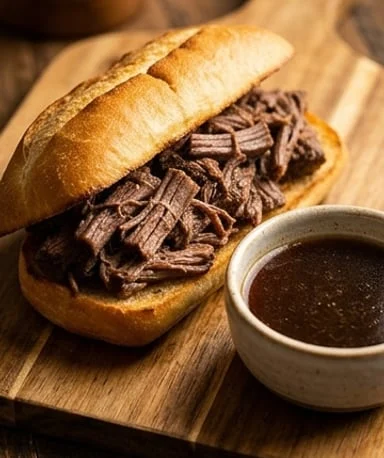
Slow Cooker French Dip Sandwich with Shredded Beef
American
Sandwich / Main course
A beef chuck cooked for 8 hours on low in a seasoned broth until fork-shredded, served on crusty toasted bread with its homemade dipping sauce. The kind of sandwich you prepare in the morning and serve in the evening without effort.
Ingredients
- 1.5 kg beef chuck
- 250 ml beef broth
- 1 large onion, finely sliced
- 4 garlic cloves, minced
- 2 tbsp Worcestershire sauce
- 1 tbsp soy sauce
- 1 tsp dried thyme
- salt and black pepper, to taste
- 1 tbsp neutral oil (for searing)
- 4 crusty rolls (baguette or French bread)
- 100 g provolone or Emmental cheese, sliced (optional)
Instructions
- 1Heat a pan over high heat with the oil until lightly smoking. Sear the chuck for 3-4 minutes on each side until a uniform golden crust forms. Deglaze the pan with a little broth and reserve the liquid.
- 2Place the sliced onions at the bottom of the slow cooker. Put the roast on top, then add the garlic, broth (including the deglazing juice), Worcestershire sauce, soy sauce, and thyme. Season lightly with salt and pepper.
- 3Cover and cook on low for 8 hours (or on high for 4 hours) without lifting the lid.
- 4Remove the roast from the pot and place it on a cutting board. Shred the meat using two forks by pulling in the direction of the fibers. Return the strands to the cooking juice and let rest for 10 minutes.
- 5Preheat the oven to 190°C. Cut the rolls in half and place the slices on a baking sheet. Place a slice of cheese on the bottom half if desired. Bake for 5-7 minutes until the cheese is melted and the bread is golden.
- 6Strain the cooking juice through a fine sieve to obtain the au jus. Taste and adjust seasoning if necessary.
- 7Generously fill each toasted roll with shredded beef. Serve immediately with a bowl of hot au jus for dipping.
Notes
• Searing the meat before the slow cooker is optional but recommended: it creates a caramelized crust that significantly enriches the depth of the final juice.
• The dish can be completely prepared the day before. Kept overnight in its juice in the fridge, the beef is even more flavorful the next day. Reheat gently with a little broth if the juice has thickened.
• The shredded meat with its juice freezes very well for up to 3 months. Thaw overnight in the fridge before reheating.
• If the au jus is too salty, gradually dilute with hot water, tasting between each addition.
Nutrition Facts (per serving, estimated)
| 580 kcalCalories | 38 gProtein | 55 gCarbs | 20 gFat |