Suivez-nous
3 June 2026

Shrimp Fried Rice in 30 Minutes

Prep Time
10 minutes
Cook Time
20 minutes
Total Time
30 minutes
Servings
4 servings

The sesame oil heating in the pan, the garlic sizzling — that’s enough to make the whole kitchen smell like an Asian restaurant. This shrimp fried rice is designed for evenings when you want something good without complicating your life. One pan, thirty minutes, and a dish that looks like a real takeout order — but with ingredients you control.
Publicité
Final result
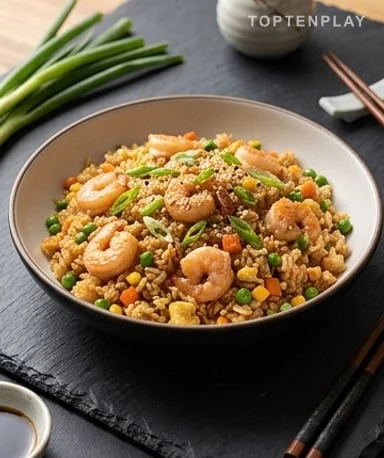
A shrimp fried rice like from a Chinese restaurant, but homemade in 30 minutes flat.

The shrimp turn pink and curl in barely five minutes over high heat, their edges slightly caramelized, firm under the fork. The day-old rice absorbs the soy sauce and takes on an amber hue, grain by grain, never clumping. Then the scrambled eggs wrap around the rice and create that slightly creamy, almost silky texture found in good restaurants. It’s that precise moment — when everything combines in the hot pan — that you understand why this dish is hard to stop making.
Why you’ll love this recipe

A complete dinner in one pan : Protein, starch, vegetables, and eggs — everything is there, in a single vessel. The dishes boil down to one pan and a cutting board.
Day-old rice finally useful : Cold rice that has spent a night in the fridge is dry on the surface. It browns properly over high heat, absorbs the sauce without turning into a compact mass. This dish is literally made for recycling leftovers.
Ready before the delivery arrives : Thirty minutes, everything included. High heat takes care of almost everything — shrimp in five minutes, vegetables in two. The rest is assembly.
Interchangeable vegetables depending on what you have : Frozen peas, diced carrots, canned corn — none require special preparation and all work. It’s also a good way to clear out the bottom of the freezer.

Ingredient Notes

Ingredients

The essentials: shrimp, day-old rice, colorful vegetables, and eggs — everything you need for a complete meal.

  • Medium shrimp : Two pounds of peeled and deveined shrimp. Size matters: too small, they disappear in the rice; too large, the outside burns before the inside is cooked. Frozen ones, well thawed and dried with paper towels before putting them in the pan, give exactly the same result as fresh.
  • Day-old long grain rice : The real pivot of this dish. A night in the fridge slightly dries the surface of the grains, allowing them to brown and stay separate during cooking. Freshly cooked rice, still loaded with moisture, will give a soft and sticky texture — the kind of result you want to avoid here.
  • Sesame oil : Used to sauté the garlic and vegetables. Its toasted nutty aroma is immediately recognizable and instantly positions the dish. You don’t replace it for this step — it’s what gives character.
  • Low-sodium soy sauce : The reduced-sodium version allows you to pour freely without saturating the dish with sodium. It provides the amber color and deep umami that transform basic rice into something memorable. Regular soy sauce will work, but reduce the amounts.
  • Eggs : Two or three eggs quickly beaten with a fork. They cook scrambled in a corner of the pan, then are incorporated and coat the grains with a fine creamy film. This gives the rice a slightly bound texture, never dry.
  • Vegetables (peas, carrots, corn) : A mix of frozen and canned vegetables for convenience. Peas bring a slight vegetal sweetness, diced carrots a firm texture that withstands high heat, corn a sweet note and bright color that contrasts with the amber rice.

Choosing your shrimp well before starting

If you buy fresh shrimp, they should smell like the ocean — clean, briny, with no strong fishy odor. The shells should be shiny and intact, the flesh firm and elastic under the finger. Avoid anything that seems slimy or soft. For a quick weekday recipe, frozen peeled shrimp are actually more convenient: they are already cleaned, thaw in 20 minutes in cold water, and their quality is consistent. The often overlooked step: dry them completely with paper towels before putting them in the hot pan. Surface moisture prevents caramelization — the shrimp steam instead of searing, and you lose that slight crispy edge that makes all the difference.

Choosing your shrimp well before starting
The key: work over high heat and stir constantly so every grain of rice is well seared.

Working over high heat without fear

Fried rice is cooked hard and fast. A lukewarm pan guarantees a soft, characterless result. The pan must be very hot before adding the canola oil — you hear the dry sizzle as soon as the shrimp hit the bottom. They cook for five minutes maximum, letting them rest a few seconds on each side so the edges brown slightly before turning. Remove them, set aside, and start again with sesame oil and garlic: thirty seconds, just enough time for the garlic to begin coloring and release its acrid, pungent aroma across the kitchen. That’s the sign it’s time to add the vegetables.

Respecting the order for everything to come together well

The logic of this dish relies on a precise sequence that allows each ingredient to cook properly without overwhelming another. Shrimp first — they need the hottest, cleanest pan. Then vegetables in the flavored oil, two minutes so they begin to soften slightly while retaining their crunch. Eggs next, pushed to a corner of the pan and scrambled quickly before the other ingredients invade them. Finally, the cold rice, which you lightly crush with the spatula to break up clumps, then the soy sauce and rice vinegar drizzled over everything. You immediately feel that hot steam laden with soy rise from the pan when the sauce hits the hot rice — that’s when you stir vigorously to coat everything.

Finishing with green onions for freshness

Green onions are always added last, off the heat or in the very last seconds of cooking. Their light, slightly pungent, almost herbaceous aroma dissipates very quickly in heat. Added too early, they soften and lose their interest. Raw and thinly sliced on top of the dish when serving, they bring that fresh, bright note that cuts through the richness of the soy sauce and egg. You can also add a few extra drops of sesame oil at this point — a drizzle, no more — to revive the aroma that high heat may have muted.

Finishing with green onions for freshness
Shrimp brown quickly over medium-high heat — 5 minutes is enough for a perfect result.

Tips & Tricks
  • If you don’t have day-old rice, spread freshly cooked rice on a baking sheet and refrigerate for 30 to 45 minutes. It doesn’t fully replace an entire night, but it reduces surface moisture enough for a decent result.
  • Don’t overcrowd the pan. If doubling the recipe, cook in two batches — the shrimp must sear in direct contact with the hot metal, not simmer in their own juice due to lack of space.
  • Rice vinegar (one tablespoon at the end of cooking) adds a slight acidity that balances the soy and wakes everything up. It’s subtle, but the dish feels brighter and less heavy with it than without.
Close-up
Separate, glossy grains of rice, coated in soy sauce and studded with crunchy vegetables.
FAQs

Can I use freshly cooked rice instead of day-old rice?

It’s possible in a pinch, but the result will be noticeably worse. Fresh rice is too moist on the surface: over high heat, it sticks to itself and forms clumps instead of browning. To work around that, spread the hot cooked rice on a baking sheet and leave it in the fridge for 45 minutes before using — that reduces moisture enough for an acceptable result.

How to store and reheat leftovers?

Fried rice keeps very well in the refrigerator in an airtight container for up to three days. To reheat, put it directly in a hot pan with a drizzle of sesame oil over medium-high heat, stirring frequently — two to three minutes is enough. The microwave also works, but the rice texture will be less interesting.

Can I replace the shrimp with another protein?

Yes, without issue. Diced chicken breast works very well, with a slightly longer cooking time (7 to 8 minutes). Pressed firm tofu cut into cubes is a good vegetarian option — sear it on all sides before adding the vegetables. In both cases, the logic remains the same: cook the protein first, set aside, and add it back at the end.

Can regular soy sauce replace the low-sodium version?

Yes, but with moderation. Regular soy sauce is significantly saltier — reduce the amount to two tablespoons instead of three, and taste before adding more. The advantage of the low-sodium version is that you can pour freely while controlling the total salt of the dish.

What other vegetables can I use?

Almost anything that cooks quickly over high heat works here. Diced bell peppers, canned bamboo shoots, green beans cut into pieces, sliced mushrooms — all are good. The idea is to keep pieces of similar size for even cooking, and avoid vegetables that release a lot of water during cooking, like zucchini, which risk making the rice mushy.

Why must the shrimp be thoroughly dried before cooking?

Surface moisture on the shrimp creates a steaming effect as soon as they hit the hot pan, which prevents caramelization. They cook steamed instead of seared, and you lose that slight golden, crispy edge that adds texture. Simply wiping them with paper towels before putting them in the pan makes all the difference.

Shrimp Fried Rice in 30 Minutes

Shrimp Fried Rice in 30 Minutes

Easy
Asian
Main course

Prep Time
10 minutes
Cook Time
20 minutes
Total Time
30 minutes
Servings
4 servings

A restaurant-style Asian shrimp fried rice, ready in thirty minutes in a single pan. The key: well-chilled day-old rice, bold high heat, and soy sauce that perfumes everything as soon as it hits the hot rice. A complete, colorful, and foolproof dish.

Ingredients

  • 900g medium shrimp, peeled and deveined
  • 800g cooked long grain rice from the day before (about 4 cups), cold
  • 3 eggs
  • 200g frozen mixed peas and diced carrots
  • 150g canned corn, drained
  • 4 green onions, sliced
  • 4 cloves garlic, finely minced
  • 2 tbsp canola oil
  • 1 tbsp sesame oil
  • 3 tbsp low-sodium soy sauce
  • 1 tbsp rice vinegar
  • salt and black pepper, to taste

Instructions

  1. 1Thoroughly dry the shrimp with paper towels. Heat the canola oil in a large wok or large skillet over medium-high heat until very hot. Add the shrimp in a single layer and cook for 4 to 5 minutes, turning halfway, until golden on the edges and fully pink. Remove with a slotted spoon and set aside in a bowl.
  2. 2Without cleaning the pan, add the sesame oil and the minced garlic. Stir constantly for 30 seconds, until the garlic begins to color and release its aroma.
  3. 3Add the green onions, frozen peas and carrots mix, and drained corn. Cook for 2 minutes, stirring regularly, until the vegetables begin to soften slightly while still holding their shape.
  4. 4Push all the vegetables to one side of the pan. Crack the eggs into the empty space and scramble with a spatula until just set, still slightly glossy.
  5. 5Add the cold rice, breaking up any clumps with the spatula. Drizzle the soy sauce and rice vinegar over the top. Stir vigorously over high heat for 2 minutes, so every grain is evenly coated.
  6. 6Return the shrimp to the pan, toss to heat through for 1 more minute. Taste and adjust salt and pepper if needed, then serve immediately.

Notes

• The rice must be cold and dry to brown well. Freshly cooked rice, still moist, will yield sticky and textureless results.

• To quickly thaw frozen shrimp, immerse them in a bowl of cold water for 20 minutes, then dry thoroughly before cooking — this step is essential for a golden edge.

• If doubling the recipe, cook the shrimp in two batches rather than one. Overcrowding the pan drops the temperature and causes the shrimp to steam instead of sear.

• A drizzle of sesame oil added off the heat just before serving revives the aroma muted by high heat.

Nutrition Facts (per serving, estimated)

480 kcalCalories 38gProtein 44gCarbs 13gFat
Publicité
Partager sur Facebook