The Art of Scrambled Eggs: Why This Recipe Changes Everything
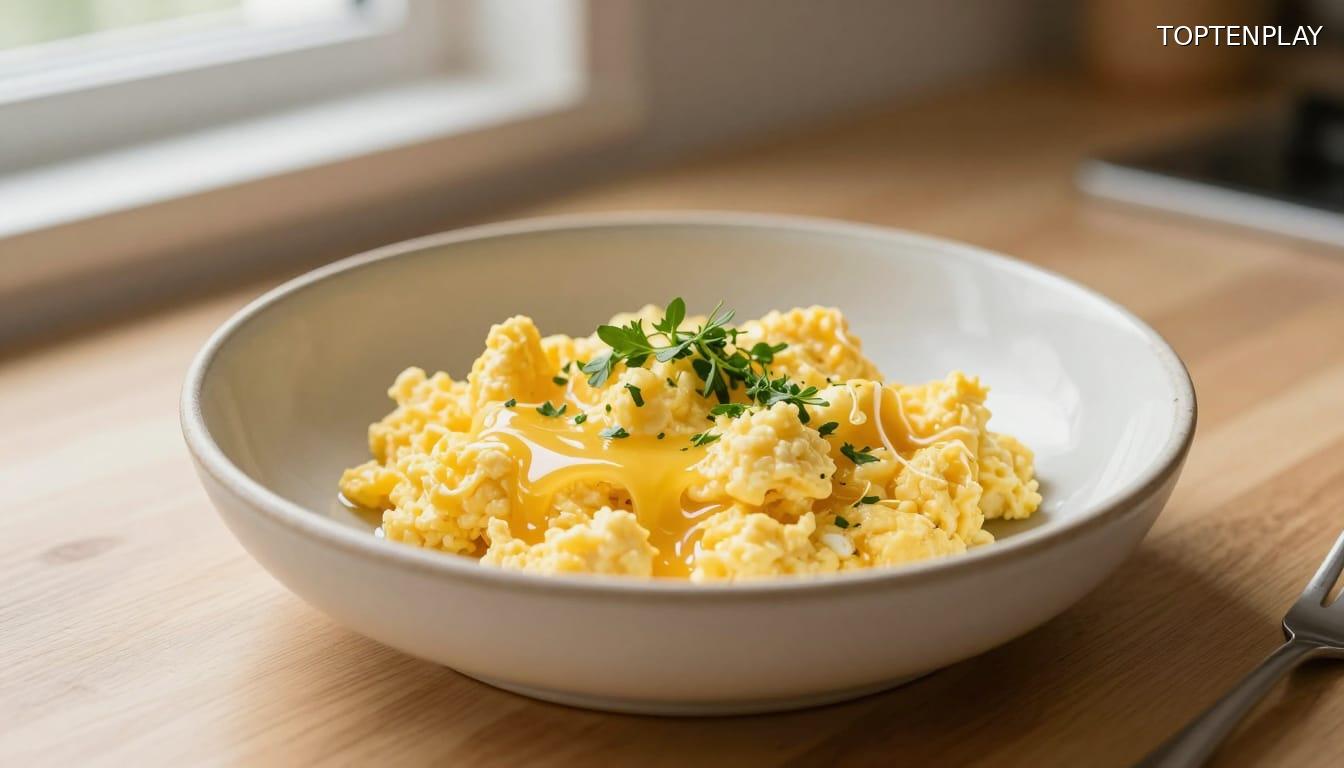
Behind the apparent simplicity of scrambled eggs lies true culinary expertise. This everyday dish, often botched for lack of method, can achieve a creamy and airy texture worthy of the finest tables — provided you know the right moves.
The difference between ordinary scrambled eggs and a restaurant-quality result depends neither on rare ingredients nor on years of professional training. It rests on a few fundamental principles, accessible to everyone, regardless of cooking level.
The first advantage of this method: its speed. In less than 10 minutes, it is possible to transform a mundane breakfast into a memorable taste experience. A decisive argument for busy mornings as well as for weekend brunches.
What also distinguishes this recipe is its universal character. It works just as well for an individual portion as for feeding several guests simultaneously, without ever sacrificing the quality of the result.
Finally, the customizable aspect of the recipe deserves to be highlighted: cheeses, fresh herbs, vegetables — the combinations are infinite. But before exploring these variations, everything starts with a rigorous selection of basic ingredients, on which the final texture of the dish directly depends.
Key Ingredients: What Really Makes the Difference
Before refining the technique, you must assemble the right ingredients. Because while the method matters, the quality of the selected products directly conditions the final result.
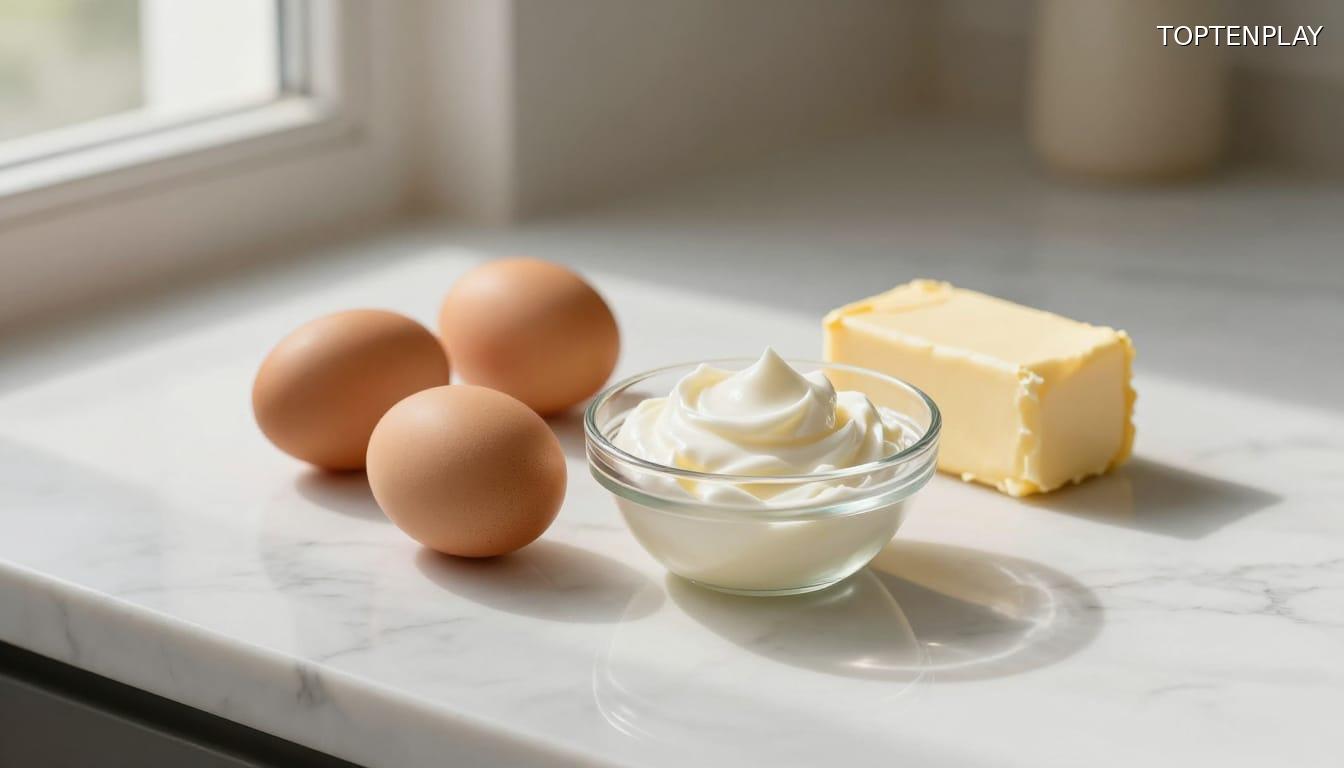
The base rests on 4 large eggs, combined with 2 to 3 tablespoons of liquid — whole milk or heavy cream. This choice is not trivial: whole milk produces lighter eggs, while heavy cream brings additional richness, a pronounced creaminess that brings the result closer to a gourmet preparation. The choice belongs to the cook according to the occasion and the desired effect.
Butter or olive oil constitute another determining lever. Beyond their non-stick role, they directly influence the final texture and contribute to the aromatic roundness of the dish. Butter brings a softer flavor and a classic creaminess; olive oil, a bolder and slightly fruity character.
Finally, salt and pepper are not simple finishes: their precise dosage, applied at the right time, enhances the whole without masking the natural flavor of the eggs.
These apparently ordinary fundamental ingredients actually form the backbone of the recipe. Their mastered balance opens the way to the next step: the technical gestures that transform this preparation into a perfect result.
The Infallible Method: The Moves That Make the Difference
With the ingredients gathered, it is now the mastery of the gesture that separates ordinary eggs from a result worthy of a gourmet brunch.
It all starts with temperature. A pan heated over medium-low heat is essential: too high a heat attacks the egg proteins and produces that rubbery texture that we specifically seek to avoid. The butter or oil must melt gently, without sizzling.
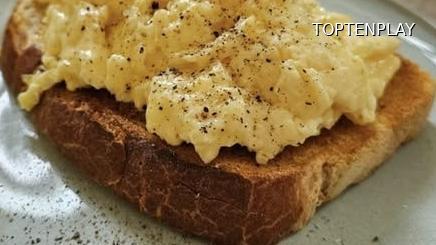
Beat your eggs with the chosen liquid until you obtain a homogeneous mixture, then pour them into the pan. The key then lies in patience and movement: stir slowly, continuously, describing large circles with a flexible spatula. This constant movement prevents the eggs from sticking and creates those delicate layers that characterize a creamy and airy texture.
Remove the pan from the heat before complete cooking. The eggs continue to cook off the heat source — this thermal inertia is precisely what guarantees a tender rather than dry result.
The entire process takes less than ten minutes, whether you are cooking for one person or for an entire table. This reproducibility is at the heart of the method: a simple, precise and accessible technique that gives consistent results with every execution.
It then remains to explore how the recipe can be transformed according to desires and occasions.
Customization and Variations: Enhancing the Recipe According to Your Desires
The technique mastered, scrambled eggs reveal their most precious asset: an almost infinite adaptability, which makes them much more than a simple basic recipe.
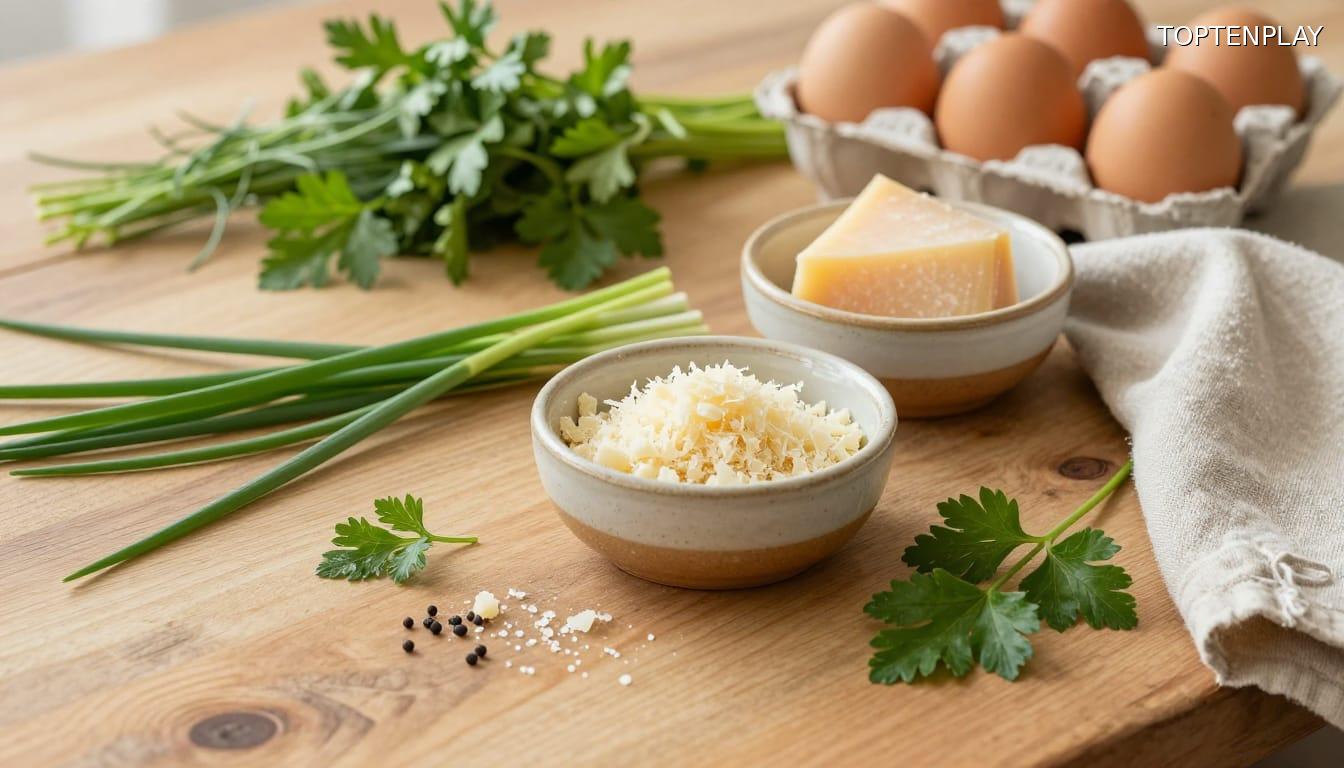
A few additions are enough to radically transform the experience. Grated cheese incorporated at the end of cooking — Gruyère, cheddar or parmesan — brings a melting richness that enhances the creamy texture already obtained. Fresh herbs such as chives, tarragon or flat-leaf parsley enhance the dish with a light aromatic touch, without weighing down the balance. For a more substantial version, sautéed vegetables — mushrooms, spinach, peppers — integrate naturally into the pan before pouring in the eggs.
The other strength of this recipe lies in its ability to adapt to all occasions. A busy morning? The ten minutes of preparation remain unchanged, whatever the chosen addition. An elaborate weekend brunch? The variations allow for composing a generous and personalized table, which gives the impression of a culinary effort far superior to the time actually invested.
It is precisely this modularity that makes scrambled eggs a timeless classic: a universal base that each cook can appropriate, refine and decline according to their taste, mood or guests — without ever betraying the essence of the method.