A Wednesday night. No energy for a long recipe, but craving something that looks the part. This Salmon with Pistachio Cream is exactly for those moments — thirty minutes, simple ingredients, and a plate that looks like it came out of a restaurant.
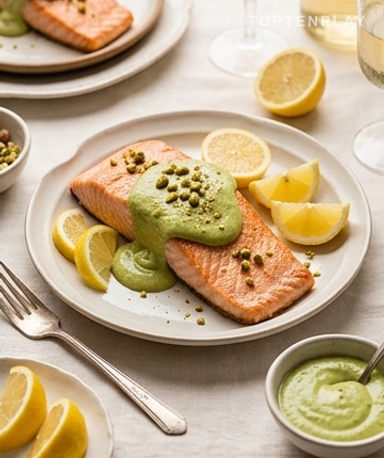
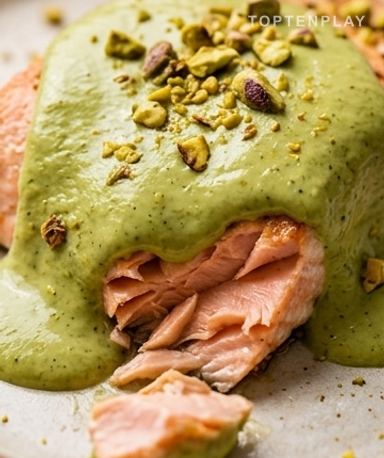
The salmon sits on the plate, still slightly pearlescent in the center, while the pistachio cream slowly drips down the sides — a vibrant green, almost jade, contrasting with the orange-pink of the fish. The aroma that rises is a blend of fresh lemon and lightly toasted pistachio, with a subtle sweetness in the background coming from the nutmeg. Under the fork, the fish yields without resistance. And that cream — thick, velvety, with a few crunchy pistachio shards on top — is what transforms everything.
Why you’ll love this recipe
Ingredient Notes
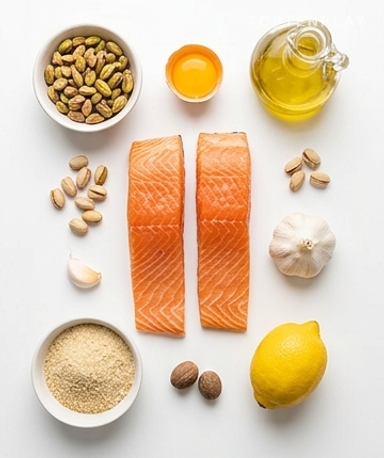
All ingredients gathered: fresh salmon, pistachios, lemon, and the small details that make the difference.
- The salmon : Choose thick fillets — at least 3 cm. A fillet that’s too thin cooks too fast and dries out before you realize it. Fresh or thawed from frozen, both work. Avoid the thin slices from the deli section.
- The pistachios : Shelled is a must, but ideally unsalted — otherwise the cream becomes too salty and you lose control over the seasoning. Baking aisle pistachios are often perfect.
- The egg yolk : This gives the cream its velvety consistency without being runny. It emulsifies everything, much like in a mayonnaise. Don’t skip it out of concern — blended cold, it’s perfectly safe.
- The breadcrumbs : The ingredient you don’t think of, but which changes everything. It absorbs the milk and gives the cream body. Without it, the sauce is too liquid and slides off the fish instead of coating it. One tablespoon, no more.
- The lemon : It does two things here: it marinates the salmon (firming the flesh slightly and flavoring it deeply) and it goes into the cream to cut through the richness of the pistachios. Use fresh — no bottled juice.
Why I always marinate salmon, even for 10 minutes
Many people skip this step because it seems minor. They are wrong. Season your fillets with lemon juice, salt, and a crack of pepper, and let them rest while you prepare the cream. During this time, the flesh changes slightly — it firms up on the surface, which allows it to stay moist in the center during cooking without falling apart in the pan. The scent of lemon penetrating the fish is already a preview of what’s to come. It’s not molecular gastronomy; it’s just common sense.
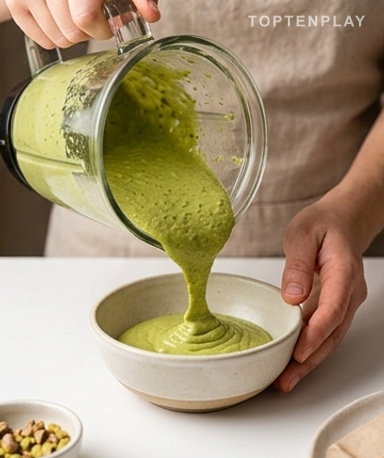
Pistachio cream: the part everyone gets wrong
The blender, the milk, the breadcrumbs, the garlic — blend once. Many stop there, thinking it’s done. But that’s just the base. Then add the pistachios, the lightly beaten egg yolk, the vinegar, and the pinch of sugar, then blend until the cream is truly smooth — this takes 30 to 45 seconds at full power. The color shifts from a pale, almost grey green to a bright, brilliant green like fresh pesto. Taste, adjust the salt. Nutmeg, just a pinch — it’s there to support, not to dominate.
Cooking: low heat, lid on, and don’t touch
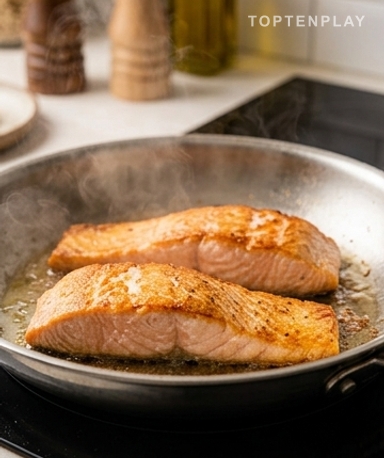
A drizzle of olive oil in a pan over medium-low heat. Lay the fillets down, cover. That’s it. The temptation to lift the lid every two minutes is real — resist it. The salmon cooks in the steam of its own juices, which keeps it tender. After 7-8 minutes, gently flip them with tongs. Flesh side down against the pan for another 5 to 7 minutes. When the flesh goes from translucent pink to an opaque, slightly pearly pink, it’s ready. No need to go further.
Plating: simple, but with intention
Place a generous spoonful of pistachio cream on each fillet. Not beside it — on top, so it melts slightly on contact with the hot fish. A few roughly crushed pistachios on top for crunch. A lemon wedge if you like adding acidity at the table. That’s it. No need to complicate what doesn’t need to be.
Tips & Tricks
- Don’t skip the pinch of sugar in the pistachio cream — it’s not there to sweeten, but to balance the slight bitterness of the pistachios. Without it, you might notice a bit of harshness on the finish.
- If your cream is too thick after blending, add an extra teaspoon of milk and blend for 10 seconds. If too liquid, add a bit more breadcrumbs and let it rest for 2 minutes — it will stabilize.
- The pistachio cream keeps for 2 days in the fridge in a closed jar. It’s even better the next day on toasted bread.
Can I prepare the pistachio cream in advance?
Yes, it’s actually recommended. The cream keeps for up to 2 days in the refrigerator in an airtight jar. Take it out 15 minutes before serving so it returns to room temperature and regains its flexible texture.
How do I know if the salmon is cooked perfectly?
The flesh should change from translucent pink to an opaque, slightly pearly pink in the center. If you press gently with a fork, it should flake away without resistance. Salmon that is too white and firm is overcooked.
The cream contains raw egg yolk — is it a problem?
No. The yolk is not heated, but it is mixed with vinegar and lemon juice which slightly acidify it. Consume the cream within 48 hours and avoid serving it to immunocompromised individuals or pregnant women.
Can I replace pistachios with another nut?
Blanched almonds or unsalted cashews work well — the texture will be similar, but the taste more neutral. Avoid walnuts, as their bitterness can overwhelm and crush the flavor of the salmon.
Can I cook the salmon in the oven instead of a pan?
Yes. Bake the fillets at 180 °C for 12 to 15 minutes depending on thickness, without covering. The texture will be slightly drier than the covered pan method, but it works very well if cooking for more than 4 people.
Can the dish be prepared ahead of time for a dinner party?
The pistachio cream can be prepared the day before with no problem. The salmon, however, is best freshly cooked — it keeps for 24 hours in the fridge but loses its tenderness when reheated. For a dinner party, make the cream ahead and cook the salmon at the last minute.
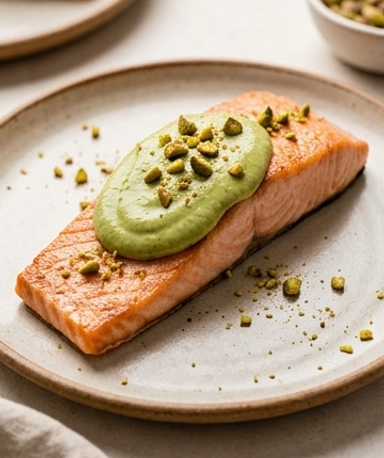
Salmon with Pistachio Cream
Mediterranean
Main Course
A tender, steam-cooked salmon fillet topped with a velvety green pistachio cream. Ready in 30 minutes with everyday ingredients.
Ingredients
- 4 salmon fillets (about 150g each, minimum 3 cm thickness)
- 200g unsalted shelled pistachios + a few for serving
- 1 egg yolk
- ½ garlic clove
- 1 lemon (juice)
- 50ml whole milk
- 1 tbsp breadcrumbs
- 1 tsp white wine vinegar
- 2 tbsp extra virgin olive oil (+ a drizzle for the pan)
- 1 pinch nutmeg
- 1 pinch sugar
- salt and freshly ground black pepper
Instructions
- 1Rinse the salmon fillets and pat dry with paper towels. Season with lemon juice, salt, and pepper; let rest for 10 minutes.
- 2Place the breadcrumbs, milk, and half garlic clove in the blender. Add a drizzle of olive oil and blend until smooth.
- 3Add the pistachios, the lightly beaten egg yolk, vinegar, and a pinch of sugar. Blend for 30 to 45 seconds on high power until you have a smooth, green cream. Season with salt and nutmeg.
- 4Heat a drizzle of olive oil in a pan over medium-low heat. Place the salmon fillets in, cover, and cook for 7 to 8 minutes without touching.
- 5Gently flip the fillets with tongs. Cover again and continue cooking for 5 to 7 minutes, until the flesh is opaque and pearlescent.
- 6Serve each fillet topped with a generous spoonful of pistachio cream. Sprinkle with roughly crushed pistachios.
Notes
• Storage: cooked salmon keeps for 24 hours in the refrigerator. Pistachio cream keeps for 48 hours in an airtight jar in the fridge.
• Variation: replace pistachios with blanched almonds or unsalted cashews for a milder and more budget-friendly version.
• Make ahead: prepare the pistachio cream the day before and refrigerate. Take it out 15 minutes before serving to restore its texture.
Nutrition Facts (per serving, estimated)
| 580 kcalCalories | 42gProtein | 11gCarbs | 41gFat |