The salmon bowl ticks all the boxes of the pretentious recipe: photogenic, English name, lacquered sauce. Except here, we’re at 27 minutes on the clock and the ingredients fit on a shopping list. That’s the real good news.
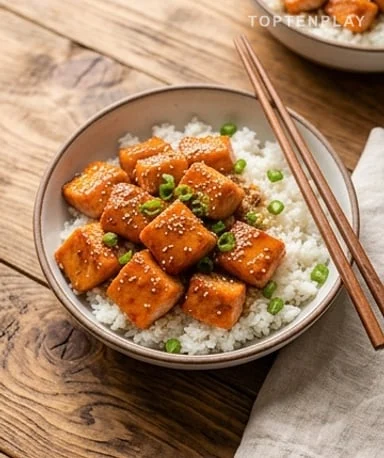
When the orange-honey sauce hits the hot pan, it begins to sizzle — that little sound that announces caramelization. The salmon pieces brown on the edges, the lacquer thickens and coats every side. On the rice, the warmth of the fish meets the coolness of the vegetables and the crunch of sesame seeds. The whole thing is coherent, balanced, and frankly satisfying for a weeknight dinner.
Why you’ll love this recipe
Ingredient Notes
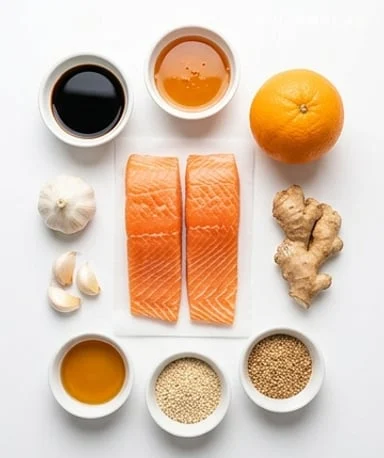
The essentials for the bowl: salmon, soy sauce, honey, fresh orange, fresh ginger, and sesame oil — pantry ingredients for a result far above.
- Skinless salmon : Cut into pieces about 2-3 cm, it cooks evenly in minutes. Whole fillets work too, but dicing speeds up cooking and maximizes the surface area in contact with the sauce.
- Fresh orange — zest matters as much as juice : The zest concentrates the essential oils that give that intense citrus aroma. Juice without zest is bland in comparison. Use a fresh orange, not bottled juice.
- Honey : It plays two roles: balances the saltiness of soy sauce and creates the lacquered texture that sticks to the salmon. Maple syrup also works if you prefer a more woody note.
- Fresh ginger : A touch of subtle heat that cuts through the sweetness of the honey. Grate it with a microplane directly over the bowl — one centimeter is enough, but don’t replace it with powdered ginger if you can avoid it.
- Toasted sesame oil : Added to the marinade, not during cooking. One teaspoon is enough to bring that characteristic toasted nutty undertone that finishes each bite.
Get everything ready before turning on the heat
This is the basic principle of this recipe. The salmon marinates for 10 minutes — that’s your window to cook the rice, cut toppings, and prepare the bowls. When the marinade is ready, everything else should already be there. The salmon cooks fast. The sauce reduces even faster. Assembling a bowl with fresh toppings over still-hot fish happens within a minute of cooking, not five minutes later.
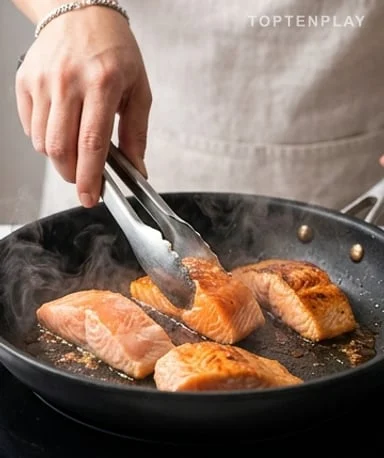
Pat the salmon dry — it’s the difference between golden and gray
Pat the pieces dry with paper towels before putting them in the marinade. Surface moisture prevents caramelization: instead of browning, the salmon will steam and take on a dull, almost grayish color. A few seconds of drying, and you get in exchange that thin, slightly caramelized crust that clings to the sauce and holds up to the bite.
Sear over high heat without disturbing
The pan must be hot before the salmon goes in. Lay the pieces without overlapping and don’t move them for three minutes — the temptation to stir is strong, but it’s precisely this still contact time that creates the color. You’ll know it’s the right moment when the edges of the salmon begin to whiten halfway up. The aroma also changes: sweeter, with that little hint of caramel rising.
Let the sauce reduce until it coats
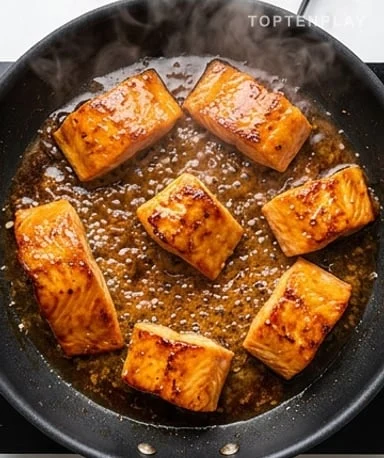
After removing the salmon, pour the reserved marinade into the still-hot pan. It will bubble immediately and reduce in two to three minutes. Stir gently — the sauce thickens and shines, with those thick little bubbles that indicate the right consistency. Return the salmon, toss gently to coat each piece, then remove from heat.
Tips & Tricks
- Start with the rice, not the marinade. Rice always takes a little longer than expected, and the salmon can’t wait once cooked.
- Don’t marinate for more than 15 minutes: the acidity of the orange starts to change the surface texture of the salmon after that time.
- Keep the fresh toppings out of the refrigerator 5 minutes before serving, so they don’t cool down the entire bowl upon first contact.
Can I use frozen salmon?
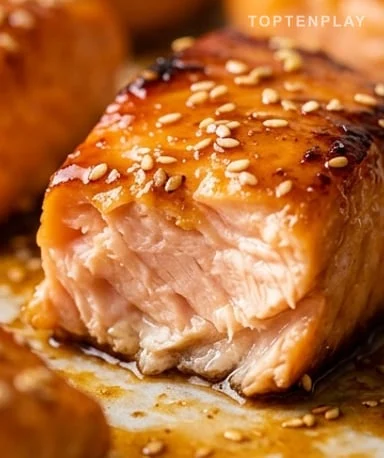
Yes, provided you thaw it completely in the refrigerator the day before and pat it dry well before marinating. Frozen salmon retains more water than fresh, and this excess moisture will prevent the sear from forming a proper golden crust. Allow a night of thawing for a clean result.
Which rice to choose as a base?
Classic white rice (Japanese or basmati) is a safe bet, but coconut rice brings a sweetness that pairs very well with the orange-honey sauce. Cauliflower rice also works if you want to lighten the carbs. The essential thing: the rice must be ready when the salmon comes out of the pan.
Can I prepare this bowl in advance?
The lacquered salmon keeps for 4 days in the refrigerator in an airtight container. Store the rice, sauce, and toppings separately to prevent everything from getting soggy. To reheat, a quick stint in a pan over low heat gives a better result than the microwave, which dries out the fish quickly.
Is the recipe gluten-free?
Not in its original version, because classic soy sauce contains wheat. For a gluten-free version, replace it with tamari — the quantity is identical and the taste is almost the same. Also check the sesame seeds if you have a severe sensitivity to traces.
Can I cook the salmon in the oven instead of a pan?
Absolutely. Arrange the marinated pieces on a baking sheet lined with parchment paper and cook at 200°C for 10 to 12 minutes. The texture will be slightly softer and less caramelized than in the pan. Reduce the reserved marinade separately in a small saucepan to use as a finishing sauce.
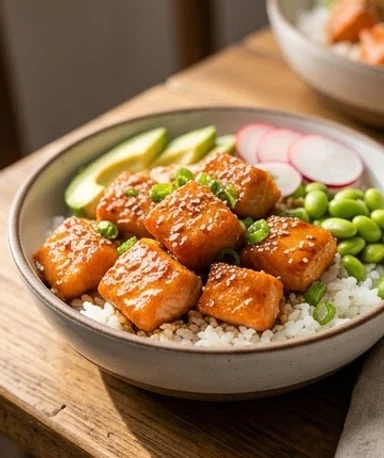
Salmon Bowl with Orange-Honey Sauce
Asian
Fish & Seafood
Seared salmon pieces lacquered in a homemade orange-honey sauce, served on a bed of rice and topped with fresh toppings. Ready in 27 minutes with pantry ingredients.
Ingredients
- 450g skinless salmon fillets, cut into 2-3 cm pieces
- ½ teaspoon salt, divided
- ¼ teaspoon black pepper
- 2 tablespoons soy sauce (or tamari for gluten-free)
- 3 tablespoons honey
- 1 orange — juice (about 120 ml) + zest (1 teaspoon)
- 1 teaspoon freshly grated ginger
- 1 teaspoon toasted sesame oil
- 2 teaspoons vegetable oil, divided
- 2 garlic cloves, minced
- 1 tablespoon sesame seeds (optional)
- 4 servings cooked rice (white, basmati, or coconut)
Instructions
- 1Pat the salmon pieces dry with paper towels, season with ¼ teaspoon salt and the pepper.
- 2In a bowl, mix the soy sauce, honey, orange zest and juice, ginger, and sesame oil. Add the salmon, gently toss, and let marinate for 10 minutes at room temperature.
- 3During the marinating, cook the rice and prepare the toppings (avocado, cucumber, red onion, edamame…).
- 4Remove the salmon from the marinade with a slotted spoon. Reserve the marinade in the bowl.
- 5Heat 1 teaspoon of vegetable oil in a large nonstick skillet over medium-high heat. Sauté the garlic for 30 seconds until fragrant.
- 6Add the salmon pieces in a single layer without overlapping. Sear for 3 to 4 minutes without moving until golden brown, flip gently and cook for another 2 minutes. Transfer to a plate.
- 7Pour the reserved marinade into the hot skillet. Bring to a simmer and let reduce for 2 to 3 minutes, stirring, until the sauce coats the back of a spoon.
- 8Return the salmon to the skillet and toss gently to coat each piece. Remove from heat.
- 9Divide the rice among bowls, top with the salmon, drizzle with the sauce, and add the toppings. Sprinkle with sesame seeds and serve immediately.
Notes
• Suggested toppings: sliced avocado, cucumber, edamame, thinly sliced red onion, fresh cilantro.
• Maple syrup replaces honey in equal quantity for a vegan version.
• Storage: lacquered salmon up to 4 days in the refrigerator. Reheat in a pan over low heat, not in the microwave.
• Oven version: 200°C for 10-12 minutes on parchment paper. Reduce the marinade separately in a small saucepan.
Nutrition Facts (per serving, estimated)
| 460 kcalCalories | 28gProtein | 58gCarbs | 11gFat |