📌 Roller skates: why the metal key was the most precious object of your childhood
Posted 16 February 2026 by: Admin
The Forgotten Key That Opened Freedom
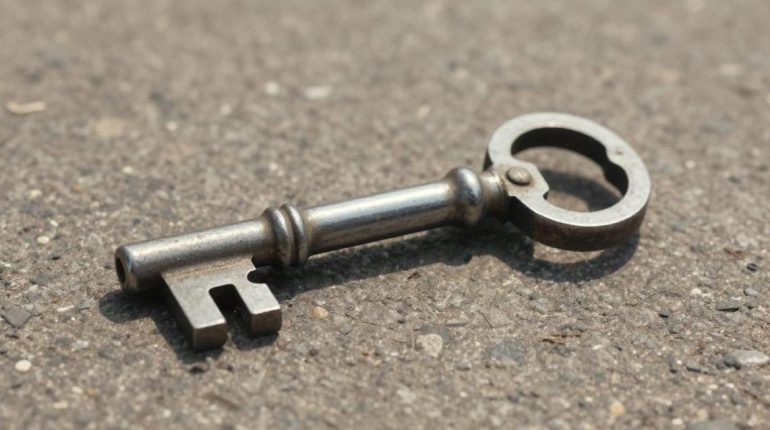
Place it in your palm today and observe: this metal object intrigues. It looks like a lost mini-adjustable wrench, the distant cousin of a bottle opener, or the tool of a vanished craftsman. Its function escapes the first glance.
Yet, if your childhood echoed with the clatter of wheels on the sidewalk, if you remember hopscotch squares drawn in chalk and the smell of hot asphalt on summer afternoons, you would recognize it instantly.
It is a roller skate key.
Not just any key. Your key. The one that hung around your neck on a worn cord. The one that transformed simple shoes into vehicles of freedom. The one you squeezed in your fist before every adventure, aware that it held the power to trigger a thousand escapades.
For an entire generation, this small metal rectangle embodied much more than a simple accessory: it symbolized conquered autonomy, the promise of movement, the sesame to a territory where adults could not follow. Losing this key was like losing your wings.
The Era When Wheels Were Earned
Before today’s integrated skates, sleek and light, reigned guardians of metal and leather. Heavy, solid, built to last. They didn’t replace your shoes: they were added to them, firmly attached by a system of straps and metal clamps that gripped the sole.
You slipped your shod foot into the frame, and then came the essential ritual: taking out the key, inserting it into the adjustment screws, turning until you felt the perfect resistance. Too loose? The skates would come off mid-run. Too tight? Impossible to move forward without pain.
Every pair necessarily came with this tool. No alternative, no automatic system, no quick click. The key was an integral part of the equipment, just like the wheels themselves. It traveled in your pocket, around your neck, attached to your wrist by a worn elastic band.
This total dependence on such a small object forged something precious: the awareness that freedom is earned, maintained, and deserved. Every child quickly learned that losing their key meant losing access to their rolling universe. A lesson in responsibility engraved in the cold metal of a toothed rectangle.
The Simple Magic Of An Essential Tool
This key orchestrated three daily gestures, three precise moments that punctuated a rolling childhood.
First, tightening before the glide. When the urge for speed rose, when the asphalt called and sharp turns loomed, the key tightened the clamps on the sole. One turn, two turns, until you felt the perfect grip. Safety depended on this controlled tension, on this solid connection between the foot and the metal frame.
Then came the evening loosening. When the streetlights came on one by one, the universal signal to return home, the key turned the other way. The straps loosened, releasing aching feet and sweat-soaked socks. This ritual marked the end of a day of adventures, the transition from the rolling world to the stationary world.
But the most discreet, most revealing function remained the continuous adjustment. Season after season, the key accompanied growth. Feet grew, shoes changed, but the skates remained. A few turns of the screw were enough to adapt the frame, extending the life of the equipment far beyond fleeting fashions.
Three simple gestures. Complete autonomy. The child waited for no one to go skating, nor to return. The key gave them that rare independence, almost forgotten today, where freedom was accompanied by personal know-how.
The Implacable Equation Of A Thousand Adventures
This independence rested on an absolute rule, engraved in the collective memory of an entire generation: no key, no skates.
The equation was implacable. Without this small piece of metal, the frame remained useless, the wheels condemned to immobility. No negotiation possible, no makeshift fix. The key commanded the adventure, or forbade it.
This constraint forged early responsibility. The child quickly learned never to lose it, to find it a safe place—hanging from a string around the neck, slipped into the deepest pocket, hidden under the pillow. Losing your key meant losing your freedom of movement, your passport to the sidewalk and the frantic races of Saturday afternoon.
But beyond the simple mechanical function, this key embodied something deeper: autonomy earned through competence. Knowing how to use it meant earning your wheels. Every child became the mechanic of their own mobility, responsible for their equipment, aware that adventure required preparation and vigilance.
A tiny metal tool thus contained a thousand departures into the unknown, a thousand returns at twilight, a thousand patient adjustments. It separated those who held the keys to their freedom from those who waited for it to be given to them. A lesson in autonomy that no modern application will ever replace.