📌 Reuben Sandwich: how to achieve the perfect crunch in 20 minutes with this medium-low heat cooking technique
Posted 18 March 2026 by: Admin
Secrets Of An Iconic Delicatessen Sandwich
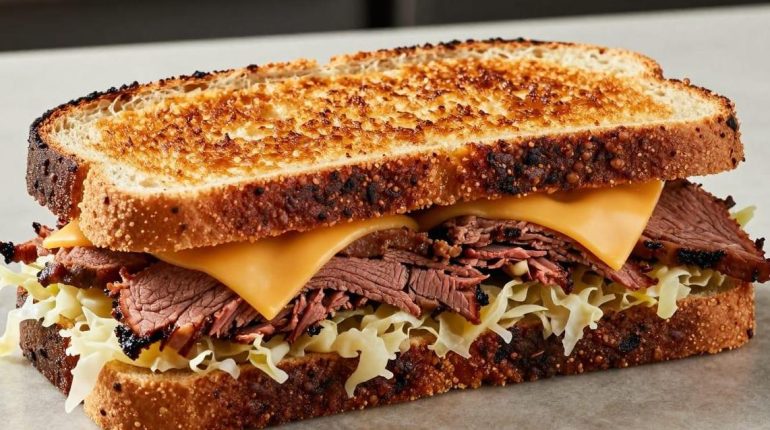
The Reuben transcends the simple grilled sandwich. This New York creation combines crispy rye bread, melting Swiss cheese, tangy sauerkraut, and savory corned beef in a harmony that has captivated delicatessen lovers for decades. Each element plays a precise role: the rye provides its rustic structure, the cheese binds the components, the sauerkraut contrasts with its acidity, while the corned beef deploys its meaty richness.
The revelation lies as much in the technique as in the ingredients. Twenty minutes are enough to reproduce this classic, provided you master the little-known professional trick: spreading mayonnaise on the outside of the bread guarantees uniform browning and an exceptionally fine crust. This substitution for butter transforms the external texture into a golden shell that cracks under the tooth.
The taste experience relies on this meticulous layering. The Thousand Island sauce permeates the bread with a creamy smoothness, the cheese melts in silky layers, the sauerkraut brings its vinegary bite, and the corned beef delivers its deep saltiness. This construction generates a balance where richness, acidity, and texture intertwine with every bite.
Traditional sides extend the experience: crunchy chips, fermented pickles, and creamy coleslaw make up the classic delicatessen counter trio. Serving an extra side of sauce for dipping the sandwich further intensifies the gourmet dimension of this American culinary monument.
The Ingredients That Make The Difference
The quality of a Reuben depends on the meticulous selection of its components. Corned beef is the pillar: deli counter slices offer a regular cut, but asking for a thickness greater than normal guarantees a more generous texture. Homemade corned beef leftovers work admirably, as does pastrami which brings a smoky dimension to the traditional recipe.
Sauerkraut represents the major technical trap. An error in draining transforms the sandwich into a soggy disaster. Vigorously pressing the sauerkraut between several sheets of paper towel eliminates the excessive moisture that softens the bread. This non-negotiable step preserves the structural integrity of the sandwich during cooking.
Swiss cheese deserves two slices per unit to maximize the characteristic melt. Baby Swiss offers a milder alternative for palates sensitive to the intensity of classic cheese. Some cooks even add shredded cheese between the slices, creating a uniform blanket that coats every bite.
The Thousand Island sauce remains the orthodoxy, but Russian sauce can be substituted without denaturing the balance. An express version can be whipped up by mixing mayonnaise, ketchup, and finely chopped pickles. For spice lovers, a touch of horseradish and a pinch of paprika enhance the preparation without masking the fundamental flavors.
The Foolproof Method For Perfect Cooking
The cooking technique determines the success of the Reuben. Generously buttering the outside of each slice of bread is the first step, while the Thousand Island sauce is spread on the inside. The assembly follows a precise logic: Swiss cheese against the bottom bread, drained sauerkraut, corned beef in regular layers, then the second level of cheese before closing with the top slice.
The cooking temperature separates amateurs from experts. A medium-low heat allows the bread to crisp gradually while the cheese melts and the heart of the sandwich heats uniformly. This thermal patience avoids the disaster of charred bread enveloping a still-cold center. For particularly packed sandwiches, preheating the corned beef in a separate pan eliminates this risk of thermal imbalance.
The pan lid transforms the cheese melt. Thirty to sixty seconds under a dome accelerates the process without compromising the browning. This professional tip guarantees runny cheese at the exact moment the bread reaches its optimal crispness. Carefully monitoring the browning during this covered phase prevents any burning.
Some chefs replace the outer butter with mayonnaise, producing an even more golden crust thanks to the egg yolk proteins that caramelize differently. This technical variation is worth experimenting with for those seeking an incomparable surface texture.
Storage And Creative Variations
The Reuben reveals its full flavor potential immediately after cooking, when the contrast between crispy crust and melting heart reaches its peak. This window of textural excellence justifies immediate tasting. However, cooked corned beef keeps for four days in the refrigerator in an airtight container, allowing for advance preparation of the sandwiches. An assembled then grilled Reuben tolerates a maximum of twenty-four hours of storage, although the bread inevitably loses its crispness.
Reheating requires a precise technique: low heat in a pan, flipping only once to revive the crust without drying out the interior. Freezing irremediably compromises the texture and is not recommended for this sandwich with delicate components.
Personalized variations enrich the experience without betraying the identity of the classic. Caraway seeds sprinkled on soft rye bread intensify the Germanic aromatic profile. A layer of shredded Swiss cheese ensures a uniform melting coverage between each bite. For bold palates, a touch of horseradish mixed into the sauce and a pinch of paprika transform the Reuben into a spicy version.
The traditional accompaniment of New York delicatessens completes the plate: wavy chips, crunchy dill pickles, and creamy coleslaw. Serving extra Thousand Island sauce in a ramekin for dipping each bite amplifies the taste intensity and honors the generous spirit of this American gastronomic institution.