📌 Reishi: the 2000-year-old mushroom that supports immunity, reduces stress, and can be grown at home
Posted 22 December 2025 by: Admin
The Gold Of The Forest: A Millennial Discovery Within Reach
Imagine coming across this mushroom with amber and purple reflections during a walk in the forest. You would probably go on your way, unaware that you have just encountered one of history’s most coveted natural treasures. Reishi, or Ganoderma lucidum, hides over 2000 years of veneration beneath its lustrous appearance.
The emperors of ancient China reserved it exclusively for their use. Nicknamed the “Mushroom of Immortality” or “Lingzhi” (the herb of spiritual power), this rare plant adorned only imperial tables and the courts of Japanese and Korean dynasties. Its sacred status testified to a value far exceeding gold or precious stones.
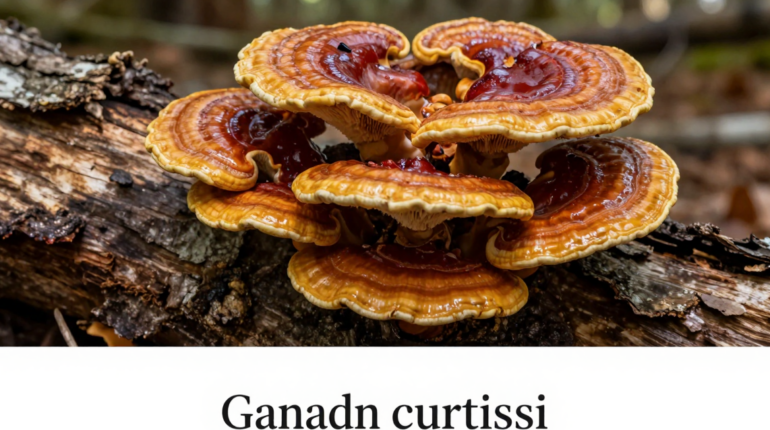
Its golden variety, Ganoderma curtisii, displays particularly striking yellow-gold tones. Contrary to its exotic reputation, this species grows naturally in the southeastern United States on decaying oak, cherry, and maple trunks. Its fan-shaped cap, varnished like a lacquered painting, captures the filtered light of the undergrowth with a haunting elegance.
This historical exclusivity was based on a correct intuition: traditional cultures already identified its exceptional properties long before modern science confirmed its unique molecular composition. Today, this once inaccessible mushroom may be growing just a few miles from your home, simply waiting to be recognized.
The Scientific Secrets Of A Living Myth
This millennial veneration is not a matter of romantic folklore. Modern laboratories have identified an exceptional concentration of polysaccharides, triterpenes, and beta-glucans in Reishi—bioactive compounds now scrutinized by international research.
The mushroom’s polysaccharides act as a balanced immune shield. Unlike aggressive stimulants, they support the body without overtaxing it, creating a measured response to external aggressions. This “gentle” approach explains why traditional practitioners associated it with longevity rather than sudden healing.
Ganoderic acids—a family of triterpenes unique to Reishi—draw particular cardiovascular attention. Studies explore their potential influence on blood circulation and cholesterol balance, paths consistent with its ancestral use to “nourish the heart.”
Its status as a natural adaptogen is perhaps its most fascinating signature. Reishi helps the body modulate its response to physical and emotional stress, gradually restoring internal balance. Many describe a calmed nervous system, regenerating sleep, and increased mental clarity after regular consumption.
Science is only beginning to decipher what emperors intuitively sensed. Each analysis reveals new molecular interactions, confirming that this golden mushroom fully deserves its centuries-old reputation.
An Accessible Treasure: Recognition And Use Of Golden Reishi
This exceptional molecular richness manifests in a particularly sought-after variety: Ganoderma curtisii, the golden Reishi. Recognizable by its brilliant yellow-gold hues, this specimen native to the southeastern United States naturally colonizes decaying hardwoods—oaks, cherries, maples.
Unlike fleshy culinary mushrooms, Reishi has a tough woody texture and a frankly bitter taste. These characteristics impose specific preparation methods: long-simmered decoctions to extract water-soluble compounds, concentrated alcoholic tinctures, or encapsulated powders from standardized extracts. A quick infusion is never enough—the release of active principles requires patience and technique.
The quality of the source determines the product’s effectiveness. Prioritize suppliers certifying the absence of heavy metals and guaranteeing cultivation on controlled organic substrates. Wild Reishi harvested from unknown wood can concentrate environmental contaminants.
For autonomy enthusiasts, home cultivation is becoming accessible. Indoor kits on colonized sawdust produce fruit bodies in 14 to 21 days in a controlled humid environment. Outdoors, hardwood logs placed in shaded areas fruit for several years. Absolute rule: never use living trees—Reishi thrives exclusively on decaying woody matter, thus participating in the natural cycle of forest regeneration.
This respectful approach transforms harvesting into a conscious ecological gesture, extending ancestral wisdom to our contemporary practices.
Precautions And Wisdom Of Use
This increasing accessibility does not dispense with rigorous vigilance. Reishi, despite its millennial reputation, interacts with several sensitive physiological mechanisms. Its triterpenes modify blood coagulation—a beneficial property in cardiovascular prevention, but dangerous in combination with anticoagulants (warfarin, therapeutic dose aspirin). The risk of hemorrhage increases significantly.
People under hypotensive or anti-diabetic treatment should also consult before any use. Reishi potentiates these medications, risking sudden hypotension or hypoglycemia. Studies document variations of 8 to 12% in glycemic and blood pressure parameters after four weeks of regular supplementation.
Pregnancy and breastfeeding are formal contraindications—lack of sufficient clinical data on placental passage and concentration in breast milk. The precautionary principle absolutely prevails.
The optimal approach favors gradual introduction: start with a quarter of the recommended dose for seven days, observe any reaction (mild digestive upsets, sleep changes), then gradually increase if tolerance proves excellent.
Beyond these individual considerations, Reishi embodies an often-overlooked ecological wisdom. By decomposing dead wood, its mycelium networks nourish the forest soil, fix carbon, and support microbial biodiversity. Choosing Reishi grown on certified organic substrates perpetuates this virtuous cycle—each cup of decoction becomes an act of respect toward the natural balances that have preserved this mushroom for millennia.