Follow us
8 June 2026

Raisin Swirls

Prep Time
60 minutes
Cook Time
38 minutes
Total Time
3 hours 38 minutes
Servings
10 raisin swirls

Raisin swirls – you’d think they’re reserved for professionals with a fully equipped lab and twenty years of bakery experience. That’s not true – but they do demand respect: respect for time, butter, and dough. Master these three points, and you’ll pull something out of the oven that has nothing to do with industrial viennoiserie.
Advertisement
Final result
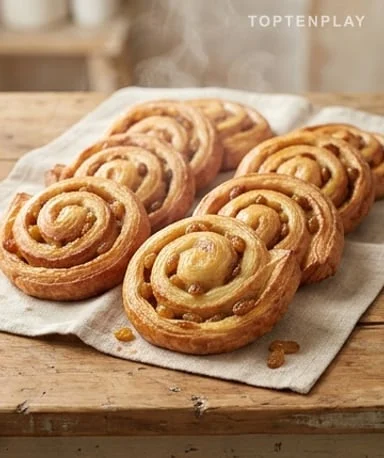
Ten golden spirals, generous puff pastry and perfectly plumped raisins – the hallmark of a true baker’s viennoiserie.

What awaits you on the plate is a flaky spiral that cracks slightly under the tooth before yielding to a buttery softness. The pastry cream forms a thin layer between the sheets, creamy without weighing down. The raisins have plumped up in the heat, juicy, almost candied. And the smell in the kitchen – that mix of melted butter and caramelized sugar on the edges – that’s what brings people back to the kitchen.

Why you’ll love this recipe

An honest puff pastry, no mystery : No need for fifty folds: the classic three double turns give well-defined layers, crispy on the surface, melting inside. It’s visible, palpable, not a matter of magic.
Homemade cream that changes everything : A homemade pastry cream takes twenty minutes and costs next to nothing. It brings a vanilla sweetness that the industrial versions loaded with margarine can never replicate.
Mostly waiting time, little active work : The total time may seem long, but most of it is the fridge working, not you. Hands-on time is at most two to three hours – the rest is patience.
A technique that sticks fast : The first batch is always a bit approximate. The second is significantly better. After that, it’s ingrained – the folding becomes gestural, intuitive.

Ingredient Notes

Ingredients

The base of puff pastry: flour, well-chilled butter, milk, fresh yeast, eggs, sugar – and the raisins that give it all the character.

  • T45 flour : T45 gives a fine crumb and an airy puff pastry – it’s the baker’s choice for viennoiserie. T55 works if that’s what you have on hand; the difference is subtle. However, avoid any whole-grain or semi-whole-grain flour: too heavy, they prevent the dough from developing properly.
  • Puff pastry butter (or AOP butter) : Puff pastry butter is dry, with about 84% fat – it contains less water than regular butter, so it breaks the layers less during lamination. Failing that, take the best AOP butter you can find, taken out of the fridge an hour before so it’s supple but not soft: it must flatten under the rolling pin without cracking or melting.
  • Fresh baker’s yeast : It gives a more even rise and a slightly more complex aroma than dry yeast. If you can’t find any, use a third of the weight in active dry yeast – but rehydrate it first in a little warm milk (not hot, not cold) to ensure it’s still alive.
  • Raisins : Currants are small, intense, slightly tart – they blend in without forming large chunks that would tear the pastry under the rolling pin. Golden raisins are plumper and sweeter, depending on your preference. In any case, soak them for twenty minutes in warm water then dry them thoroughly: a rock-hard raisin in the spiral is a failed texture.
  • Whole milk : The fat in whole milk enriches the dough and contributes to the final softness. Semi-skimmed works but gives a slightly less tender result. Imperative temperature: warm, around 30°C – too cold and the yeast won’t activate, too hot and you kill it on the spot.
  • Vanilla pastry cream : It serves as a binder between the puff pastry and the raisins while adding a creamy sweetness. The classic mistake: a cream too runny that escapes during rolling. It must be thick enough to stay on the dough – if it slides, it was too warm or undercooked. Make it the day before: cold and firm, it spreads perfectly.

Work the dough without overworking it

The détrempe is the base dough before incorporating the butter. Mix flour, warm milk, eggs, sugar, salt, and yeast until you get a smooth, slightly elastic ball. The pitfall here is over-kneading: an overworked dough develops a too-tight gluten network, making it difficult to roll out during lamination – it springs back, resists, throws a tantrum. Stop as soon as the dough pulls away from the sides and remains homogeneous. It should not stick to your fingers but stay supple, almost velvety under the palm. Wrap it and place it in the fridge for at least one hour – this rest is essential for the gluten to relax. The next morning, it will already smell slightly fermented, slightly lactic: a good sign, the yeast has been working quietly overnight.

Work the dough without overworking it
The key step: spreading the pastry cream over the puff pastry before sprinkling the raisins and rolling tightly.

Incorporate the butter without breaking or melting it

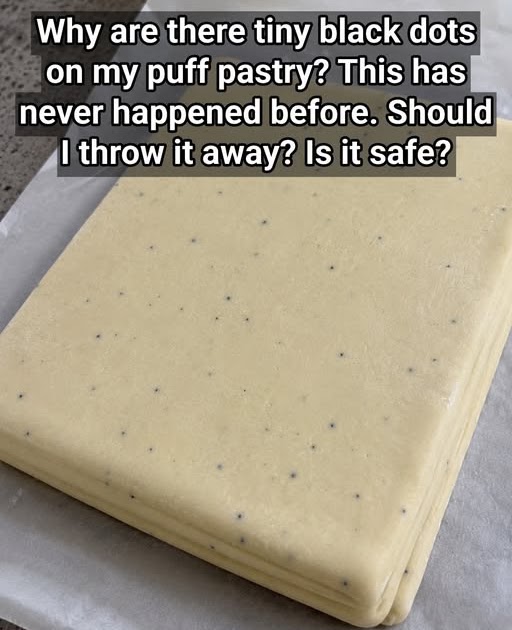
This step deserves your full attention. If the butter is too cold, it breaks into pieces and tears the dough; too warm, it melts into it and the puff pastry disappears. The butter must have the same consistency as the dough – supple, malleable, without being greasy to the touch. To test: press it between your fingers; it should flatten without cracking. Roll it into a rectangle on parchment paper, then wrap the dough around it like an envelope, sealing the edges well. Then come the turns: roll into a rectangle, fold in three, give a quarter turn, repeat. Between each set of two turns, at least twenty minutes in the fridge. Cold is your ally – it firms up the butter and prevents the layers from fusing under the heat of your hands. After lamination, the surface of the dough is smooth, slightly speckled white in transparency: that’s the butter structured in layers, exactly what we’re after.

Prepare a pastry cream that holds up to rolling

The pastry cream is ideally made the day before or early in the morning, so it’s completely cold when you spread it. Heat the milk with the split and scraped vanilla bean, whisk the yolks with the sugar until pale, incorporate the cornstarch, then pour in the hot milk in a stream while whisking constantly. Return to the heat, and then: don’t move, stir constantly until the first boil, then another two full minutes. The cream must thicken noticeably, cling to the spatula, and pull away from the bottom of the pot – if it’s still runny, put it back over low heat. Cover it with plastic wrap directly on the surface to prevent a skin, and let it cool completely. Cold, it will have the consistency of a firm cream that can be spread in one go without sliding – that’s exactly the state we want to work with.

Shape the spiral evenly

Roll the puff pastry into a rectangle about 5 mm thick – too thin, the layers stick under the rolling pin; too thick, the spirals won’t cook evenly in the center. Spread the cold pastry cream in an even layer, leaving one centimeter free on one of the long edges – that will be the sealing edge. Scatter the drained raisins over the entire surface without overloading: too many raisins, and the spiral won’t hold together when cutting. Roll tightly, starting from the edge opposite the seal, without trapping air in the spiral. Seal the joint by pressing lightly. Cut into 3 cm segments with a sharp knife in a single clean stroke – no sawing motion that would crush the layers and deform the spirals. Place them on a baking sheet with space, cover with a cloth, and let rise at room temperature until they have puffed up nicely: one to two hours depending on the warmth of the room.

Bake at the right heat for a clean puff pastry

The oven must be really hot – 180°C fan-forced, preheated for twenty minutes. An oven that isn’t hot enough bakes too slowly: the butter melts before the steam has time to lift the layers, and the puff pastry collapses. Gently brush each raisin swirl with a mixture of beaten egg and milk, carefully avoiding the sides – the egg wash on the cut edges would glue the layers together and block the puff. During baking, you’ll hear a slight buttery crackling from the oven: that’s the butter creating steam between the layers. After 35 to 38 minutes, the spirals are nicely golden, slightly caramelized on the edges, and the smell of hot butter and sugar fills the entire kitchen. Take them out directly onto a wire rack – left on the tray, they will soften from condensation underneath and the crispness disappears.

Bake at the right heat for a clean puff pastry
Twenty minutes in the oven and the kitchen already smells of hot butter – the spirals puff, brown, caramelize at the edges.

Tips & Tricks
  • Don’t skip the fridge rest between lamination turns: it’s tempting to save time, but without this rest, the butter warms up, fuses with the dough, and the distinct layers disappear. Puff pastry is built in the cold, not by force.
  • Soak the raisins in warm water before adding them – a dry raisin absorbs moisture from the pastry cream during baking and results in a dry, gritty texture. Pre-soaked, they stay juicy and don’t steal moisture from the cream.
  • Use a smooth, sharp knife to cut the log into spirals – a serrated knife pulls and crushes the raw puff pastry. One clean stroke from top to bottom is enough, without pressing.
  • Let the raisin swirls cool for at least ten minutes before tasting – the hot puff pastry is still fragile and the cream too runny on the surface. As they cool, the layers regain their crispness and the cream firms up just right.
Close-up
Layer after layer of buttery dough, a juicy raisin at the heart: that’s well-made puff pastry.
FAQs

Can the dough be prepared the day before?

Not only is it possible, it’s even recommended. A détrempe that rests overnight in the fridge develops more complex aromas through slow fermentation, and the gluten relaxes better – the dough is easier to roll out the next day. Also prepare the pastry cream the day before: cold and firm, it spreads without sliding.

Can raisin swirls be frozen?

Yes, in two ways. Before baking: freeze the cut spirals on a tray, then transfer to an airtight bag. Take them out the night before to thaw slowly in the fridge, then let them rise at room temperature before baking. After baking: freeze them completely cooled, and reheat for 8 minutes at 160°C – the puff pastry regains its crispness.

Why didn’t my puff pastry rise and remain dense?

Two main causes. Either the butter was too warm during lamination and fused with the dough instead of staying in separate layers – the rule: butter and dough at the same temperature, cool but supple. Or the fridge resting times were shortened, leading to the same problem. A failed puff pastry can’t be fixed midway, but the lesson sticks quickly.

Why do my spirals unroll during baking?

The sealing edge wasn’t pressed firmly enough, or the pastry cream was still warm when rolling – a warm cream acts like a lubricant and prevents the dough from adhering. Make sure to press the sealing edge well, and place the spirals with the seam against the baking sheet so gravity works in your favor during baking.

Can fresh yeast be replaced with dry yeast?

Yes, use about one third of the weight in active dry yeast. The key difference: first rehydrate it for five minutes in a tablespoon of warm milk (max 30°C) before incorporating it into the dough. Instant dry yeast can be added directly to the flour, but fresh generally gives a slightly more aromatic result.

Can the filling be varied?

Absolutely. Candied orange peel cut into small dice pairs very well with raisins and adds a tangy note. You can also add a handful of praline powder on the pastry cream before rolling, which gives a pronounced caramelized flavor. However, avoid fresh fruits – too much moisture, the dough will soften during rising.

Raisin Swirls

Raisin Swirls

Hard
French
Viennoiserie

Prep Time
60 minutes
Cook Time
38 minutes
Total Time
3 hours 38 minutes
Servings
10 raisin swirls

Flaky spirals filled with vanilla pastry cream and plumped raisins, artisan bakery style. An airy puff pastry achieved with the butter lamination technique – work, but a result that holds its own against any bakery display.

Ingredients

  • 500g T45 flour
  • 10g fine salt
  • 60g sugar
  • 20g fresh baker’s yeast
  • 150ml whole milk, warm (for the dough)
  • 2 whole eggs
  • 50g softened butter (for the dough)
  • 250g cold puff pastry butter (or AOP butter)
  • 150g raisins (currants or golden)
  • 500ml whole milk (for the pastry cream)
  • 4 egg yolks
  • 100g sugar (for the pastry cream)
  • 50g cornstarch
  • 1 vanilla bean
  • 30g butter (for the pastry cream)
  • 1 beaten egg + 2 tbsp milk (egg wash)

Instructions

  1. 1Prepare the pastry cream: split and scrape the vanilla bean into the milk, bring to a simmer. Whisk the yolks with the sugar until pale, add the cornstarch. Pour in the hot milk in a stream while whisking, return to medium heat and stir until thickened (2 min after boiling). Add the butter, cover with plastic wrap directly on the cream, refrigerate.
  2. 2Prepare the dough: dissolve the fresh yeast in the warm milk. Mix flour, salt, and sugar, add eggs, yeast milk, and softened butter. Knead until smooth and supple, no longer sticky – do not overknead. Wrap and refrigerate at least 1 hour (or overnight).
  3. 3Soak the raisins in warm water for 20 minutes, drain and dry thoroughly on paper towels.
  4. 4Prepare the puff pastry butter: flatten it into a 20×15 cm rectangle between two sheets of parchment paper with a rolling pin. It should be supple but not soft – flatten without cracking.
  5. 5Roll the dough into a rectangle twice as large as the butter, center the butter on it, fold the dough edges over like an envelope and seal the seams by pressing.
  6. 6First set of turns: roll into a long rectangle, fold in three (simple turn), give a quarter turn, repeat. Wrap and refrigerate 20 minutes. Repeat this operation twice, with 20 minutes rest in the fridge between each set.
  7. 7Roll the puff pastry into a large rectangle 5 mm thick. Spread the cold pastry cream evenly, leaving 1 cm free on one long edge. Scatter the raisins over the entire surface.
  8. 8Roll tightly starting from the edge opposite the seal, press the free edge to seal. Cut into 10 segments of 3 cm with a smooth sharp knife in one clean stroke.
  9. 9Place the spirals on a parchment-lined baking sheet, spacing them. Cover with a clean cloth and let rise at room temperature for 1h30 to 2h, until well puffed.
  10. 10Preheat the oven to 180°C fan-forced. Gently brush the tops of the swirls with the egg-milk wash, avoiding the sides. Bake for 35 to 38 minutes until deep golden. Transfer to a wire rack immediately.

Notes

• The puff pastry butter must have the same suppleness as the dough during lamination – too cold it breaks the layers, too warm it fuses them.

• Don’t shorten the fridge rests between turns: this ensures a puff pastry with distinct layers, not a dense brioche.

• The pastry cream must be completely cold and firm before spreading – warm, it slides and escapes during rolling.

• To freeze: place raw spirals on a tray, freeze for 2 hours then transfer to a bag. Thaw overnight in the fridge, then let rise for 2 hours at room temperature before baking.

Nutrition Facts (per serving, estimated)

375 kcalCalories 8gProtein 47gCarbs 18gFat
Advertisement
Share on Facebook