📌 Pumpkin seeds: cucurbitine paralyzes parasitic worms according to laboratory studies
Posted 20 March 2026 by: Admin
Pumpkin Seeds: A Nutritional Treasure With Ancestral Virtues
Long before the era of synthetic antiparasitics, the 19th-century United States Pharmacopeia officially recognized pumpkin seeds as a remedy against worms and parasitic infections. This medical listing testifies to a scientific confidence now confirmed by modern nutritional analyses.
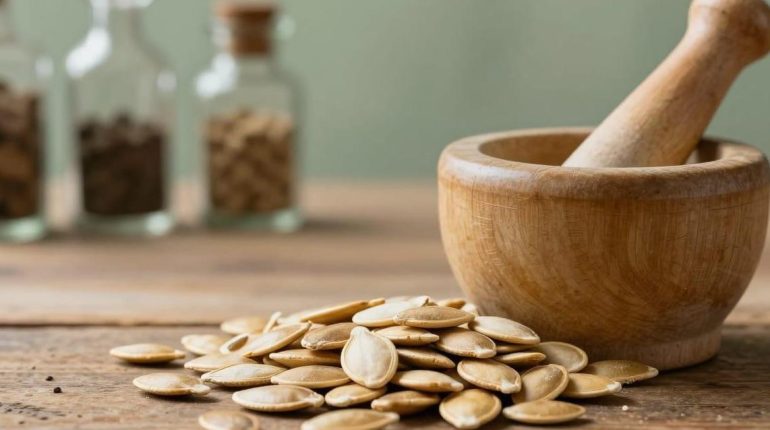
The exceptional richness of these seeds lies in their concentration of healthy fatty acids, antioxidants, magnesium, fiber, and amino acids. But their true distinction comes from cucurbitine, a compound with anthelmintic properties documented in the laboratory. This specific molecule distinguishes pumpkin seeds from other oilseeds by its targeted action on parasitic organisms.
Traditional Chinese medicine already exploited these properties to treat schistosomiasis and promote the expulsion of tapeworms. These ancestral uses, far from being simple folk beliefs, were based on repeated clinical observations in regions where parasitosis constituted a major health problem.
Contemporary work on pumpkin seed extracts reveals precise mechanisms of action: influence on worm motility, disruption of egg development, and measurable activity against gastrointestinal nematodes. These laboratory results, although requiring clinical confirmation in humans, scientifically validate centuries of empirical use and position these seeds as a legitimate object of study for modern parasitological research.
Scientific Evidence: What Studies Reveal
These historical observations now find measurable experimental validation. A study on oil derived from pumpkin seeds documented a 75% reduction in adult worms and a 66% reduction in encysted larvae in infected laboratory animals. These results were accompanied by a significant decrease in intestinal inflammatory markers, suggesting a dual antiparasitic and protective mechanism of action.
Research on whole seed extracts has demonstrated specific anthelmintic activity against gastrointestinal nematodes. Experimental protocols revealed direct interference with worm motility and disruption of the parasitic reproductive cycle, two convergent mechanisms that explain the efficacy observed under controlled conditions.
However, the transposition of these animal data to humans remains to be formally established. Historical clinical observations from endemic regions suggest benefits in managing parasitic infections, but no large-scale randomized controlled study has yet confirmed these effects according to current methodological standards of medical research.
This scientific limitation does not call into question the biological properties of the active compounds but highlights the need for rigorous protocols before any official therapeutic validation. The promising figures obtained in the laboratory nevertheless open clinical research perspectives that several teams are now exploring with methodologies adapted to contemporary regulatory requirements.
Mode of Action: How These Compounds Work
The identified biological mechanisms are based on the specific action of cucurbitine and cucurbitacins. These molecules interfere with the neuromuscular system of intestinal parasites by paralyzing their muscle fibers, making it impossible for them to adhere to the digestive mucosa. This inability to anchor leads to their natural expulsion through the peristaltic movements of the intestine.
Beyond this mechanical paralysis, the active compounds also disrupt the reproductive cycle of helminths. Research demonstrates an inhibition of the embryonic development of parasitic eggs and an alteration of larval viability. This dual action—neutralization of adults and blocking of reproduction—explains the progressive reduction in parasitic load observed in experimental protocols.
Parasitic motility studies have revealed that exposure to pumpkin seed extracts significantly decreases the movement capabilities of nematodes. This loss of mobility, combined with the failure of attachment organs, creates unfavorable conditions for parasitic survival in the hostile environment of the digestive tract.
These biological processes documented in the laboratory on animal models and in vitro, however, require pharmacokinetic confirmation in humans. The bioavailability of the active principles after ingestion, their effective concentration at the site of action, and their metabolism remain parameters to be established to evaluate their real therapeutic relevance in a clinical context.
Dietary Integration and Essential Precautions
Beyond the antiparasitic properties documented in fundamental research, pumpkin seeds are above all a nutritionally dense food whose health benefits extend far beyond traditional anthelmintic use. Their unsaturated fatty acid content contributes to cardiovascular protection, while their magnesium concentration supports more than 300 metabolic enzymatic reactions. The zinc they contain actively participates in immune function and tissue healing.
Daily culinary integration requires no special expertise. Dry-roasted, they bring crunch to mixed salads and soups. Ground, they enrich smoothies and oatmeal preparations. Plain, they constitute a practical snack rich in fiber promoting intestinal transit and satiety. Their gastronomic versatility facilitates regular consumption without monotony.
The fundamental distinction lies in the difference between a dietary supplement and medical treatment. Despite the encouraging results observed in animal models, no health authority currently recognizes pumpkin seeds as a validated antiparasitic therapy. Diagnosed helminth infections imperatively require prescribed pharmaceutical antiparasitics, whose clinical efficacy is established by randomized controlled trials.
Any symptom suggesting parasitosis—persistent digestive disorders, unexplained weight loss, visible presence of worms—requires immediate medical consultation for precise parasitological diagnosis and appropriate prescription. Self-medication with natural substances potentially delays appropriate care, with sometimes serious consequences for digestive and nutritional health.