Who can resist a warm, golden, crispy bite when the air turns cooler? These puff pastry nests with quail eggs have that mini comfort food vibe: simple, creamy, a little chic, but mostly very comforting. It’s the kind of recipe that smells like the oven and disappears fast at the table.
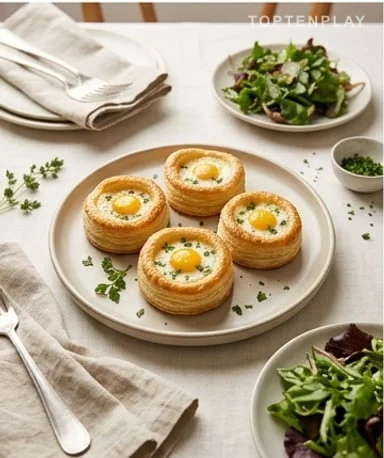
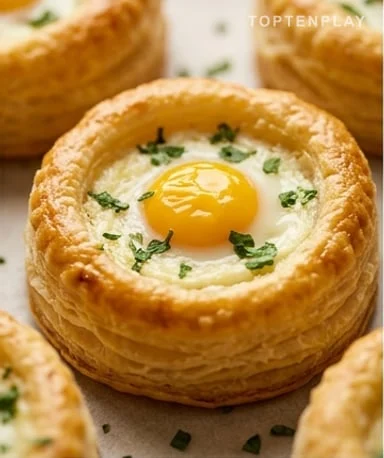
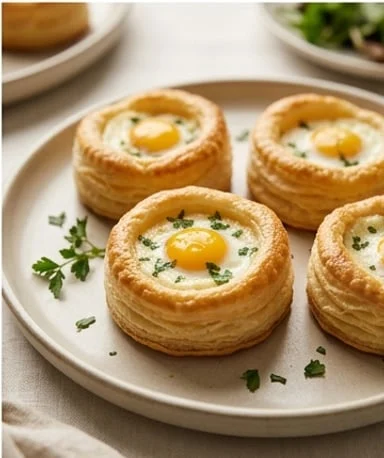
The puff pastry puffs into thin layers, with golden edges that crack under your fingers. At the center, the cream and cheese melt gently, then the quail egg adds that little round, shiny yolk, almost too pretty to cut. It smells like warm butter, fresh herbs, and lightly browned cheese. Served warm, these nests have the perfect balance between crispy dry and soft heart.
Why you’ll love this recipe
Ingredient Notes
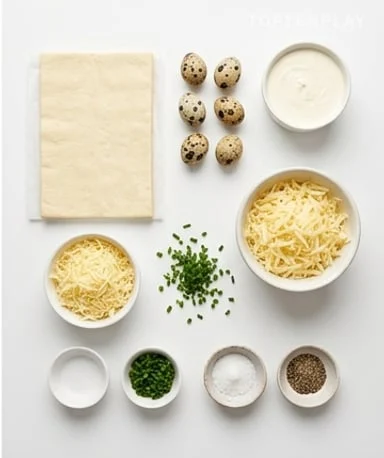
Well-chilled puff pastry, quail eggs, cream, grated cheese, and fresh herbs: simple and effective.
- Puff pastry : It provides structure and crispness, so it must stay very cold until shaping. Choose an all-butter pastry if possible, or a thick puff pastry if you want higher, golden edges.
- Quail eggs : They give the soft, visual center of the nest, with a delicate yolk that cooks very quickly. Crack them into a ramekin before pouring, as the shell is thin but the membrane can be tough.
- Thick cream : It binds the cheese, keeps the center moist, and prevents the egg from resting on dry pastry. For a denser texture, replace with fresh cheese.
- Grated cheese : It adds flavor, meltiness, and a light gratiné note around the egg. Comté is more flavorful, Gruyère milder, and Emmental works well if you want to keep it simple.
- Fresh herbs : Chives or parsley cut the richness of the cream with a fresh green note. Add them finely chopped to avoid large wet pieces that could soak the center.
- Salt and pepper : They wake up the filling, but go light as the cheese already adds salt. Freshly ground pepper gives a subtle warmth, sharper than pre-ground pepper.
Cold pastry really is better
Start with well-chilled puff pastry, because cold helps the layers separate in the oven. If it becomes soft under your fingers, it sticks, stretches, and rises less well. Cut regular circles with a glass or cutter, then place on a parchment-lined sheet. Work quickly: the pastry should still feel firm and silky when moved. If your work surface is too floured, brush off excess, otherwise you risk a dry surface instead of golden puff.
The center well changes everything
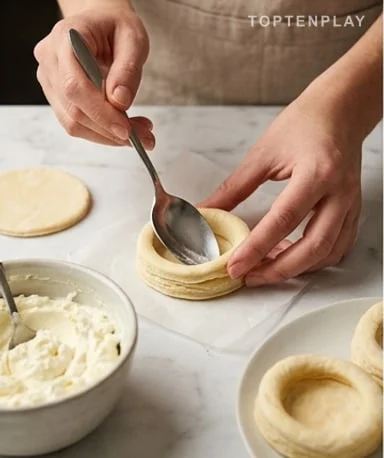
Creating a well in the center isn’t just decorative; it prevents the filling from spilling onto the sheet. Gently press with the back of a spoon without piercing the pastry, leaving a visible border all around. You should see a kind of small basin, deep enough to hold the cream but not crushed to break the puff. If the center puffs too much during baking, the egg might slide and cook unevenly. A light fork prick in the middle helps tame that puffing while letting the edges rise nicely.
The filling should be generous but wise
Mix cream, grated cheese, and herbs until you get a thick, shiny, fragrant mixture. It should hold on the spoon, not run like a sauce. Place a small amount in the center of each nest, because too much filling soaks the pastry and masks the delicate egg flavor. Cream brings softness, cheese gives a comforting melt, and herbs freshen everything with a green smell. Salt little, taste the base if possible before adding the eggs, and remember that cheese concentrates its flavor in the oven.
Quail eggs deserve patience
Quail eggs are small, but they need more attention than a regular egg. Their shell sometimes cracks badly, so a ramekin is your best ally to remove any shell bits before they reach the pastry. Gently pour each egg at the center, letting the white settle on the cream. The yolk must stay visible, round and shiny, like a little golden disc. If an egg overflows a little, it’s fine, but avoid overloading the next nests to keep clean baking.
Short baking keeps the charm
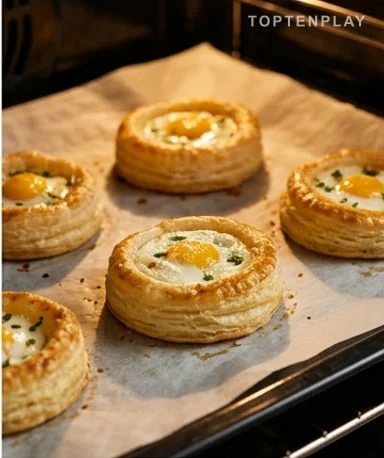
Bake at 180°C and watch as soon as the edges start to turn golden. The right doneness is seen in puffed pastry, crispy edges, and opaque egg white. The smell of warm butter and melted cheese is a good sign, but quail eggs can go from runny to dry in minutes. For a slightly runny yolk, take the nests out as soon as the white is set and let them rest briefly on the hot sheet. Avoid microwaving when reheating; it softens the puff and ruins the contrast that makes the bite special.
Tips & Tricks
- Work the pastry quickly and return it to the fridge for a few minutes if it becomes soft, because a too-warm pastry loses its puff and gives less crispy edges.
- Always crack quail eggs into a small bowl before placing them, as the membrane can catch and send shell pieces into the filling.
- Don’t overfill the center with cream, even if tempting, because excess moisture prevents the pastry from cooking properly underneath.
- Serve the nests warm rather than hot, as the pastry stays crunchy and the flavors of cheese, herbs, and egg come through better on the palate.
Can you prepare the puff pastry nests with quail eggs in advance?
You can cut the pastry and prepare the filling a few hours ahead, keeping everything refrigerated separately. Add the quail eggs just before baking, otherwise the pastry may soften.
How to prevent the puff pastry from getting soggy?
Use cream sparingly and keep a small pastry border around the filling. Well-chilled pastry and a preheated oven also help achieve a cleaner bottom and crispy edges.
How to easily crack quail eggs?
The easiest way is to open them with the tip of a small knife or clean scissors, then pour into a ramekin. That way you can remove any shell pieces before placing the egg on the pastry.
Can I replace the cream?
Yes, fresh cheese works well for a denser filling. You can also use a plant-based thick cream, as long as it’s not too liquid.
How to keep the yolk slightly runny?
Watch the baking from 15 minutes, as quail eggs cook very quickly. Take the nests out when the white is set but the yolk still shiny in the center.
What to serve with these puff pastry nests?
They go great with a crispy green salad, a mild soup, or an appetizer platter. Serve them warm to keep the contrast between crispy pastry and creamy center.
Puff Pastry Nests with Quail Eggs
French
Appetizer
Small puff pastry bites, golden and crispy, filled with cream, grated cheese, fresh herbs, and a perfectly cooked quail egg in the center.
Ingredients
- 230 g well-chilled puff pastry
- 10 quail eggs
- 30 g thick cream
- 50 g grated cheese, such as Comté or Gruyère
- 5 g finely chopped chives or parsley
- 5 g flour for the work surface
- 2 g salt
- 1 g black pepper, ground
Instructions
- 1Preheat the oven to 180°C and line a baking sheet with parchment paper.
- 2Roll out the puff pastry on a lightly floured surface, then cut out 8 to 10 circles of 8 to 10 cm in diameter.
- 3Place the circles on the sheet and gently press the center of each with the back of a spoon to create a well, without piercing the pastry.
- 4Mix the cream, grated cheese, chopped herbs, salt, and pepper in a bowl.
- 5Spoon a small amount of the filling into the center of each pastry circle.
- 6Crack each quail egg into a small ramekin, then carefully pour into the center of a nest.
- 7Bake for 15 to 20 minutes, until the pastry is golden, puffed, and the egg whites are set.
- 8Let cool for 2 minutes before serving to keep the pastry crisp and the center still soft.
Notes
• For a slightly runny yolk, check the baking after 15 minutes.
• Do not overfill the center with cream to avoid soggy pastry.
• Puff pastry must stay cold before baking to rise well.
• Reheat in a gentle oven rather than a microwave to preserve crispness.
Nutrition Facts (per serving, estimated)
| 150 kcalCalories | 6gProtein | 10gCarbs | 10gFat |