📌 Potato storage: why keeping them away from apples and bananas prolongs their freshness
Posted 28 February 2026 by: Admin
Why Do Your Potatoes Sprout?
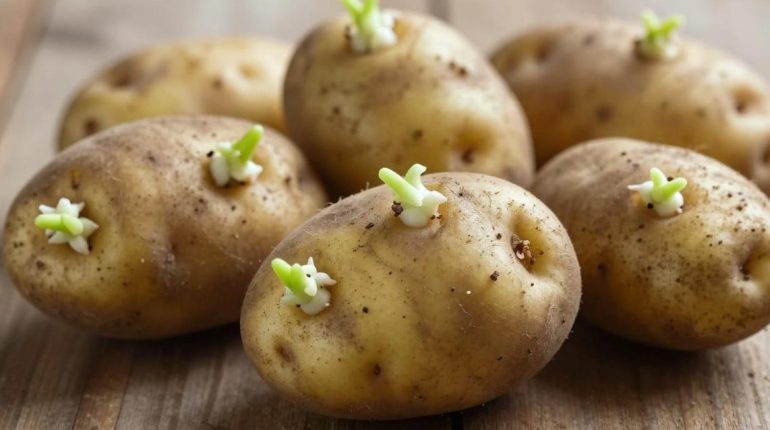
Those small green shoots that appear on your potatoes are not just an aesthetic nuisance. Sprouted tubers develop slightly toxic compounds which, if consumed in large quantities, can pose a problem. Understanding this phenomenon helps avoid waste and health risks.
Potatoes remain living organisms even after harvest. Three factors trigger their germination: exposure to light, excessive humidity, and temperatures that are too high. As soon as sprouts appear, a chemical process begins. The starch contained in the tuber gradually turns into sugar, irremediably altering the flavor and texture. What was meant to be a smooth puree becomes grainy; what was intended for crispy fries takes on an undesirable sweetish taste.
The most common reaction to these sprouts is to remove them before cooking. But this easy solution overlooks a crucial aspect: the concentration of solanine, the toxic compound that develops in green and sprouted areas. While a few occasional sprouts do not present an immediate danger, their multiplication signals a progressive degradation of the tuber.
The real solution lies not in treating the symptoms, but in prevention. Controlling the storage environment radically transforms shelf life.
The Revolutionary Preservation Method
The ideal temperature for storing your potatoes is between 45 and 50°F (7 to 10°C). This precise range blocks the germination process while fully preserving flavor and texture. Neither too cold nor at room temperature: thermal balance is the first defense against deterioration.
The refrigerator, this seemingly logical solution, is actually the most common mistake. Temperatures that are too low turn starch into sugar, giving potatoes that unpleasant sweet taste that many wrongly attribute to poor initial quality. Fries prepared with refrigerated tubers brown prematurely, and puree becomes strangely sweet.
A closed pantry, a temperate cellar, or a dark cupboard offer optimal conditions. These spaces combine two decisive advantages: total darkness and stable natural coolness. The absence of light prevents photosynthesis responsible for the production of chlorophyll and solanine, while the moderate temperature considerably slows down the tuber’s metabolic activity.
Simultaneously controlling light and temperature multiplies the shelf life by three or even four compared to approximate storage. This scientific approach transforms a perishable food into a long-lasting reserve. But the thermal environment is not enough: the container plays an equally determining role.
The Crucial Choice Of Container
A breathable container prolongs this optimal preservation by evacuating moisture, the tuber’s true enemy. Plastic bags, though ubiquitous when returning from the market, trap condensation and create an environment conducive to rapid sprouting. This stagnant moisture activates dormant buds in just a few days.
Kraft paper bags are the ideal solution for home storage. Their porous structure absorbs excess moisture while maintaining sufficient air circulation. Wicker baskets or openwork metal baskets offer an effective alternative, particularly suited to well-ventilated cellars. Natural fabric bags, cotton or jute, combine breathability and reusability.
This constant aeration keeps the surface of the potatoes dry, an essential condition for blocking the germination process. A tuber exposed to moisture develops not only sprouts but also soft spots and superficial mold. Air circulation prevents these degradations by renewing the atmosphere around each potato.
Permanently banning plastic is the first measure to adopt. This simple modification of the storage method can double the life of your reserves. There remains an often ignored dimension: the unsuspected chemical influence of certain fruits on tuber preservation.
The Counter-Intuitive Fruit Trick
This chemical influence takes the form of an invisible gas: ethylene. Apples, bananas, pears, and avocados naturally release it during ripening, accelerating the germination of nearby stored potatoes through a domino effect. This phenomenon explains why your tubers mysteriously sprout even when you respect temperature and darkness.
Ethylene gas acts as a hormonal signal that wakes up the potatoes’ dormant buds. A few apples in the same basket are enough to trigger premature germination in less than a week. The concentration of the gas increases in confined spaces, multiplying its effect on vulnerable tubers.
The solution is to radically separate these two food categories. Create a dedicated area for potatoes, at least one meter away from your fruit bowl. This minimum distance prevents the gas from diffusing into the surrounding air. Distinct cupboards or separate shelves guarantee this necessary isolation.
Paradoxically, a single apple or an onion placed without direct contact with the tubers can absorb residual moisture in the container. This optional technique works by regulating the storage atmosphere but requires monitoring to remove the fruit before it produces too much ethylene. The key lies in this subtle balance between benefit and chemical risk.