Quiche is often imagined as a lukewarm cafeteria staple eaten by default for lack of a better option. This prejudice is understandable. But the homemade potato and turkey ham version is a different story — more generous, more honest, and ultimately much simpler than you might think.
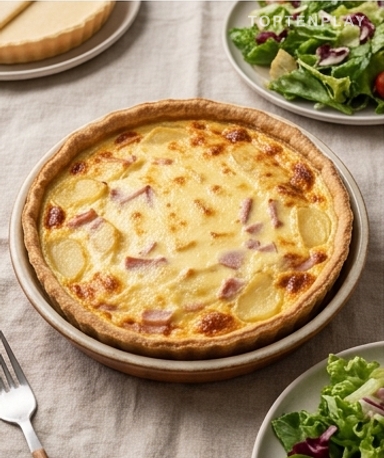
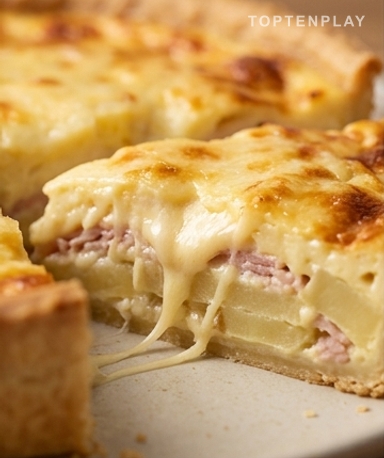
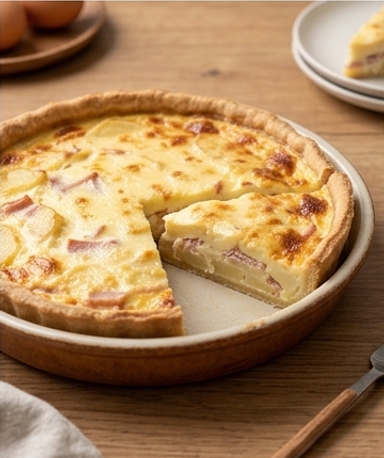
The surface is bronzed like a light caramel, slightly crackled along the edges of the pastry. When you sink your knife in, it glides without resistance through the cream-soaked potato slices. The aroma that rises as you cut a slice is that of melted cheese mixed with caramelized onion — a bit sweet, a bit salty, immediately comforting. The center is still slightly wobbly, not liquid: just the perfect texture between a custard and a gratin.
Why you’ll love this recipe
Ingredient Notes
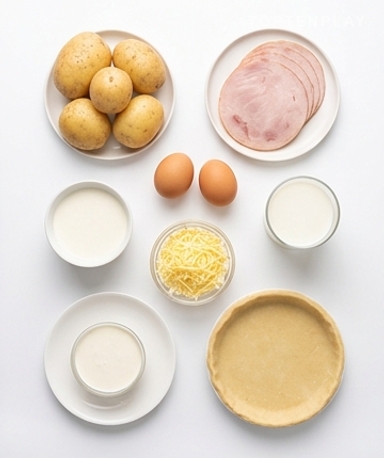
All the simple ingredients that make this melt-in-the-mouth quiche a success.
- Potatoes : Choose waxy potatoes — Charlotte, Amandine, or fingerlings. Floury varieties like Monalisa will fall apart during cooking and turn your quiche into a compact mash without identifiable layers. Cut them into 3 to 4 mm thick slices. Too thick, and they will stay hard in the center despite parboiling.
- Turkey ham : Get thick slices if you have the choice — diced, it has much more presence than thin strips that disappear. Avoid very low-fat versions: they release water during cooking and make the filling soggy. Between 150 and 200 g is the right range for 4 to 6 people.
- Heavy cream + milk : The duo that creates the texture. All heavy cream is too heavy — the quiche becomes almost overwhelming after two bites. All semi-skimmed milk is too watery and doesn’t set well. A 50/50 ratio (20 cl of each) results in a fluid, silky mixture that bakes into a smooth cream without being greasy.
- Grated cheese : Emmental gets the job done without complaints. But if you have Comté on hand, the difference in depth of flavor is truly noticeable — fruitier, more complex. Grate it yourself if you can: pre-grated cheese is coated in cornstarch which prevents even melting and leaves unsightly small clumps.
- Espelette pepper : Optional depending on the spice tolerance of your guests, but honestly useful. It’s not truly spicy — it brings a gentle heat felt at the end of the bite, a slightly spiced background that wakes up the richness of the cream. Half a teaspoon is plenty for 4 to 6 people.
Parboiling the potatoes — the step you’re tempted to skip and will regret
Raw potatoes in a quiche never truly cook through in 45 minutes in the oven. The top layers brown, the center remains hard, and the whole thing is unbalanced. Ten minutes in well-salted boiling water is all it takes. They should be tender under a knife blade but still firm — if they mash between your fingers, you’ve overcooked them. Drain them and let them cool flat on a clean kitchen towel. This detail matters: slices that are still hot and wet will soak the bottom of your crust before it even enters the oven.
The quiche filling — the part everyone unknowingly sabotages
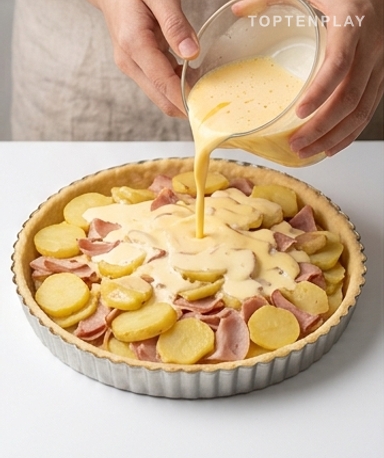
The most common mistake: whisking the eggs too vigorously. This incorporates air, making the filling puff up during cooking and then collapse, forming bubbles and an uneven surface. Whisk just enough so that the eggs and yolks are homogenous — one minute, no more. Add the cream and milk, then season cautiously. Turkey ham is already salty, and some brands are very much so. Taste the mixture before pouring. The final filling should be fluid, a pale ivory-yellow color, and smell of fresh milk.
Assembly: a matter of well-placed layers
Prick the bottom of the pastry with a fork all over the surface. Arrange the potato slices, overlapping them slightly like tiles. On top, spread the turkey ham and sautéed onion mixture — the onion should be translucent, almost transparent, having lost all its water in the pan before going into the quiche. Sprinkle the grated cheese. Then pour the filling slowly, from the edge toward the center, so it seeps between the layers without moving what you’ve arranged. The pan should be three-quarters full — no more, otherwise it will overflow during baking.
Baking — 45 minutes that require a bit of monitoring
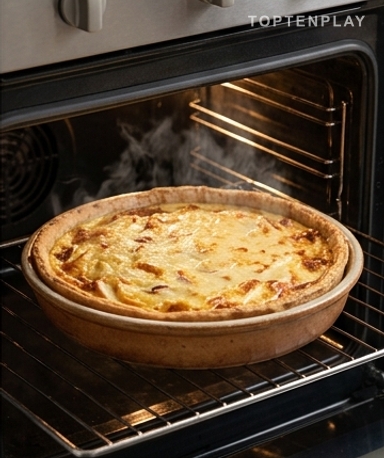
Oven at 180°C, fan setting if you have it. After 30 minutes, take a look: if the edges are already well-browned but the center still wobbles significantly, drop to 165°C to finish gently. The quiche is ready when the center barely quivers when you lightly shake the pan — like a crème brûlée not yet fully solidified. Remove it from the oven and let it rest for a good 10 minutes before cutting. The cream continues to firm up outside the oven during this time. If you cut too early, the filling will run and the slice will collapse.
Tips & Tricks
- Never salt the filling blindly: taste the turkey ham you bought first. Some brands are very salty, and you’ll end up with an inedible quiche if you salt automatically. A small pinch of salt is usually enough.
- If the top browns too quickly before the center is set, place a sheet of foil over the quiche without pressing down — just tented. This slows down browning without blocking the cooking in the center.
- To check for doneness without a thermometer: insert a knife blade into the center and remove it immediately. If it comes out clean and slightly warm, it’s cooked. If it comes out with liquid filling on it, give it another 5 minutes.
Can I prepare the quiche the day before?
Yes, and it’s actually recommended. A quiche rested overnight in the refrigerator has better-integrated flavors. Reheat it in the oven at 160°C for 12 to 15 minutes before serving — it regains its crispy crust without drying out.
How long does it keep in the refrigerator?
Up to 3 days in an airtight container or wrapped in cling film. Avoid leaving it at room temperature for more than 2 hours, as the egg-cream mixture is sensitive. For storage, the oven remains the best reheating method — the microwave softens the pastry.
Can I freeze it?
Yes, in individual slices well-wrapped in cling film and then in a freezer bag. It keeps for up to a month. To thaw, put it directly in the oven at 160°C for 20 minutes without prior thawing — this gives the best results.
The quiche is liquid in the center after 45 minutes of baking — what should I do?
This is a sign the oven wasn’t hot enough or the pan is too thick. Lower the temperature to 165°C and extend the baking by 10 minutes. If the top browns too much, cover with a sheet of foil without pressing down. The quiche is done when the center barely quivers, like a crème brûlée.
Can I make this quiche without a crust?
Yes, that’s the gratin version. Generously butter the pan, pour the filling with the garnish directly into it, and add a layer of grated cheese on top. The texture is closer to a gratin than a quiche, but it’s just as delicious and even faster.
What can I substitute for turkey ham?
Shredded roasted chicken works great and makes for an even milder version. Button mushrooms sautéed in a pan until their water has completely evaporated provide a solid vegetarian variant. In both cases, sauté your substitutes before adding them so as not to soak the filling.
Potato and Turkey Ham Quiche
French
Main course
A generous family quiche with a crispy crust and creamy filling, stuffed with tender potatoes and golden turkey ham. Simple, budget-friendly, and ready in one hour.
Ingredients
- 1 (250g) shortcrust pastry (homemade or store-bought)
- 500g waxy potatoes (Charlotte or Amandine type)
- 180g turkey ham in thick slices
- 1 medium (120g) onion
- 100g grated cheese (Comté or Emmental)
- 2 whole eggs
- 2 egg yolks
- 200ml (20cl) heavy liquid cream
- 200ml (20cl) semi-skimmed milk
- ½ teaspoon Espelette pepper
- 1 tablespoon neutral oil (sunflower or olive)
- Salt and pepper to taste
Instructions
- 1Peel the potatoes and cut them into 3-4 mm slices. Cook them for 10 minutes in salted boiling water until tender but still firm. Drain and let cool slightly.
- 2In a pan over medium heat, sauté the sliced onion in oil for 5 minutes until translucent. Add the diced turkey ham and sauté for another 2 minutes. Set aside.
- 3In a bowl, briefly whisk the eggs and egg yolks. Add the liquid cream and milk, then season with Espelette pepper, salt (sparingly), and pepper. Mix until combined.
- 4Preheat the oven to 180°C (preferably fan-assisted). Roll out the shortcrust pastry into a 28 cm tart pan and prick the bottom with a fork.
- 5Arrange the potato slices in a layer, then distribute the turkey ham and onion mixture. Sprinkle the grated cheese on top.
- 6Pour the filling slowly from the edge, filling the pan to three-quarters. Bake for 40 to 45 minutes, until the surface is golden like a light caramel and the center barely quivers.
- 7Let rest for 10 minutes out of the oven before cutting and serving.
Notes
• Storage: up to 3 days in the refrigerator, covered with cling film. Reheat in the oven at 160°C for 12 minutes to preserve the crispness of the crust.
• Make ahead: the quiche can be prepared the day before — flavors develop better after a night in the fridge. Simply reheat before serving.
• Freezing: freeze in individual slices for up to 1 month. Reheat directly in the oven at 160°C for 20 minutes, without prior thawing.
Nutrition Facts (per serving, estimated)
| 430 kcalCalories | 18gProtein | 32gCarbs | 26gFat |