The poached egg doesn’t deserve its reputation as a technical dish. With water held at a gentle simmer and extra-fresh eggs, it’s reliably reproducible — and when you add a homemade morel cream, the result far surpasses what most bistros serve. It’s the kind of dish you make on a Saturday morning, without rushing.
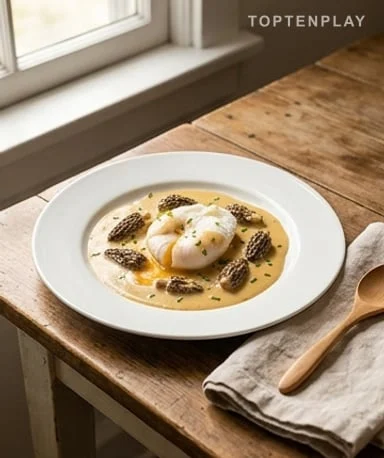
On the plate, the pearly white encases a liquid yolk just waiting to flow. The morel cream, a deep golden brown, envelops everything with a texture that lightly clings to the spoon. You smell the mushrooms before even diving in — that earthy, woody aroma that perfumed the entire kitchen during simmering. A dish to eat slowly, because it deserves to be lingered over.
Why you’ll love this recipe
Ingredient Notes

Dried morels, fresh eggs, heavy cream, and a few aromatics: that’s all it takes.
- Dried morels (50 g) : The true stars of the dish. Dried, they are concentrated in flavor — rehydration releases that characteristic woody aroma that no fresh commercial mushroom can match. Prefer whole morels over broken pieces: they hold up better during cooking and the presentation is cleaner. Plantin or a specialty shop are good sources; avoid supermarket packets that smell like cardboard.
- Heavy cream (25 cl) : Its role is dual: it binds the sauce and softens it. Heavy cream withstands simmering without breaking, which a light version would not. With 50 g morels and four eggs, it’s not the time to skimp on fat.
- Chicken broth (10 cl) : It provides the savory, round structure that cream alone wouldn’t, and creates the reduction base that concentrates flavors. A cube dissolved in hot water works fine; no need to prepare veal stock. For a vegetarian version, a slightly robust vegetable broth works perfectly.
- Shallot : More delicate than onion, it melts into the butter without overpowering and lets the morels speak. Its role is to provide a sweet aromatic base in the sauce. Chop it very finely — if left in large pieces, it will still be slightly crunchy when the cream is ready, which ruins the desired velvety texture.
- Extra-fresh eggs : Freshness directly determines the quality of poaching. A firm white wraps naturally around the yolk; an old white spreads and turns into filaments in water. The water glass test is reliable: a fresh egg lies flat on the bottom, a questionable egg leans or rises to the surface.
- White vinegar (2 tbsp) : It speeds up coagulation of the white upon contact with hot water, tightening proteins faster. It’s not for taste — in two minutes of cooking, the amount used does not flavor the white. If you don’t have it, poaching is still possible, but requires perfectly simmered water and very fresh eggs.
Start by waking up the morels
Immerse the dried morels in a bowl of warm water — not boiling, around 40°C — and leave them alone for 30 to 45 minutes. On the weekend, this is the perfect step to start with your first coffee. During soaking, the mushrooms will swell, regain their honeycomb shape, and release their aromas: the water will gradually turn an amber brown that smells of damp undergrowth after rain. Once drained, do not discard this liquid. Strain it through a fine cloth or coffee filter to remove sand and impurities settled at the bottom, then set aside two or three tablespoons: added at the end of cooking, it intensifies the sauce in a way no store-bought broth can replicate.

Build the cream layer by layer
In a sauté pan over medium-low heat, melt the butter without browning and add the finely minced shallot. It should cook slowly, five to seven minutes, until translucent and almost confit — if it browns, the sauce will have a slightly bitter undertone that no cream can mask. Add the drained morels and sauté for three to four minutes: they will firm up, and the smell will change, from damp mushroom to something more concentrated, almost roasted. Pour in the broth and let reduce by half over medium heat — this is where depth truly builds. Then incorporate the heavy cream, lower the heat, and let simmer at very gentle bubbles for eight to ten minutes until the sauce lightly coats the back of a spoon. Add a spoonful of the filtered soaking liquid, adjust salt and pepper, and keep warm over minimal heat.
Don’t fear the poached egg, master the water
The only rule to remember: the water simmers, it does not boil. Bubbles gently rising from the bottom, yes — a vigorous boil that makes the liquid dance, no. A rolling boil tears the white before it has time to coagulate. Add the white vinegar, then crack each egg into an individual ramekin: this precaution lets you check freshness and avoid a shell in the water. To create the whirlpool, stir once with a spoon, then gently slide the egg into the center of the movement. The white will naturally wrap around the yolk. Count two minutes thirty for a very runny yolk, three minutes for a yolk that holds a bit more. Remove the egg with a slotted spoon, drain it for a few seconds on a folded kitchen towel, and proceed with the others.
Plate quickly, don’t let it wait
Reheat the cream if it has cooled, stirring gently — never to a boil, otherwise it will break and become grainy. Place a poached egg in the center of each preheated shallow bowl, generously spoon the morel cream over, making sure to distribute the mushrooms evenly in each portion. The snipped chives arrive last, just before serving: they bring a fresh, slightly sharp note that cuts through the creaminess of the sauce and lifts the whole dish. A poached egg that waits cools quickly and the yolk begins to set — the ideal serving window is two minutes maximum after poaching. Slightly grilled country bread on the side is anything but optional.

Tips & Tricks
- Strain the morel soaking water before incorporating it: grains of sand in a velvety cream are the kind of detail that ruins a dish you spent 45 minutes preparing.
- Preheat your shallow bowls for a few minutes in an oven at 80°C: a poached egg placed on a cold plate loses heat in thirty seconds, partially setting the yolk and breaking the whole texture of the dish.
- To poach multiple eggs without stress, cook them all in succession and keep them in a warm water bath at 60°C until plating — they hold well for a good ten minutes without losing texture.
- If the cream thickens too much at the end of simmering, loosen it with a tablespoon of hot broth rather than cold cream: a thermal shock in the sauce can break the emulsion and create a lumpy texture that’s hard to fix.

How do I know if the poached egg is cooked perfectly?
Practical rule: 2 minutes 30 for a very runny yolk, 3 minutes for a yolk that flows but holds slightly. Once out of the water, gently press your finger on top — if the white resists firmly but the center gives, it’s perfect. Beyond 4 minutes, the yolk begins to solidify and the whole point of the dish is lost.
Why does my egg white turn into filaments in the water?
Two possible causes: the water is too hot and the boiling tears the white before it coagulates, or the eggs are not fresh enough. The older an egg, the more liquid and spreadable its white becomes. Check freshness with the water glass test: a fresh egg lies flat on the bottom, an old egg rises to the surface.
Can I prepare the morel cream in advance?
Yes, and it’s even recommended for a stress-free meal. It keeps for 24 hours in the refrigerator in a covered pot. To reheat, use very low heat while stirring — never to a boil, the cream would break and become grainy. If it has thickened too much while cooling, add a tablespoon of hot broth to loosen it.
Can I replace dried morels with other mushrooms?
Dried morels are hard to replace identically — their aromatic profile is unique. As an honest substitute, dried porcini give a more rustic sauce that is equally tasty. Fresh button mushrooms work in a different register: the sauce will be milder, less deep, but still pleasant if you compensate with a robust broth and a little tomato paste.
How long can I keep poached eggs prepared in advance?
Up to 24 hours, stored in a cold water bath in the refrigerator. To reheat, immerse them for two minutes in water at 60°C — no longer, otherwise the yolk finishes cooking. This technique is commonly used in restaurants to serve multiple guests at once without stress.
Can I turn this dish into a light starter or should it be served as a main course?
With one egg per person and the cream, it’s a generous starter or a light main depending on appetite and what follows. As a starter, accompany with a slice of grilled bread; as a main, double the eggs and add a bed of steamed vegetables or white rice to balance the creaminess of the sauce.
Poached Eggs with Morel Cream
French
Starter
Poached eggs with runny yolk topped with a velvety morel cream — a classic of French bistro cuisine, achievable in less than an hour with patience and simple ingredients.
Ingredients
- 4 extra-fresh eggs
- 2 tbsp white vinegar
- 50 g dried morels
- 25 cl heavy cream
- 10 cl chicken broth
- 1 shallot
- 20 g butter
- a few sprigs fresh chives
- salt and freshly ground black pepper
Instructions
- 1Immerse the dried morels in a bowl of warm water and let them rehydrate for 30 to 45 minutes. Drain them gently, strain the soaking water through a fine cloth to remove impurities, and set aside two to three tablespoons of this amber liquid.
- 2Finely chop the shallot. In a sauté pan over medium-low heat, melt the butter without browning then sauté the shallot for 5 to 7 minutes until translucent and soft.
- 3Add the drained morels and sauté for 3 to 4 minutes to concentrate their aromas. Pour in the chicken broth and let reduce by half over medium heat.
- 4Incorporate the heavy cream, lower the heat, and let simmer at a gentle bubble for 8 to 10 minutes until a velvety texture that coats the back of a spoon is achieved. Add a tablespoon of the filtered soaking liquid, adjust salt and pepper, and keep warm over minimal heat.
- 5Bring a large pot of water to a simmer (not boiling) and add the white vinegar. Crack each egg into an individual ramekin, create a light whirlpool in the water and gently slide the egg in. Poach for 2 minutes 30 to 3 minutes depending on desired doneness, then drain on a clean kitchen towel.
- 6Place a poached egg in each preheated shallow bowl, generously spoon the morel cream over, distributing the mushrooms evenly, sprinkle with snipped chives, and serve immediately with grilled country bread.
Notes
• The poaching water should simmer, not boil: regular bubbles rising from the bottom, with no surface agitation. A rolling boil tears the white before it coagulates.
• The filtered morel soaking water is precious: added at the end of the sauce, it intensifies flavors without extra effort.
• To serve multiple people without stress, poach the eggs in advance and keep them in a water bath at 60°C until plating — they hold for up to 15 minutes without losing texture.
• If the cream thickens too much while cooling, loosen it with a spoonful of hot broth rather than cold cream to avoid thermal shock.
Nutrition Facts (per serving, estimated)
| 380 kcalCalories | 12gProtein | 11gCarbs | 32gFat |