Exotic cakes are often a disappointment. Too artificially flavored, too dense, or prone to falling apart as soon as you slice them. This pineapple coconut cake does exactly what it promises: moist, moderately fragrant, and frankly, why make things more complicated.
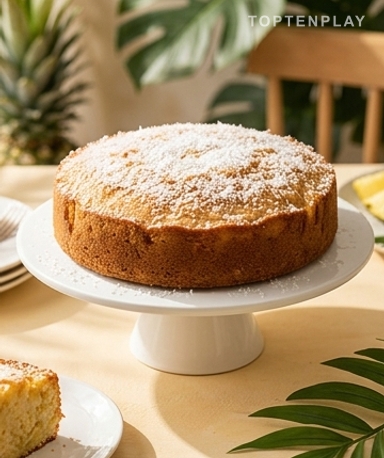
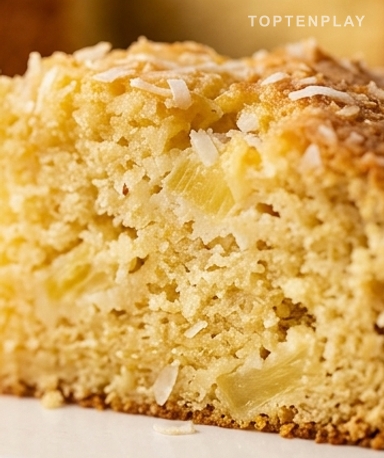
Imagine a slice that holds well in your hand — a cream-yellow crumb, dotted with small translucent pineapple chunks and white coconut strands. On the surface, a slightly grainy, light caramel-colored crust that cracks gently under the knife. The aroma rising from the still-warm cake is vanilla first, then cooked sugar, then that round, slightly milky scent of toasted coconut. No need for frosting or decoration: it stands perfectly on its own.
Why you’ll love this recipe
Ingredient Notes
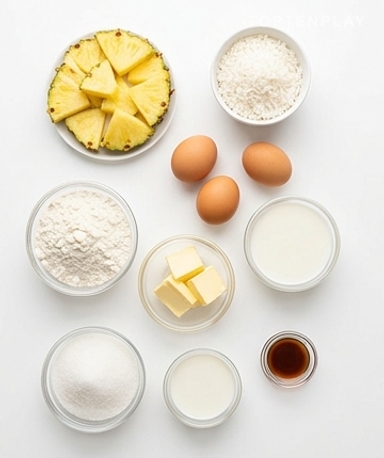
All ingredients together: pineapple, shredded coconut, eggs, flour, butter, and a touch of vanilla.
- Pineapple (fresh or canned) : If using canned, let it drain thoroughly in a sieve for 10 to 15 minutes. Excess juice is the enemy of a well-risen crumb. If fresh, cut into 1 cm cubes — not too large so they don’t sink to the bottom, nor too small so you can still feel the bite.
- Shredded coconut : Use unsweetened shredded coconut if you can find it. The sweetened supermarket version also works, but it pushes the cake towards being too sugary. 80 g is the right amount: you feel it, you chew it slightly, but it doesn’t take over.
- Melted butter or coconut oil : Butter gives a rich, almost brioche-like crumb. Coconut oil amplifies the tropical side and slightly lightens the mouthfeel. If choosing coconut oil, ensure it’s melted and cooled before adding — if hot, it might cook the eggs in the bowl.
- Baking powder : A full sachet, 10 g, for 200 g of flour. Check that it hasn’t expired — tired leavening results in a flat, compact cake that never truly rises, regardless of technique.
Take everything out of the fridge 30 minutes before starting
Cold eggs break the emulsion when mixed with lukewarm butter. Cold milk does the same — it re-solidifies the fats and creates lumps. The rule is simple: everything should be at room temperature. Meanwhile, preheat the oven to 180 °C and prepare your pan, either greased and floured or lined with parchment paper. If using canned pineapple, now is the time to drain it.
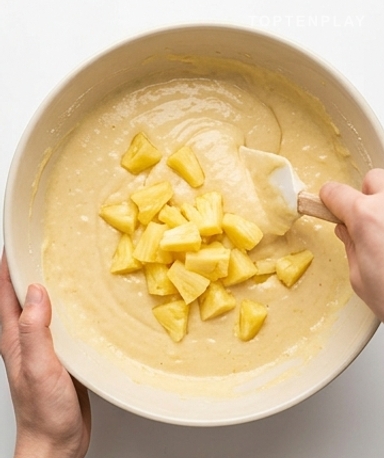
Whisk the eggs and sugar properly, not halfway
In a large bowl, beat the eggs with the sugar for 3 to 5 minutes. The mixture should become pale, almost ivory, and slightly frothy — you’ll feel the resistance of the whisk decrease over time, a sign that air is being incorporated. This step provides lightness to the crumb. If you cut it short, the cake will be tasty but dense. Add the melted lukewarm butter, milk, and vanilla if using. Mix until the batter is smooth, shiny, and homogeneous.
Incorporate the flour gently
Mix flour, baking powder, salt, and shredded coconut in a separate bowl before pouring them into the liquid batter. Add in two batches, mixing with a spatula using wide folding motions from bottom to top. The goal: just make the traces of white flour disappear. No more. Over-mixing at this stage releases gluten and results in a rubbery crumb. Add the pineapple last with two or three turns of the spatula, then stop.
Don’t touch anything for 40 minutes
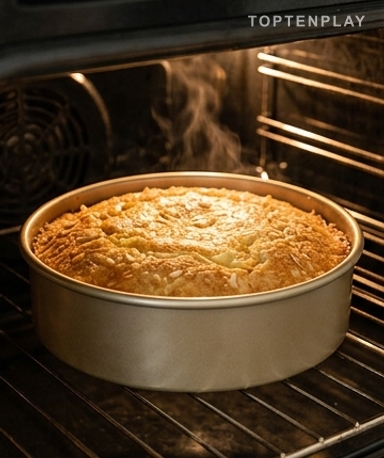
Pour the batter into the pan — it’s quite thick, so spread it slightly with a spatula. Bake and resist the urge to open the oven before 35 minutes. The thermal shock would cause the cake to collapse. Around 35 minutes, a scent of toasted coconut will fill the kitchen and the top will turn light caramel. Insert a knife blade into the center: it should come out clean. If sticky, extend by 5 minutes, covering with foil if the top browns too quickly.
Wait for it to cool down before touching it
Leave the cake in its pan for 10 minutes out of the oven. It will shrink slightly on its own and unmold easily. Place it on a wire rack, not directly on a plate — air must circulate underneath to prevent the bottom from getting soggy. If you slice it while hot, the crumb will crush. Once lukewarm, it holds perfectly and the texture is exactly what you expect.
Tips & Tricks
- Weight the pineapple after draining, not before. 150 g of drained pineapple is often 200 g or more straight from the can. The weight difference really matters for the final texture.
- If your oven runs hot, cover the cake with aluminum foil halfway through baking. It will finish cooking through without burning the surface.
- For an even more fragrant version, replace the 120 ml of milk with coconut milk from a carton — not the canned kind, which is too concentrated and fatty. The scent steps up a notch without making the crumb heavy.
Fresh or canned pineapple: which to choose?
Both work well. Fresh pineapple has a brighter, slightly tart flavor, but canned pineapple is more convenient and provides a more consistent texture. In either case, drain it thoroughly for 10 to 15 minutes in a colander before incorporating — excess juice is the main cause of a cake that doesn’t bake through.
Why is my cake too dense and not rising enough?
Two likely culprits: expired baking powder, or over-working the batter after adding the flour. Check your powder’s date and, once the flour is added, mix just enough to remove white traces. Not one stroke more.
Can I replace butter with coconut oil?
Yes, and it’s an excellent variation. Coconut oil accentuates the tropical flavor and gives a slightly less rich texture. Ensure it is fully melted and cooled to room temperature before adding, otherwise it may solidify when hitting the eggs.
How long does this cake keep?
At room temperature, 2 days well covered. In the refrigerator, up to 4 to 5 days wrapped in plastic. Take it out 20 minutes before serving — when cold, it loses some moistness. It also freezes very well, whole or sliced, for up to 2 months.
Can I prepare it the day before?
Absolutely, and it’s actually recommended. A night in the fridge allows the coconut to infuse the crumb, and the texture becomes more melt-in-your-mouth. Simply cover it with plastic wrap to prevent it from drying out.
Can I replace cow’s milk with plant-based milk?
Yes, carton coconut milk is the ideal substitution to amplify the aromas. Avoid canned coconut milk, which is too concentrated and fatty and might weigh down the batter. Almond or oat milk also work very well.
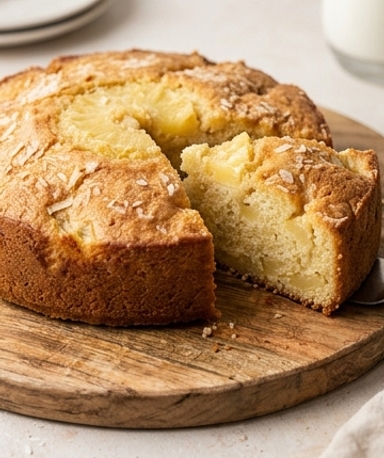
Pineapple Coconut Cake
Exotic
Dessert
A moist cake with tropical flavors, scented with coconut and generous with juicy pineapple pieces. Simple to make, even better the next day.
Ingredients
- 200 g flour
- 150 g granulated sugar
- 3 eggs
- 100 g melted butter (or 100 ml coconut oil)
- 120 ml milk (or coconut milk from a carton)
- 1 sachet (10 g) baking powder
- 1 pinch salt
- 150 g pineapple (fresh or canned, well drained)
- 80 g unsweetened shredded coconut
- 1 tsp vanilla extract (optional)
Instructions
- 1Preheat the oven to 180 °C. Grease and flour a 22 cm pan, or line with parchment paper.
- 2If using canned pineapple, drain for 15 minutes in a sieve. If fresh, cut into 1 cm cubes.
- 3In a large bowl, whisk the eggs with the sugar for 3 to 5 minutes until the mixture becomes pale and slightly frothy.
- 4Incorporate the lukewarm melted butter (or cooled coconut oil), milk, and vanilla. Mix until the batter is smooth and homogeneous.
- 5In a separate bowl, mix the flour, baking powder, salt, and shredded coconut.
- 6Pour the dry ingredients into the liquid batter in two batches, folding gently with a spatula. Stop as soon as the flour is incorporated.
- 7Add the pineapple pieces and mix gently two or three times.
- 8Pour the batter into the pan and bake for 35 to 40 minutes. Check the doneness with a knife blade: it should come out clean.
- 9Let cool for 10 minutes in the pan, then unmold onto a wire rack and wait until lukewarm before slicing.
Notes
• Storage: 2 days at room temperature (covered), 4 to 5 days in the fridge, 2 months in the freezer. Serve at room temperature for maximum moistness.
• Upside-down version: place pineapple slices at the bottom of the pan with 2 tablespoons of sugar before pouring the batter. Flip the cake after cooling.
• Make ahead: this cake keeps very well when made the day before. Overnight resting allows the coconut aromas to develop in the crumb.
Nutrition Facts (per serving, estimated)
| 390 kcalCalories | 7 gProtein | 48 gCarbs | 18 gFat |