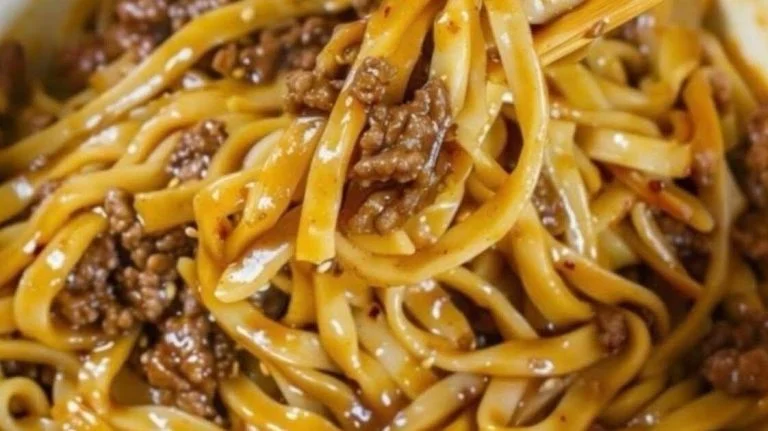
The smell arrives before anything else—this beef base searing in the cast iron, with that dry crackling sound that signals a crust forming. The Sloppy Joe, American saucy sandwich, meets the Philly cheese steak here: ground beef, caramelized vegetables, melted provolone. Twenty minutes active, that’s it.

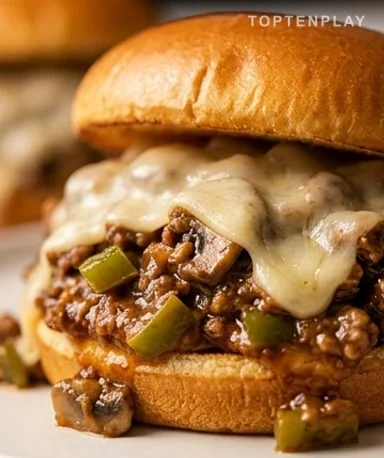
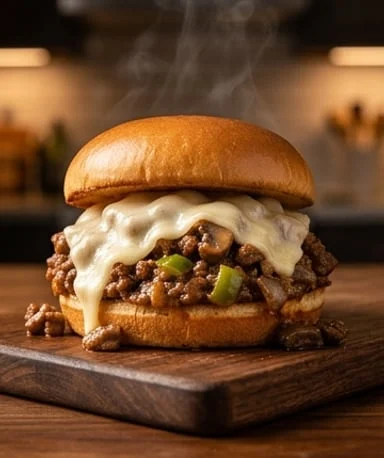
In the toasted brioche bun, the filling is shiny, slightly dark in spots where the onions have taken color, with strands of provolone clinging to the bread when you lift the top. It smells of hot cast iron, slightly acidic Worcestershire, and that sugar base caramelizing in the vegetables. The texture is halfway between a bolognese and a thick sauce—liquid enough to drip, dense enough not to soak the bread in thirty seconds. It’s the kind of recipe that stains your shirt and is worth it.
Why you’ll love this recipe
Ingredient Notes
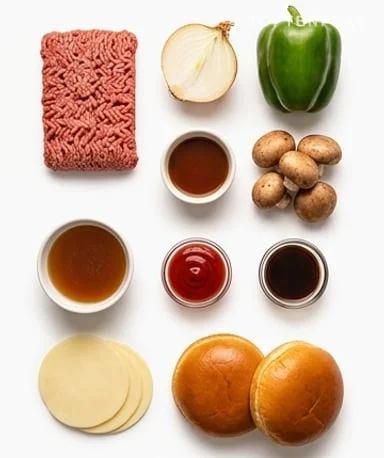
Everything is here: well-marbled ground beef, basic vegetables, thick-cut provolone, and the condiments that make the sauce.
- 85/15 ground beef : The fat-to-lean ratio is crucial here. Too lean beef will give a dry texture once the sauce reduces, because the meat has nothing to compensate for moisture loss. The rendered fat at the start also serves to sweat the vegetables without adding extra fat.
- Cremini mushrooms : Their role is to provide umami—that depth of flavor that makes the dish taste like it simmered for a long time even though it cooked for twenty minutes. Cut them into small dice so they blend into the filling. Too large pieces create texture contrasts that break the homogeneity of the sloppy joe.
- Provolone : This is the historic cheese of the Philly cheese steak, and it has a useful property: it melts without separating or becoming elastic, provided it’s never directly cooked. Deli-sliced provolone melts significantly better than pre-packaged, which often contains anti-caking agents that disrupt melting.
- Beef broth + cornstarch : Cornstarch diluted in cold broth before being poured into the hot pan—that’s the only order that works. If you add dry cornstarch directly to a hot sauce, it forms lumps that won’t disappear even when whisking. The cold broth gives the starch time to disperse evenly before heating.
- Worcestershire sauce : It brings a fermented acidity and depth reminiscent of steak marinades. One tablespoon is enough—beyond that, the flavor becomes too dominant and overwhelms other tastes. Look for a version with anchovies in the ingredients for maximum umami depth.
- Brioche buns : Brioche holds up better to sauce than classic white bread thanks to its denser crumb and butter content. Toast them absolutely: a slightly grilled surface creates a physical barrier that slows absorption and gives about twenty minutes before the bread starts to soften.
Sear the beef without moving it
The first step goes against the usual reflex to stir the meat as soon as it hits the pan. Here, we do the opposite. The cast iron must be really hot before adding the beef—a lukewarm surface will boil the meat in its own juices rather than searing it. Spread the ground beef in as even a layer as possible and leave it untouched for 2 to 3 minutes. You hear the crackling change in tone, becoming drier, less watery—that’s the sign that water has evaporated and the crust is forming. This prolonged contact with the hot surface generates Maillard compounds, the reaction that gives seared meats their complex, slightly charred flavor, the kind that distinguishes pan-cooked ground beef from boiled meatballs. Turn the pieces, let the other side brown for another minute, then remove the meat. It doesn’t need to be fully cooked—it will finish in the sauce.
Let the vegetables burn a little (yes, really)
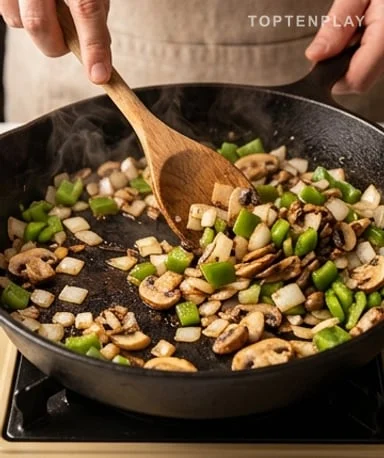
Leave the rendered fat in the pan—that’s what will cook the vegetables, and it already carries some of the beef flavor. Add a pat of butter, then the onions, bell pepper, and diced mushrooms. Same rule as with the beef: do not stir. Let the vegetables have direct contact with the hot cast iron for 1 to 2 minutes. The onions will start to take on an amber color on the edges, the mushrooms will lose their water and visibly shrink. This controlled slight charring replicates the grilled taste of real Philly cheese steaks, cooked in Philadelphia on a very hot metal griddle, not in a non-stick pan. There should be some dark spots on the vegetables when you stir them—that’s exactly what we want, not an accident. Another 1 to 2 minutes of contact, then move on to the sauce.
The sauce thickens on its own if given time
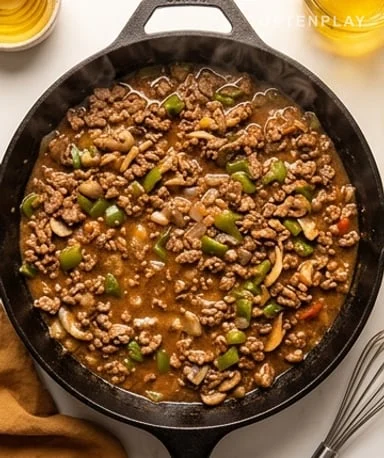
Return the beef to the pan with the vegetables. First, prepare the cornstarch-broth mixture in a separate small bowl: whisk until no white grains are visible. Pour this mixture over the meat, then add the ketchup, Worcestershire, salt, and pepper. The sauce will look far too liquid at first glance—that’s normal, the cornstarch hasn’t heated yet. Let it simmer over medium heat for 3 to 5 minutes, stirring occasionally. The transformation is gradual and quite clear: the sauce goes from translucent liquid to a consistency that coats a spoon and leaves a trail when you draw a line with the back of a spatula. Taste as you go. If it lacks depth, an extra half-spoon of Worcestershire. If it’s too acidic, a small pinch of brown sugar. The ideal consistency: the filling slowly slides off a spoon but doesn’t immediately flatten in the pan.
Incorporate the cheese off the heat
Turn off the heat completely before adding the provolone cut into pieces. The residual heat from the cast iron and the filling is enough to melt the cheese in 1 to 2 minutes of slow stirring. This is the detail that makes the difference between a creamy filling and a greasy one. With the flame still on, the cheese melts too quickly, the oil separates from the proteins and rises to the surface—you get a grainy texture under a golden pool, which is not the desired effect. Stir in wide circles, bringing the filling from the edges to the center. The provolone will first form strands, then gradually disperse into the sauce. The filling takes on a shiny, slightly pearlescent appearance, darker than before—a sign that the cheese has been properly incorporated rather than separated.
Tips & Tricks
- Toast the buns with butter in the same cast iron after transferring the filling to a bowl—the caramelized juices stuck to the surface will transfer to the bread during toasting, adding a layer of flavor you won’t need to build otherwise.
- Prepare the filling up to two days ahead and store it in the refrigerator without the cheese. Add the provolone only when reheating over low heat—it will melt better in freshly hot sauce than in a cooled sauce whose proteins have hardened.
- If the sauce has thickened too much while waiting (it will), add 2 to 3 tablespoons of hot broth and stir—the already present cornstarch redistributes and the consistency returns without needing to cook again or add more thickener.
- To delay bread absorption, place a whole slice of provolone directly on the bottom bun while still hot before adding the filling. It melts slightly on contact and creates an impermeable layer between the sauce and the crumb.
Can I use another cheese instead of provolone?
Yes, but provolone remains the best choice for its even melting without oily separation. Emmental or Comté melt similarly. Avoid pre-shredded cheddar: the anti-caking agents give a grainy texture rather than creamy.
How do I keep the bread from getting completely soggy?
Two things: toast the buns in the cast iron with a little butter, and serve immediately after assembly. If you prepare the filling ahead, keep the bread and filling separate until the last moment—even toasted brioche starts to soften after ten minutes of contact with the sauce.
Can I prepare the filling in advance?
Yes, and it’s even better the next day once the flavors have melded. Store it in the refrigerator without the provolone and add the cheese only when reheating over low heat with stirring. The sauce will have thickened—add a little hot broth to get back to the original consistency.
Does this recipe freeze well?
The filling without cheese freezes very well for up to three months. Thaw in the refrigerator overnight, reheat over low heat with a splash of broth, then incorporate the provolone off the heat. Cheese added before freezing separates and gives a grainy texture after thawing.
The sauce is too thin—what went wrong?
Either the cornstarch wasn’t properly dissolved in cold broth before adding (then it forms lumps that cook without thickening), or the heat was too low to activate the starch. Simply continue cooking over medium-high heat for 2 to 3 more minutes, stirring—the sauce will thicken further.
Can I substitute the cremini mushrooms?
Regular white mushrooms work but provide less umami than cremini. For a similar result, add half a teaspoon of soy sauce to the sauce instead. Rehydrated dried shiitake mushrooms, finely chopped, also yield a very satisfying result.
Philly Cheese Steak Sloppy Joes
American
Sandwich / Main Course
Seared ground beef with a crust, caramelized vegetables in cast iron, and provolone melted off the heat—all the flavor of a Philly cheese steak in a saucy sandwich ready in 35 minutes.
Ingredients
- 500g ground beef 85/15
- 1 tbsp butter
- 1 medium yellow onion, finely diced
- 1 green bell pepper, finely diced
- 200g cremini mushrooms, finely diced
- 3 tbsp ketchup
- 1 tbsp Worcestershire sauce
- 1 tbsp cornstarch
- 180ml beef broth
- 150g provolone, cut into pieces
- 4 brioche buns
- to taste salt and black pepper
Instructions
- 1Heat a large cast iron skillet over high heat until very hot. Place the ground beef in an even layer without pressing down and let it sear untouched for 2 to 3 minutes, until a brown crust forms on the bottom.
- 2Turn the beef pieces and let brown for another minute. Remove the meat and reserve in a bowl. Leave the rendered fat in the pan.
- 3Add the butter to the cast iron, then the onion, bell pepper, and diced mushrooms. Let them brown without stirring for 1 to 2 minutes, then stir once and let cook another 1 to 2 minutes until the vegetables have some golden spots.
- 4Return the beef to the pan. In a separate bowl, whisk the cornstarch into the cold broth until no lumps remain. Pour this mixture over the meat, then add ketchup, Worcestershire, salt, and pepper. Mix well.
- 5Simmer over medium heat for 3 to 5 minutes, stirring occasionally, until the sauce thickens and coats the back of a spoon.
- 6Turn off the heat completely. Add the provolone and stir slowly in wide circles until fully melted and the filling is shiny.
- 7Toast the split buns in the same cast iron with a little butter. Divide the filling among the buns and serve immediately.
Notes
• A very hot cast iron is essential for the beef crust—a lukewarm pan boils the meat in its juices instead of searing.
• Provolone is always added with the heat off: residual heat is enough and prevents oily separation.
• The filling (without cheese) keeps for 2 days in the refrigerator. Add provolone only when reheating over low heat.
• If the sauce thickens too much upon resting, add 2-3 tbsp of hot broth and stir—consistency returns without recooking.
Nutrition Facts (per serving, estimated)
| 655 kcalCalories | 41gProtein | 47gCarbs | 33gFat |