When cool evenings call for a real centerpiece, this peppercorn and Parmesan prime rib roast does the job beautifully. It’s the kind of classic you serve for a hearty Sunday, a festive meal, or a dinner where you want to slice impressive portions without spending all day in the kitchen.
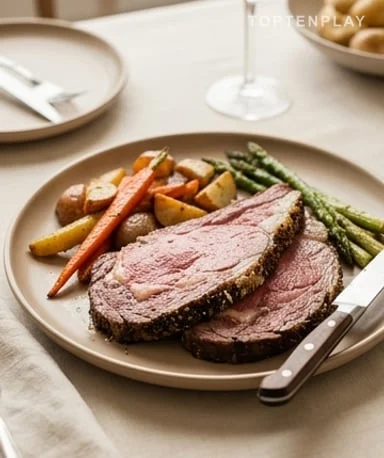
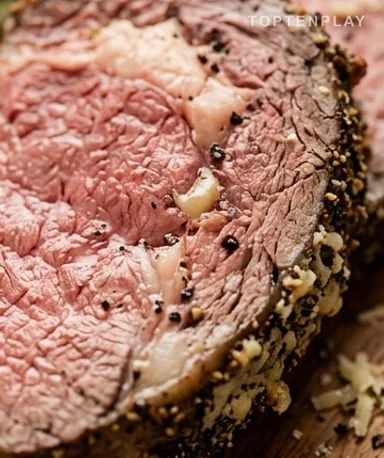
The crust comes out dark, granular, with that warm aroma of cracked pepper and roasted garlic. When sliced, the meat should remain juicy, pink in the center, with glossy juices beading on the board. The Parmesan adds a salty, toasted, almost nutty note that clings to the surface. It’s generous, clean, and much simpler than a grand roast might lead you to believe.
Why you’ll love this recipe
Ingredient Notes
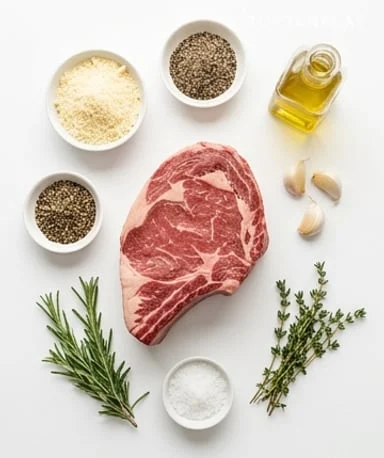
Beef, cracked pepper, garlic, and Parmesan: few ingredients, so each must be good.
- Prime rib roast or rib roast : This is the base of the dish, so choose a well-marbled piece with fine fat veins that will melt during cooking. If you can’t find a rib roast, a sirloin roast works, but you’ll need to monitor the internal temperature even more closely.
- Cracked black pepper : It forms the aromatic backbone of the crust, with a clean heat and a slight crunch. Use whole peppercorns and crack them coarsely rather than fine powder, otherwise the flavor becomes flat and sometimes bitter.
- Grated Parmesan : It adds salt, umami, and a lightly grilled surface that smells like warm hazelnut. Grate it finely so it adheres well to the meat, or substitute with Grana Padano for a milder flavor.
- Garlic : It rounds out the pepper and perfumes the crust during cooking. Use fresh garlic finely grated rather than large pieces, as they might burn on the surface and give a dry bitterness.
- Olive oil : It helps the pepper-Parmesan mixture stick to the meat and promotes an even crust. A simple oil is fine; no need for a very fruity one that might overpower the beef.
- Salt : It seasons the meat deeply and helps the surface roast better. Salt sparingly, as the Parmesan is already salty, then adjust at serving with a pinch of fleur de sel if needed.
Let the meat come to room temperature gently
Take the roast out of the fridge early enough so it loses its chill before going into the oven. Meat that is too cold cooks unevenly: the outside colors quickly while the center stays firm and cold. Pat the surface dry with paper towels, because moisture prevents the crust from forming and creates steam instead of a roasted aroma. The meat should be slightly supple to the touch, with a matte surface ready for seasoning.
Make a crust that sticks
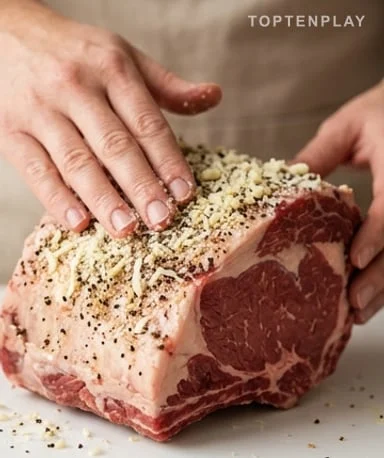
Mix the finely grated Parmesan, cracked pepper, garlic, salt, and oil until you get a thick, granular paste. It should smell strongly of fresh pepper, with a salty, milky note from the cheese. Press this paste onto the top and sides of the roast instead of just sprinkling it, because direct contact helps it adhere during cooking. If the mixture crumbles, add a few drops of oil, not too much, just enough to bind.
Cook slowly to keep the juices
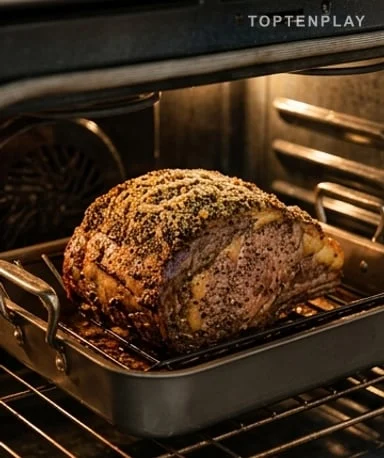
Place the roast in a dish or on a rack, then start with even heat rather than an aggressive fire from start to finish. The surface will darken gradually, the Parmesan will brown in spots, and the kitchen will fill with that peppery roast beef aroma that makes you hungry even before carving. The key point remains the internal temperature: remove the meat a bit before the desired doneness, as it continues to rise during resting. This habit avoids gray, dry edges.
Let it rest before slicing
Resting is not a decorative option; it’s what allows the juices to redistribute in the meat. Place the roast on a board and cover loosely, without wrapping, so the crust doesn’t soften. You might hear a slight sizzle from the surface, then the meat relaxes gently. If you cut too soon, the juice runs onto the board instead of staying in the slices.
Serve with a simple side
This roast already has plenty of character, so no need to load it with complicated accompaniments. A well-buttered purée, roasted potatoes, or golden carrots are enough to soak up the peppery juices. When slicing, use a long, sharp knife to get clean slices, with the dark crust bordering the pink meat. Serve immediately, while the contrast between crispy crust and juicy center is still at its peak.
Tips & Tricks
- Use a probe thermometer, because the thickness of a roast varies a lot and time alone doesn’t tell if the center is pink, rare, or overcooked.
- Crack the pepper coarsely just before using, so its aroma is livelier and the crust keeps a real texture under the tooth.
- Don’t cram the roast into a too-small dish; hot air needs to circulate around the meat to form a dry, well-roasted crust.
- Prepare a quick jus with the pan drippings and some hot broth, as this picks up the toasted flavors without masking the beef taste.
What doneness should I aim for a roasted prime rib?
For pink and juicy meat, aim for about 52-54°C internal temperature before resting. The temperature continues to rise slightly out of the oven, so it’s better to remove the roast a bit before the final desired result.
Do I need to sear the meat before roasting?
It’s not necessary here, because starting at a very high oven helps form a crust. The Parmesan, pepper, and garlic create a well-flavored surface without adding a complicated step.
How do I prevent the Parmesan crust from falling off?
The meat must be well dried before applying the mixture. Press the crust on with your hands instead of sprinkling, and use just enough oil to get a paste that adheres.
Can I prepare the roast in advance?
You can season the meat a few hours before cooking and keep it covered in the fridge. Then take it out early enough to come to room temperature before going into the oven.
What to serve with this roast?
Roasted potatoes, homemade mash, or root vegetables work very well. You need a simple side that can absorb the peppery juices without stealing the show from the meat.
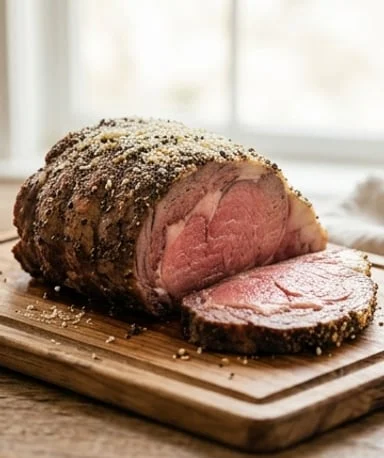
Peppercorn and Parmesan Prime Rib Roast
French
Main course
A classic centerpiece simplified: a prime rib roast with an intense crust of pepper, garlic, and Parmesan, crispy outside and juicy in the center.
Ingredients
- 2 kg prime rib roast
- 60 g finely grated Parmesan
- 2 tbsp coarsely cracked black pepper
- 3 cloves garlic, grated or very finely chopped
- 2 tbsp olive oil
- 1 tsp fine salt
- 1 tsp fresh thyme, chopped
- 250 ml hot beef broth for the jus
Instructions
- 1Take the roast out of the refrigerator 45 minutes before cooking, then pat the entire surface dry with paper towels.
- 2Preheat the oven to 220°C.
- 3Mix the grated Parmesan, cracked pepper, garlic, olive oil, salt, and thyme until a thick paste forms.
- 4Press this mixture onto the top and sides of the roast to form an even crust.
- 5Place the roast in a dish, ideally on a rack, then roast at 220°C for 15 minutes.
- 6Reduce the oven to 160°C and continue roasting for about 1 hour 30 to 1 hour 45 minutes, until the internal temperature reaches 52-54°C for medium-rare.
- 7Remove the roast from the oven, cover loosely, and let it rest for 20 minutes before slicing.
- 8Pour the hot broth into the roasting dish, scrape up the browned bits, and serve this jus with the beef slices.
Notes
• A probe thermometer is highly recommended, as the weight and thickness of the roast greatly affect cooking time.
• Do not cover the meat tightly during resting, or the crust will soften.
• For a milder flavor, replace half the black pepper with milder white pepper.
• The beef broth is enough to make a simple and tasty jus.
Nutrition Facts (per serving, estimated)
| 690 kcalCalories | 62gProtein | 2gCarbs | 48gFat |