Why do some Italian recipes reduce an entire table to silence after the first bite? Arrabbiata is one of them. Five ingredients, an honest technique, and a sauce that stays in your memory.
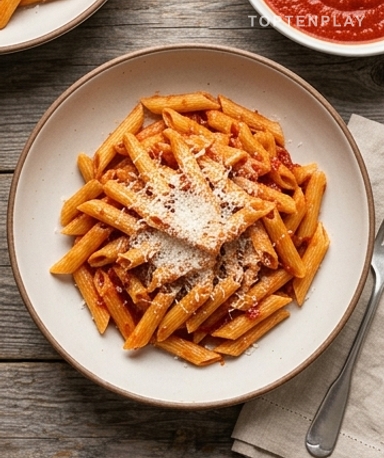
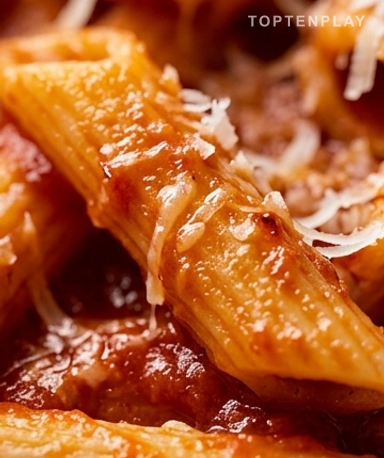
The red of this sauce is deep—almost burgundy after reducing, far from the bright red of a raw tomato. Every ridge of the penne is saturated, the surface of the pasta shiny with oil and concentrated tomato. The rising aroma mixes garlic sautéed in hot oil—that slightly sweet, almost caramelized scent—and the dull heat of the chili, discreet to the nose, which only truly manifests after swallowing. Grated Pecorino melts in small white islands on top.
Why you’ll love this recipe
Ingredient Notes
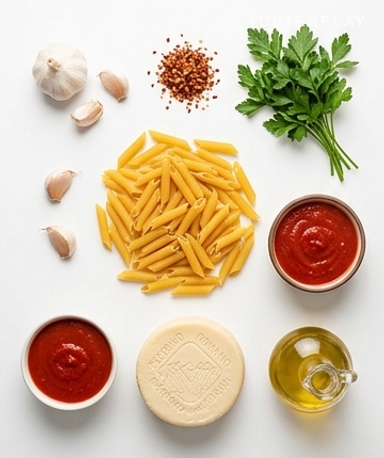
All recipe ingredients gathered: penne, passata, garlic, chili, Pecorino, and parsley.
- Passata : Passata is just pureed and strained tomatoes—smoother than crushed, denser than industrial coulis. For arrabbiata, it’s the right choice: it reduces well and clings to the pasta without being grainy. Cirio is solid, but any Italian passata with a short ingredient list will do.
- Chili flakes : Flakes, not powder. Powder gives a diffuse and uniform heat; flakes provide small peaks of heat depending on where they land. It changes how you experience the spiciness. One teaspoon to stay reasonable.
- Pecorino Romano : You could use parmesan. Some do. But Pecorino Romano is saltier, more robust, with a slightly sharp edge that pairs well with the acidity of the tomato. If you can’t find it, ordinary Pecorino can work; parmesan also works but the profile is milder, less sharp.
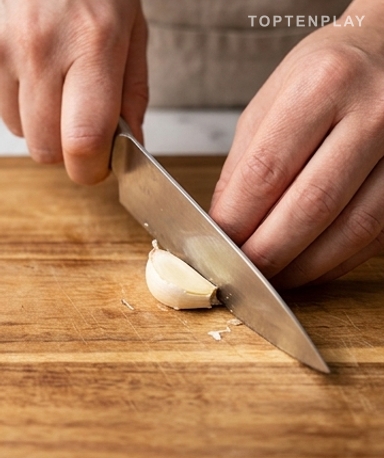
- Garlic : Two cloves, smashed flat with the side of a knife—not minced. Smashed, the garlic gently infuses the oil and can be easily removed before serving if needed. Minced, it would melt into the sauce and become more aggressive. Here we want the aroma, not the pieces.
Garlic first, and no joking around
Heat the olive oil over medium heat—not too high. The smashed garlic should make a soft hiss as it enters the pan, that little sizzle confirming the temperature is right. Add the chili flakes directly into the oil with the garlic. Watch closely. This is the most technical moment of the entire recipe: the garlic must turn golden like light caramel, with slightly browned edges, but absolutely not burnt. One second too long and it becomes bitter, and the sauce won’t recover. Two minutes over medium heat, no more.
The sauce that takes its time
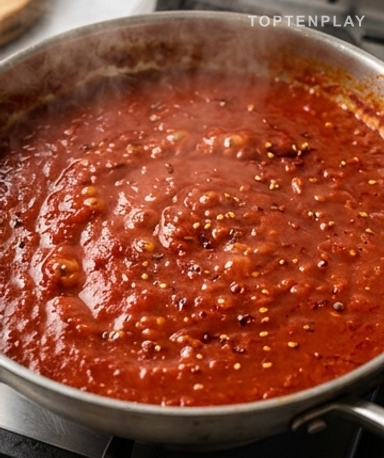
Pour in the passata all at once—it will splatter a bit, that’s normal. Lower the heat immediately. Season with salt and pepper, and stir. The sauce will change from bright red to a darker, more concentrated red during cooking. Allow fifteen to twenty minutes over low heat, stirring occasionally—the surface should bubble gently, not a rolling boil. During this time, start your pasta in a large pot of very salty water. Just before adding the drained pasta, stir the chopped parsley into the sauce for a touch of freshness and color.
The junction that changes everything
Drain the penne al dente—reserving a small ladle of cooking water in a bowl. Don’t forget it. Pour the pasta directly into the pan with the sauce and sauté everything over medium-high heat for a good minute: the penne absorbs, the sauce clings to the ridges. If it seems too thick and the pasta starts to stick together, add a splash of the reserved cooking water—it’s loaded with starch, binds the sauce, and gives it that characteristic shine. The result should be coated, neither dry nor liquid.
To the table—and Pecorino last
Serve immediately, pasta doesn’t wait. Grated Pecorino Romano goes on the plates at the last second—not before, otherwise it melts into a mass in the pan and loses its slightly grainy texture. This salty, lingering cheese balances the tomato’s acidity and the chili’s heat. Put the rest of the Pecorino in a small bowl on the table. People always go for seconds.
Tips & Tricks
- Never throw away the cooking water before finishing the sauce. A ladle is enough, but it literally changes the texture: the starch it contains binds the sauce and makes it adhere to the pasta in a way nothing else can imitate.
- If the garlic colors too quickly, remove it from the pan before adding the passata. Its job is done—it has flavored the oil. Burnt garlic in the sauce ruins everything else.
- Pecorino Romano is naturally very salty. Taste the sauce before seasoning, and wait until you’ve grated the cheese onto the plate before concluding it needs more salt.
Can I replace penne with other pasta?
Yes, but penne rigate remains the best choice—their ridges and tubular shape hold the sauce both inside and out. Rigatoni also work very well. Avoid long pasta like spaghetti, which doesn’t coat as well with such a thick sauce.
How to store and reheat leftovers?
Penne arrabbiata keeps for 2 days in the refrigerator in an airtight container. To reheat, add a splash of water to a pan over medium heat and stir until the sauce is uniform again. The microwave dries out the pasta—best to avoid it.
Can I prepare the sauce in advance?
Absolutely, it’s even recommended for meals with guests. The sauce can be prepared up to 3 days in advance and kept cool in a jar. It even develops more character after a night. Just reheat it gently while the pasta cooks.
How to dose the chili to avoid it being too hot?
Start with half a teaspoon for a mild, pleasant heat. A full teaspoon gives a spicy result, while two teaspoons reserve the recipe for thrill-seekers. You can always add chili to the plate, but you can’t take it out.
Pecorino Romano or parmesan—what’s the concrete difference?
Pecorino Romano is saltier, sharper, and more pungent than parmesan. In this acidic and spicy tomato sauce, it provides a bold contrast that works very well. Parmesan can substitute, but the result will be milder and less distinctive. If you use Pecorino, taste the sauce before salting—it compensates for some of the salt.
My garlic burnt, can the sauce be saved?
No. Burnt garlic gives a bitterness that permeates the entire sauce and doesn’t disappear during cooking. The only solution is to start over. That’s why we cook over medium heat, not high—better to take 30 seconds longer than to fail the only delicate moment of the recipe.
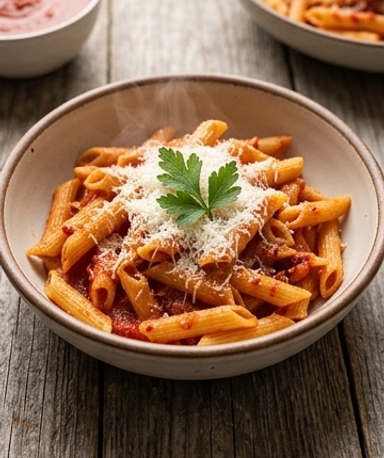
Penne all’arrabbiata with Pecorino
Italian
Main Course
A spicy tomato sauce reduced with olive oil and garlic, served over penne al dente and generously covered with grated Pecorino Romano. Simple, direct, unbeatable.
Ingredients
- 400g penne rigate
- 700ml tomato passata (1 bottle)
- 3 tbsp (45ml) olive oil
- 2 cloves of garlic, smashed flat
- 1 tsp dried chili flakes
- 1 small bunch fresh parsley, chopped
- 60g Pecorino Romano, grated (+ extra for the table)
- 1 tsp salt (+ pasta water)
- 1 pinch black pepper
Instructions
- 1Bring a large pot of heavily salted water to a boil.
- 2Heat the olive oil over medium heat in a large pan. Sauté the smashed garlic cloves with the chili flakes for 2 minutes, until the garlic is golden like light caramel—without burning it.
- 3Pour the passata into the pan all at once, lower the heat immediately. Salt, pepper, and let simmer over low heat for 15 to 20 minutes, stirring occasionally until slightly thickened.
- 4Cook the penne in the boiling water according to package directions, removing them 1 minute before the end so they are al dente. Reserve a ladle of cooking water before draining.
- 5Stir the chopped parsley into the sauce, then add the drained penne. Toss over medium-high heat for 1 minute. If the sauce is too thick, add a splash of cooking water to bind.
- 6Serve immediately. Generously grate Pecorino Romano over each plate at the last moment.
Notes
• The sauce can be prepared up to 3 days in advance and stored in the refrigerator. Reheat it gently while the pasta is cooking.
• Cooking water is essential: never throw it away before finishing the sauce. The starch it contains gives the sauce its shine and hold.
• For a spicier version, increase to 2 teaspoons of chili flakes. For a mild family version, decrease to half a teaspoon.
Nutrition Facts (per serving, estimated)
| 490 kcalCalories | 17gProtein | 76gCarbs | 13gFat |