📌 Pear velouté with star anise and vanilla whipped cream: a refined recipe ready in 45 minutes
Posted 29 December 2025 by: Admin
A Refined Dessert With Autumnal Flavors
This recipe for pear velouté and vanilla whipped cream brings together in just 45 minutes the elegance of a gourmet dessert and the simplicity of an accessible preparation. Designed by Anne Kerouédan for Cniel, it transforms six pears into a refined dessert for four people, without requiring any particular technical skills.
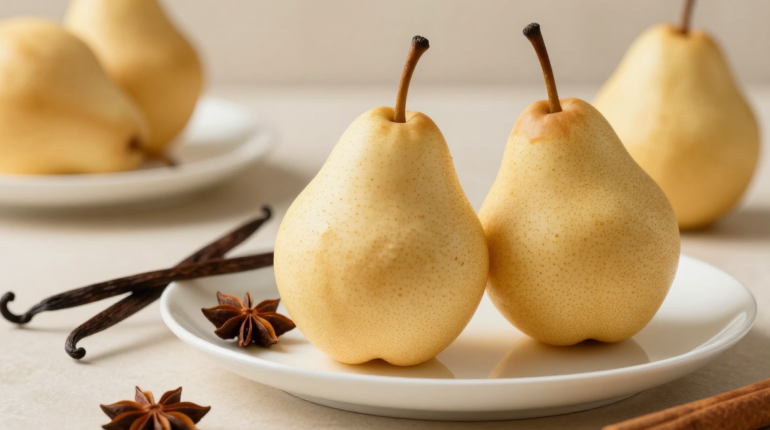
The alliance of noble spices constitutes the heart of this creation: a split vanilla bean, three star anise stars, and two teaspoons of cinnamon envelop the pears in an enchanting fragrance. These aromatics, combined with 80 grams of brown sugar, enhance the fruit without ever dominating it. The final touch? Toasted flaked almonds that provide the necessary crunch to contrast the textures.
The genius of this recipe lies in its ability to impress without constraint: ten minutes of active preparation, minimal supervision during cooking, and a result worthy of a Michelin-starred table. Autumn finds its most gourmet expression here, one that marries melting and creaminess, warmth and freshness. Success depends as much on the choice of ingredients as on the precision of the technical gestures that transform these simple elements into a complete sensory experience.
The Secrets Of A Mastered Preparation
The success of the velouté relies on slow cooking that transforms the pears into a melting substance. After washing, peeling, and cutting the fruit while carefully removing the core and seeds, the first step is to plunge them into a saucepan with 60 ml of water, the brown sugar, and the spices. Thirty minutes over medium heat is enough to obtain this perfectly melting texture that characterizes the velouté.
The critical moment occurs at the end of cooking: the incorporation of 100 ml of light liquid cream requires particular attention. This late addition preserves the delicacy of the emulsion and prevents the cream from separating under the effect of prolonged heat. Five minutes over low heat allows the flavors to merge without compromising the creaminess.
Blending with an immersion blender takes place after removing the vanilla bean, whose seeds have already infused their fragrance. This final step homogenizes the whole by creating that velvety consistency that glides in the mouth. The resulting texture should remain fluid without being liquid, creamy without being thick.
This methodical technical progression guarantees a consistent result, where each component plays its role without dominance. Patience during cooking and precision in adding the cream determine the final quality of the dessert.
Vanilla Whipped Cream, A Creamy Counterpoint
While the velouté constitutes the heart of the dessert, the whipped cream represents the essential element of contrast. Its preparation requires a perfectly cold mixer bowl, a sine qua non condition for obtaining the desired firmness. The 300 ml of whole cream, whipped for three minutes, begins to gain volume before the incorporation of the vanilla sugar.
The addition of the three packets of vanilla sugar occurs only after this first whipping phase. This chronology avoids excess liquid that would delay the rising of the whipped cream. Whipping then continues until a firm texture is obtained, capable of holding in a dome on a spoon without collapsing.
The final result must present an airy consistency that contrasts with the density of the velouté. This textural opposition transforms each spoonful into a complete sensory experience: hot meets cold, melting dialogues with creamy. The three packets of vanilla sugar provide just enough sweetness to balance the spices of the velouté without dominating their intensity.
The serving temperature plays a crucial role in this balance. The lukewarm velouté enhances the aromas of cinnamon and star anise, while the freshness of the whipped cream amplifies its natural lightness.
Presentation And Gourmet Variations
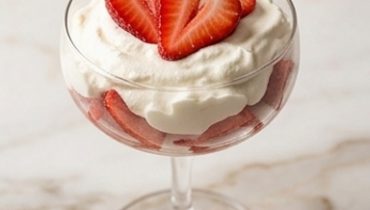
The final plating transforms this meticulous preparation into a gustatory painting. The bowls receive the still-lukewarm velouté, topped with a generous quenelle of whipped cream. A star anise crowns the whole, visually recalling the spice that flavors the dessert, while the toasted flaked almonds provide the essential crunch.
The toasting of the almonds is done in a very hot pan, without fat. A few minutes are enough to reveal their aromas and obtain that golden hue that contrasts with the paleness of the velouté. This technical detail, seemingly trivial, completes the sensory architecture of the dessert: each spoonful alternates between melting, creamy, and crunchy.
The recipe offers a welcome creative latitude. Anne Kerouédan suggests a variation with apples, substituting the classic autumn fruit for pears, with bitter almond to accentuate the aromatic depth. This adaptation maintains the basic structure while allowing for the exploration of other gustatory territories according to the seasons or preferences.
The thermal contrast remains decisive until serving. The lukewarm velouté exalts the cinnamon and vanilla, while the cold whipped cream brings its milky freshness. The toasted almonds, added at the last moment, preserve their crunchy texture and residual heat, creating a third thermal dimension that completes the experience.