It’s often in late November or early December that we start thinking about it. A show-stopping appetizer without spending the whole day in the kitchen. This pear foie gras terrine is exactly that.
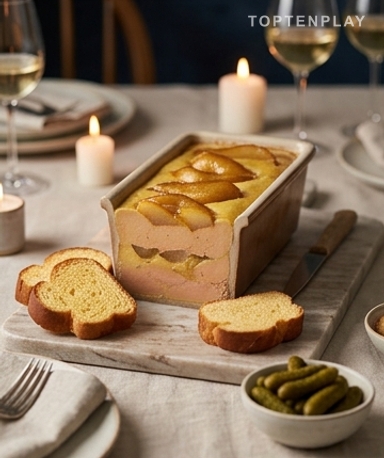
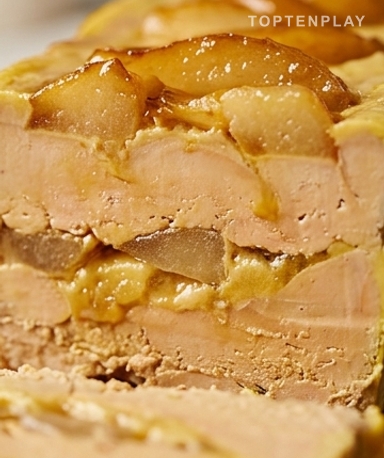
Place the terrine on the table and watch the reactions. The slice reveals a gradient of golden beige — almost the color of a light caramel — dotted with small translucent pieces of pear. Under the knife blade, it resists for a split second, then gives way. In the mouth, the richness of the foie gras recedes behind the sweet freshness of the pear. A balance that is not at all complicated to achieve.
Why you’ll love this recipe
Ingredient Notes
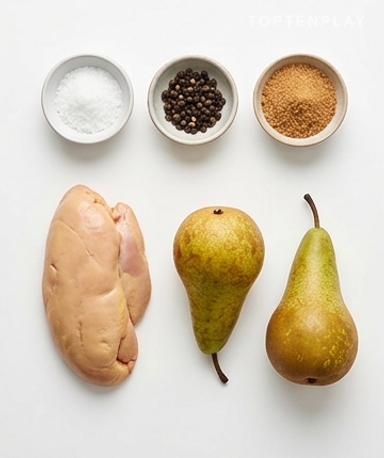
Few ingredients, but each one counts: raw foie gras, conference pears, salt, pepper, and cane sugar.
- Raw foie gras : Choose ‘extra’ or first choice, between 500 and 600 g. It should be supple to the touch, pinkish-ivory in color, and free of green spots. Green spots are bile — they give a bitter taste that is unforgiving. In supermarkets, you can find vacuum-sealed foie gras for around 30-40 € per lobe; at a butcher or gourmet shop, expect to pay a bit more, but the quality follows.
- Pears : Conference or Williams. Ripe but still firm — if you can press your nail into it without forcing, it’s too ripe and will turn into compote during cooking. The idea is for them to just melt a little, not disappear.
- Cane sugar : Two tablespoons, no more. It’s used to caramelize the pears in the pan — it creates that light amber veil around the pieces. White sugar works too, but cane sugar gives a slight note of molasses that pairs beautifully with foie gras.
- Salt and pepper : Fine salt rather than fleur de sel — it penetrates the flesh of the liver better. For the pepper, grind it yourself if you can. Pre-ground pepper powder has lost three-quarters of its aroma before you even open the bag.
Take the foie gras out of the fridge 30 minutes before starting
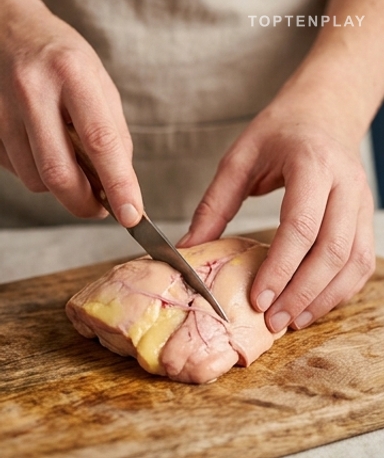
This is the first and most ignored rule. Cold foie gras is rigid, brittle, and difficult to work with. Thirty minutes at room temperature and it becomes as supple as clay — you can feel it under your fingers, a slight resistance that gradually gives way. Then separate the two lobes by pulling gently, then remove the veins using a sharp knife by following their path. It takes a little patience, but no special dexterity. A small forgotten vein won’t ruin the terrine.
Massage the salt and pepper into the liver, then let it rest
Mix 7.5 g of fine salt and 2 g of ground pepper in a bowl. Spread over the two lobes and massage lightly to help the seasoning penetrate — your fingers sink into the soft flesh of the liver, which regains its shape as soon as the pressure is removed. Let it rest for 15 to 20 minutes. It’s short, but enough for the salt to start working.
Caramelize the pears just right
Peel the pears, remove the core, and cut them into pieces of about 1.5 cm. Heat a pan over low heat, add the pears and the two tablespoons of cane sugar. As soon as the sugar melts, it smells like a warm tart — a sweet, slightly vanilla scent that fills the kitchen. The pears should become translucent at the edges, slightly colored like a light caramel. No more. If they start to turn into a puree, remove them from the heat immediately.
Assemble the terrine, then forget it in the oven
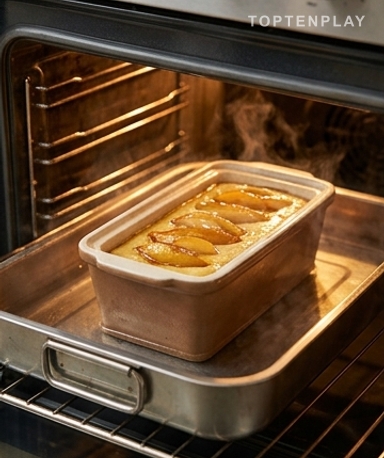
Preheat the oven to 100-110 °C and prepare a larger dish filled with hot water for the bain-marie. In your terrine, place a first layer of foie gras, pressing down lightly with the flat of your hand. Spread the caramelized pears over the top, then cover with the rest of the foie gras. Press down again to remove air pockets. Bake for 1h to 1h30 depending on the thickness of the liver. During cooking, the liver releases a golden, translucent fat that rises to the surface — this is normal and a good sign.
Wait 24 hours. This is the hardest part
As soon as it comes out of the oven, place a weight on the terrine — a small board and a tin can work perfectly. Let it cool at room temperature, then slide into the fridge for at least 24 hours, ideally 48. This resting period is not optional: the flavors need time to bond. On the day of tasting, take the terrine out 15 to 20 minutes before slicing. The blade slides through the flesh without resistance, revealing slices that hold together well and do not crumble.
Tips & Tricks
- Use a kitchen thermometer if you have one: the core temperature should be between 50 and 55 °C. Below that, the liver is undercooked. Above that, it will be dry and grainy.
- Don’t throw away the fat that rises to the surface during cooking — once cooled, it forms a thin protective layer that keeps the terrine fresh for several days in the fridge.
- For a clean slice, run the knife blade under hot water between each cut. A cold blade will catch and tear.
How long does the terrine keep in the refrigerator?
Well-covered with plastic wrap or an airtight lid, the terrine keeps for 5 to 7 days. The layer of fat that forms on the surface acts as a protective seal — do not remove it until slicing.
How do I know if the foie gras is cooked without a thermometer?
Insert a thin knife blade into the center of the terrine for 5 seconds, then place it on your wrist: it should be warm without burning. The terrine should also have slightly shrunk from the edges of the mold. If you have a thermometer, aim for 50-55 °C at the core.
My foie gras released a lot of fat during cooking, is this normal?
Yes, it’s normal. The amount depends on the quality of the liver and the oven temperature — the hotter the oven, the more the foie gras melts. At 100-110 °C, the melting remains limited. If you lose more than 30% of the volume, your oven was probably too hot.
Can you freeze homemade foie gras terrine?
Yes, but freezing alters the silky texture of the foie gras. If you must freeze it, wrap the whole terrine in plastic wrap before putting it in the freezer, and thaw slowly in the refrigerator 24 hours before serving.
Can I replace the pears with another fruit?
Absolutely. Rehydrated dried figs, cooking apples, or mangoes work well. Fig is sweeter and earthier, apple is more acidic, and mango brings an exotic note. The key is to choose a firm fruit that holds up during cooking.
What should I serve the terrine with for a beautiful presentation?
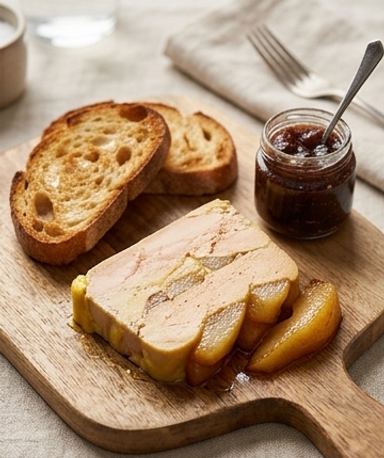
Slightly toasted country bread or gingerbread, a spoonful of fig or onion jam, and a few cornichons to cut through the richness. For a clean cut, dip the knife blade in hot water between each slice.
Pear Foie Gras Terrine
French
Appetizer
A melting foie gras terrine with caramelized pears, gently cooked in a bain-marie. Prepare 24 to 48 hours in advance for fully developed flavors.
Ingredients
- 550g raw duck foie gras (1 lobe, extra or first choice)
- 2 Conference or Williams pears (about 400g), ripe but firm
- 7,5g fine salt (about 1.5 teaspoons)
- 2g freshly ground black pepper (about 1 level teaspoon)
- 2 tbsp cane sugar (about 25g)
Instructions
- 1Take the foie gras out of the refrigerator 30 minutes prior. Separate the two lobes and carefully remove the veins using a sharp knife.
- 2Mix the salt and pepper in a bowl. Spread over the foie gras, massage lightly, and let rest for 15 to 20 minutes.
- 3Peel the pears, remove the core, and cut into approximately 1.5 cm pieces. Sauté over low heat with the cane sugar for 5 to 7 minutes until lightly caramelized. Set aside.
- 4Preheat the oven to 100-110 °C. Fill a large dish with hot water for the bain-marie.
- 5Place a first layer of foie gras in the terrine, add the caramelized pears, then cover with the rest of the foie gras. Press down firmly to eliminate air pockets.
- 6Cook in the bain-marie for 1h to 1h30. The core temperature should reach 50-55 °C.
- 7Remove from the oven, place a weight on the terrine (board + tin can). Let cool at room temperature, then refrigerate for at least 24 hours.
- 8Take the terrine out 15 to 20 minutes before serving. Slice with a blade dipped in hot water and serve with toasted bread.
Notes
• Keeps for 5 to 7 days in the refrigerator, well-covered. Do not remove the protective fat layer on the surface before tasting.
• Flavors are better 48 hours after preparation than after 24 hours — preparing in advance is an advantage, not a constraint.
• Fruity variation: replace the pears with rehydrated dried figs or pieces of firm mango for a sweeter version.
Nutrition Facts (per serving, estimated)
| 350 kcalCalories | 6gProtein | 14gCarbs | 30gFat |