Suivez-nous
28 May 2026

Pastry: this single-batter cake transforms into three layers during baking

Illustration image © TopTenPlay
Symbolbild © TopTenPlay

Publicité

Baking Magic In A Single Preparation

Imagine pouring a homogeneous liquid batter into a mold and discovering, forty minutes later, a dessert with three perfectly distinct layers. This is not a magic trick, but the fascinating reality of the Creamy Cake. This preparation defies culinary logic: a single mixing step simultaneously produces a dense and smooth custard base, a creamy intermediate heart that literally melts on the tongue, and an airy top reminiscent of the lightness of a traditional sponge cake.

The phenomenon relies on a natural stratification that occurs during baking. Ordinary ingredients – eggs, milk, flour, butter – reorganize themselves according to their respective densities under the effect of heat, creating this spectacular gustatory architecture without complex human intervention. Where a classic entremets would require three separate preparations, meticulously assembled, this cake achieves its transformation alone.

This apparent simplicity hides an impressive technical feat. You obtain a result worthy of a professional pastry shop without mastering advanced assembly or layered baking techniques. The contrast between the minimal effort required and the spectacular effect produced makes this dessert unique. Each bite reveals a different texture, creating a complete sensory experience that intrigues as much as it delights the taste buds.

Publicité

Illustration image © TopTenPlay
Symbolbild © TopTenPlay

Decoding The Ingredients And Their Strategic Role

This spectacular transformation relies on eight essential components, chosen and prepared with deliberate precision. Four separated eggs at room temperature, 200g of granulated sugar, a teaspoon of vanilla extract, 113g of melted then cooled butter, 120g of sifted flour, 480ml of warmed whole milk, and a pinch of salt constitute the complete arsenal. Each element occupies a strategic function in creating the three distinct layers.

Temperatures play a decisive role. Eggs must reach room temperature to emulsify correctly with the sugar and incorporate enough air during beating. The milk, warmed but never hot, integrates without shocking the preparation or melting the butter prematurely. The latter, melted then cooled, maintains its fluidity while avoiding cooking the egg yolks on contact.

The separation of whites and yolks is the absolute key to success. The yolks, beaten with the sugar, create the dense custard structure of the base. The whipped egg whites provide the necessary aeration for the spongy top. Between the two, the flour and milk generate that creamy intermediate layer that makes the dessert so original. This calibrated combination delivers 350 calories and 12g of protein per serving, balancing indulgence and nutritional value without compromising on the final texture.

Publicité

Illustration image © TopTenPlay
Symbolbild © TopTenPlay

The Preparation Technique Revealed

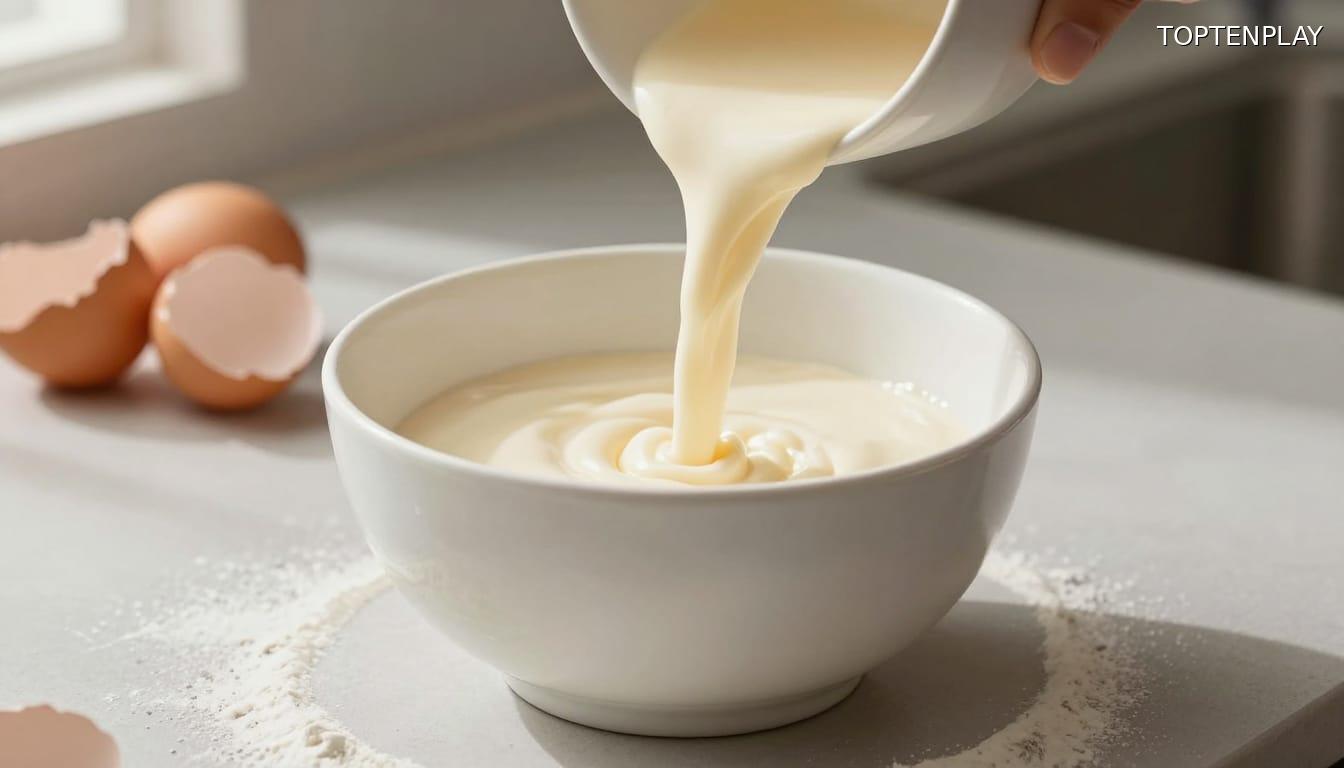
This orchestration of ingredients requires a precise method to trigger the stratification phenomenon. Start by beating the egg yolks with the sugar until you get a pale and frothy mixture. Incorporate the cooled melted butter, then the vanilla extract. Gradually add the sifted flour alternating with the warmed milk, mixing gently after each addition. The resulting consistency will seem abnormally liquid: this is exactly what is needed.

In a separate container, beat the egg whites to stiff peaks with the pinch of salt. This step determines the lightness of the spongy top. Then incorporate them into the liquid preparation in three parts, using folding movements. The final batter will look unstable, almost failed, but resist the urge to correct it. This fragile texture is precisely what allows the different densities to separate during baking.

Pour into a buttered 20×20 cm mold and bake at 160°C for 50 to 60 minutes. No complicated monitoring is required. The oven works alone, orchestrating the migration of components according to their specific weight. The proteins coagulate into a custard base, the fats stabilize the creamy middle layer, while the air trapped in the whites maintains the airy top. Upon removal, the dessert wobbles slightly in the center, a sign that the scientific magic has worked. Complete cooling reveals the three perfectly delimited strata, proving that the apparent complexity hid a baking logic accessible to all.

Publicité

Publicité
Partager sur Facebook