The Basics of an Ultra-Fast Fresh Recipe
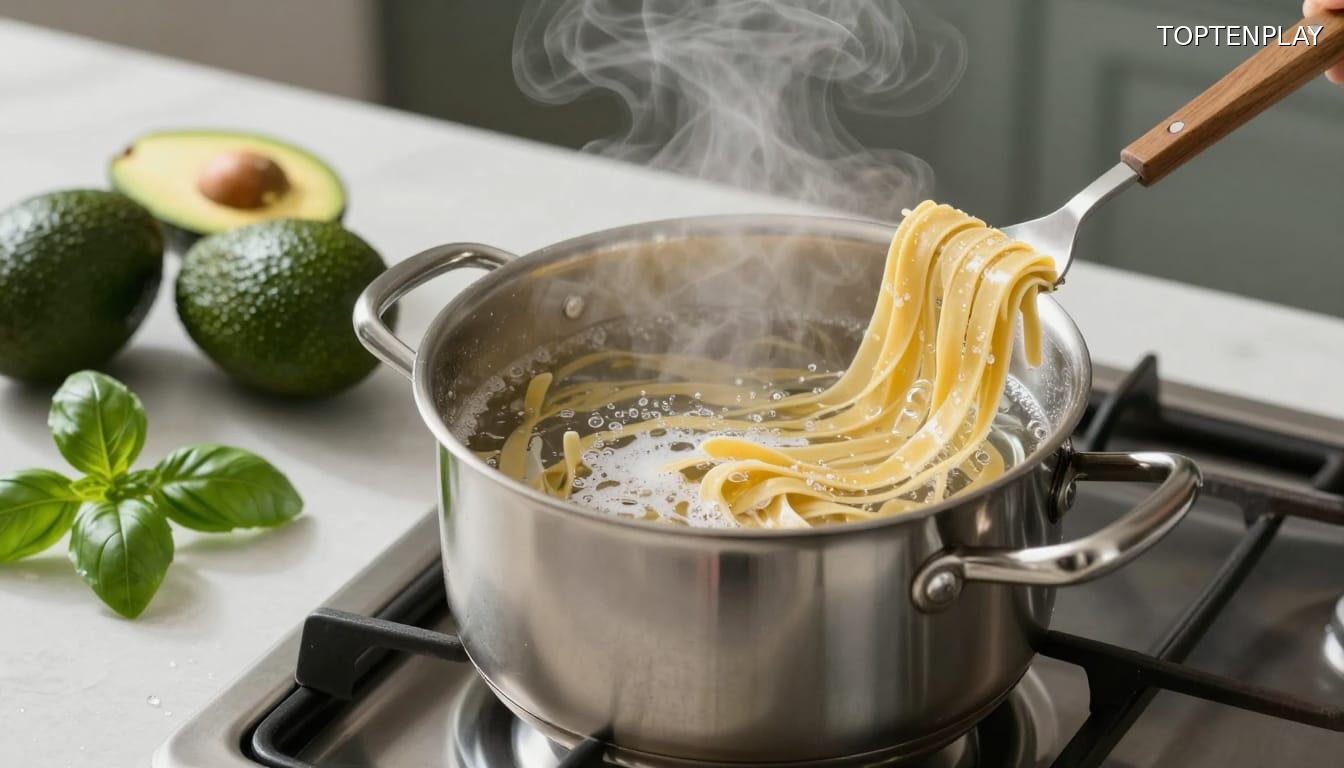
The success of this dish relies on precise timing. In a large volume of salted water, the pasta must cook al dente according to the exact time indicated on the package. This firm texture is the essential foundation for holding the creamy sauce without the whole dish turning into mush.
Meanwhile, preparing the avocados requires method and speed. Cut them in half, remove the pit and skin with a sharp movement, then dice the flesh into even cubes. This uniform cut ensures a harmonious distribution in the final dish and preserves the visual integrity of each piece.
Organization becomes the invisible ally of this express recipe. While the pasta simmers, prepare your avocados and gather the ingredients for the homemade pesto. This anticipation transforms fifteen minutes of stress into a fluid sequence where each element arrives at the right time, at the right temperature. The key lies in this timed execution: no rushing, no downtime, just a natural pace that leads straight to the desired result.
Homemade Pesto Revisited with Avocado Oil
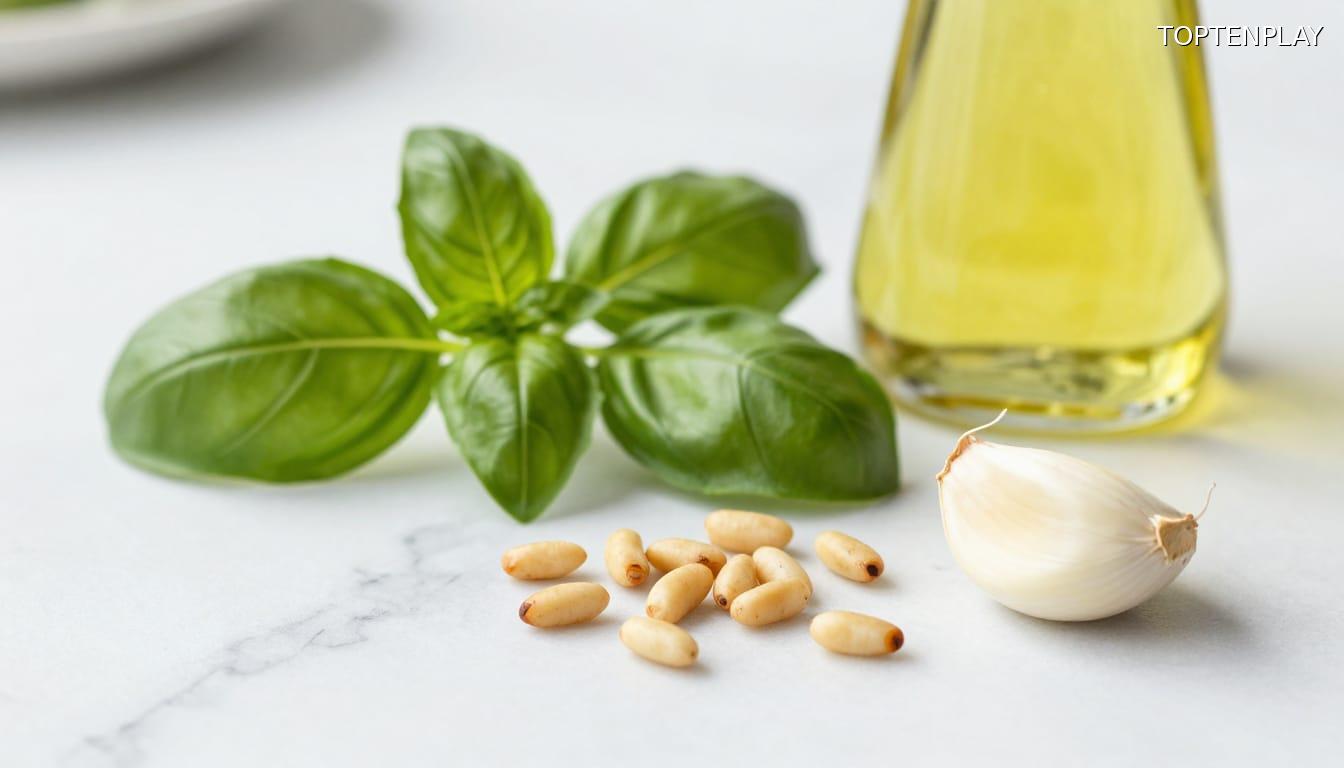
Blending in the mixer disrupts the codes of traditional pesto. Fresh basil, pine nuts, and a clove of garlic go into the bowl, but it is the avocado oil that marks the break. Exit Ligurian olive oil: this modern version creates a total aromatic coherence with the avocado cubes that will enrich the pasta.
Parmesan serves a dual function. First blended with the other ingredients to bind the flavors and create that characteristic creamy emulsion, it can then be added to taste. This flexibility allows for adjusting the intensity of the cheese without compromising the final texture.
Salt and pepper balance this new-generation sauce. Seasoning at this stage remains measured: it is better to adjust later than to oversaturate from the start. Blending transforms these raw elements into a velvety sauce that will coat each penne or fusilli without weighing them down.
This contemporary version of Genoese pesto keeps the spirit of the original recipe while embracing the plant-based trend. Avocado oil brings its subtle sweetness and beneficial fatty acids, while the basil unfolds its intact anise notes. The result? A sauce that already dialogues with the avocado cubes even before they meet on the plate.
The Strategic Assembly of Textures
Draining the pasta requires precision and timing. As soon as they reach the al dente texture, head for the colander without waiting. This step marks the beginning of a final choreography where every movement determines the result.
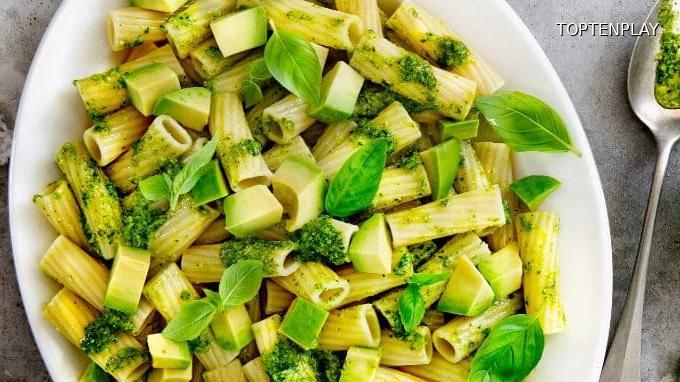
The pesto immediately joins the still-hot pasta. This rapid incorporation allows the sauce to seep between each spiral or tube, creating a uniform coating. The residual heat from the pasta gently melts the Parmesan and releases the aromas of the basil, transforming the mixture into a perfect emulsion.
The avocado cubes come in last. This sequence protects their integrity: incorporated after the pesto, they retain their shape and melting texture. Too vigorous a mixing would turn them into puree, drowning their distinct presence in the sauce. Delicacy is paramount to preserve these pieces that bring freshness and creamy contrast to every bite.
This precise orchestration guarantees a homogeneous distribution without compromising on textures. The pesto coats, the avocado punctuates, the pasta structures. Three distinct elements that merge into a coherent dish, ready to reveal its taste potential at the moment of plating.
Plating and the Final Touch
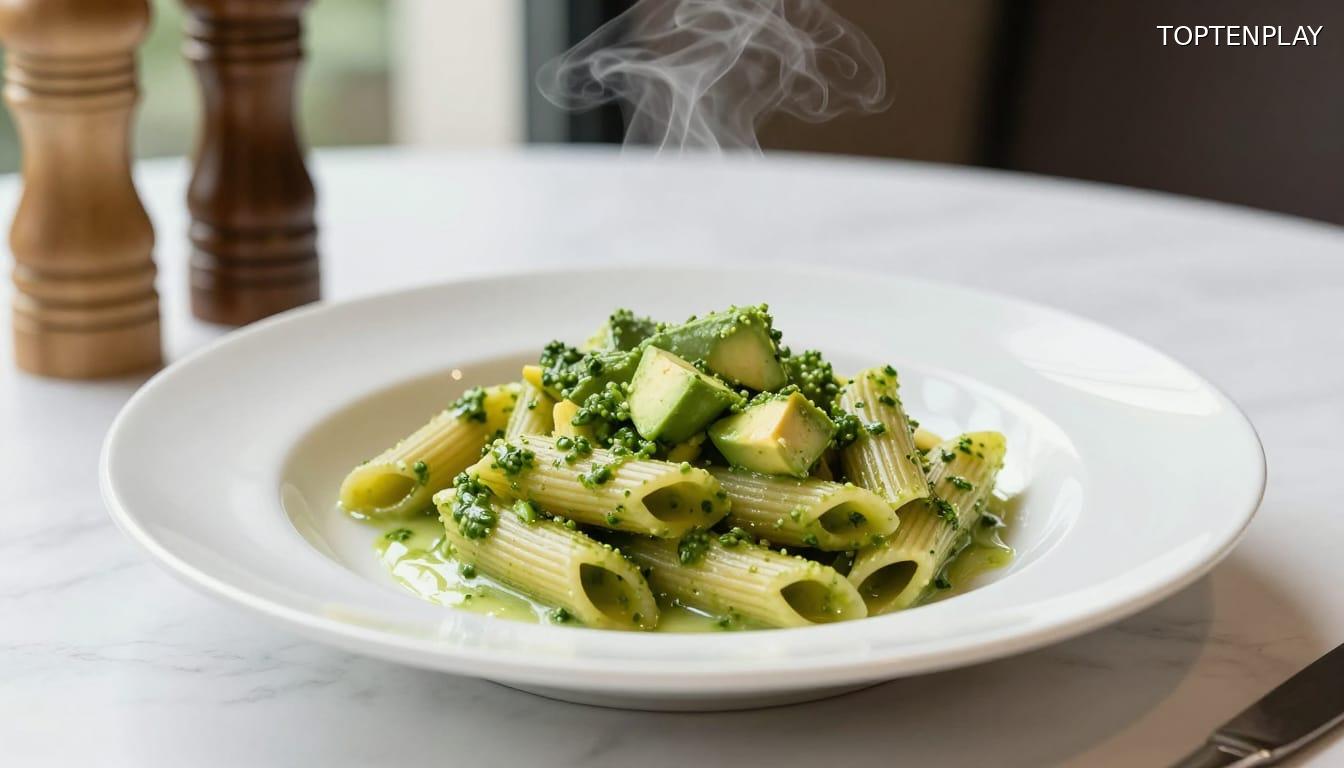
The serving dish receives the still-steaming pasta. This immediate transfer preserves the heat that enhances the pesto-avocado alliance. Presentation matters: the green-coated spirals reveal the suspended avocado cubes, a visual promise of the freshness to come.
The final seasoning happens at the table. A few turns of the black pepper mill and a pinch of salt adjust the flavors to the palate. This individual freedom makes all the difference: some will prefer to accentuate the character of the basil, others to reinforce the sweetness of the avocado. Control remains in everyone’s hands.
Temperature plays a decisive role. The hot pasta contrasts with the coolness of the avocado cubes, creating a multi-dimensional sensory experience. Waiting would cool the whole dish and flatten the gustatory tension that makes the recipe vibrate. Immediate service fully reveals the volatile aromas of fresh basil and the creaminess of avocado oil.
This final touch at the table transforms a mastered assembly into a personalized culinary moment. Each plate becomes unique, adjusted to the preferences of the moment. The scents rise, the textures dialogue, the freshness-heat balance reaches its peak. The dish then reveals all its sophisticated simplicity.