That sound when onions hit a hot pan — that sharp, immediate whisper that rises in seconds — is the signal that something good is about to happen. Pan-seared red onions are one of those recipes you completely underestimate until the day you serve them to guests and find yourself explaining the recipe three times in one evening. Ten minutes, two main ingredients, zero hassle.
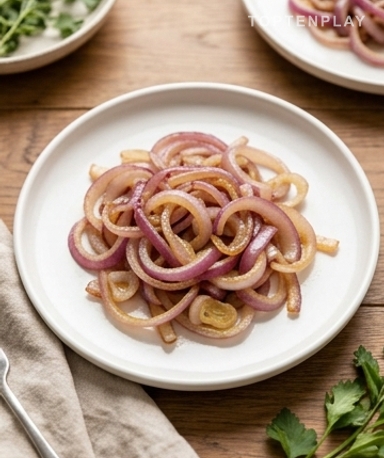
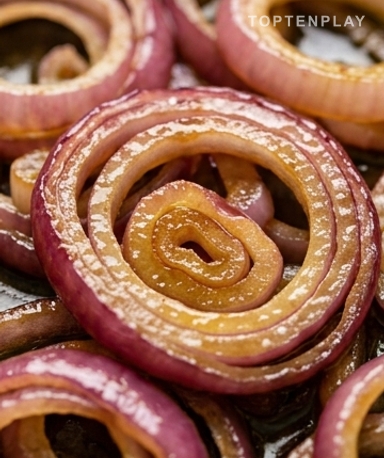
On the plate, they’ve lost all their aggressive pungency to become melt-in-the-mouth, almost translucent, golden like light caramel with slightly darkened edges. Their scent is sweet and mellow — a far cry from raw onions that sting your eyes. Under the fork, they give way without resistance but still maintain that slight vegetal thread that provides some bite. The squeeze of lemon added at the very end changes everything: it cuts through the fat, brightens the flavors, and gives the whole dish a freshness you really didn’t expect.
Why you’ll love this recipe
Ingredient Notes
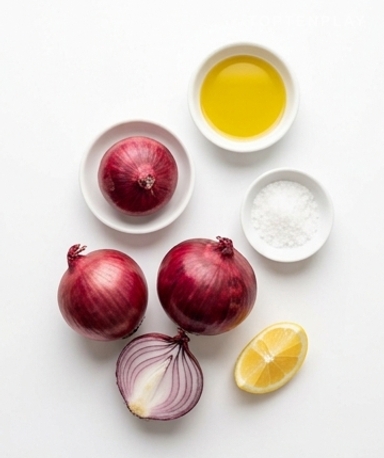
All you need for this minimalist recipe: two red onions, olive oil, and a pinch of salt.
- Red onions : Choose them firm, well-rounded, with a deep violet-burgundy, shiny skin. If the skin is dry and dull, the onion is old — it will be bitter and less juicy when cooked. Two medium onions are the right amount for two people as a generous side.
- Olive oil : Use a standard oil, not your best bottle of cold-pressed extra-virgin olive oil. Those oils don’t handle high heat well — they smoke and turn bitter. An ordinary olive oil for cooking is more than enough.
- Sea salt : A pinch, no more. The salt will speed up the onions’ sweating process and concentrate their naturally sweet flavor. Fine salt works too, but sea salt flakes added at the very end provide a subtle crunchy texture that changes everything.
- Lemon juice : Fresh only. Bottled lemon has a chemical aftertaste that is immediately noticeable in such a simple dish. Half a lemon is enough. Squeeze it just before serving, not during cooking — otherwise, the heat kills the aromas.
Start with a truly hot pan
This is where most people fail their onions. They put oil in a cold pan, add the onions too early, and end up with onions soaking in lukewarm oil instead of searing. First, heat the empty pan for a minute — you should feel the heat a few centimeters from the surface when you pass your hand over it. Only then, pour in the oil. Two seconds later, the onions. The thermal shock is immediate: it sizzles loudly, smokes slightly, and that reaction is exactly what will create that light surface caramelization.
Slice thin — really thin
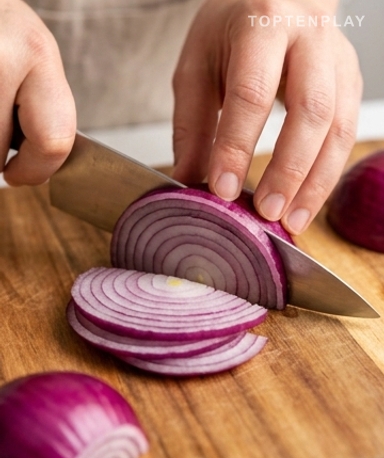
Thick slices are a no-go. The goal is for the onions to melt without waiting fifteen minutes. Half-moons 3 to 4 mm thick, no more. At this thickness, you’ll feel almost physically how raw and pungent the onion is when you slice it — a slight bite in the eyes, a somewhat aggressive sulfurous smell. This is normal. All that disappears in a few minutes in the pan. If you struggle with knives, a julienne peeler does the job perfectly.
Don’t touch anything for 5 minutes
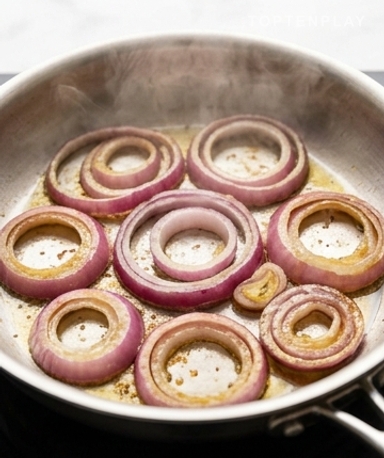
Once in the pan, add salt and stir once. Then put down your spatula. The temptation to stir constantly is strong, but that’s what prevents caramelization from forming. Leave the onions in contact with the hot pan for 2-3 minutes before turning them. When you look from above, you’ll see the edges starting to take on an amber-copper hue. Turn them over, lower the heat slightly, and leave for another 2-3 minutes. They should be golden like light caramel in some parts, still slightly purplish in others — this color contrast is exactly what we’re looking for.
Lemon at the last moment, not a second before
Remove the pan from the heat. Pour a few drops of lemon juice directly onto the hot onions — you’ll hear a brief hiss, and the aroma that rises is immediately different: fresher, brighter, with that acidity contrasting with the sweetness of the cooking. Stir one last time to coat. Taste. If it’s too sweet for your liking, add another drop. If you want a more complex note, a drizzle of balsamic vinegar instead of lemon also works — it brings a slightly syrupy depth as well.
Tips & Tricks
- If your onions stick to the bottom of the pan, do not turn up the heat. Add a tablespoon of cold water: it will deglaze the caramelized juices and create a little steam that finishes cooking the onions gently — and those released juices are pure flavor.
- For guests, make them ahead of time and reheat them covered in the pan for 2 minutes. They’ll be even better — the flavors concentrate as they cool.
- You can mix red and yellow onions in the same pan. The yellow is sweeter, the red is more complex and slightly firmer. The final result is more nuanced than with a single type.
Can these onions be prepared in advance?
Yes, and it’s actually a great idea. Pan-seared onions keep very well, and their flavors concentrate even more as they cool. Make them the day before, keep them in the refrigerator, and reheat them for 2 minutes over low heat with a lid before serving.
Why are my onions becoming soft and soggy instead of browning?
Two possible reasons: the pan wasn’t hot enough at the start, or you stirred too much during cooking. You need a strong thermal shock the moment the onions hit the pan, and then let them stay in contact with the heat without moving them so caramelization can form.
Can I use yellow or white onions instead of red onions?
Yes, but the result will be different. Yellow onions are sweeter and softer, white onions are more neutral and crunchy. Red onion provides a subtle complexity and a beautiful purplish color that turns golden-amber when cooked — which is what makes this dish visually appealing.
What dishes should I serve these pan-seared onions with?
They adapt to almost anything: over white rice, with a grilled turkey escalope, in a wrap with roasted vegetables, or on a green salad with some feta. They also work very well as a topping for a savory tart or grilled vegetables.
Can I add herbs or spices?
Absolutely. A sprig of fresh thyme added at the start of cooking subtly scents the onions. A pinch of cumin or ground coriander at the end of cooking adds an Oriental dimension. Avoid fragile herbs like parsley or chives during cooking — add them raw just before serving.
How do I prevent onions from sticking to the bottom of the pan?
If they stick, add a tablespoon of cold water directly into the hot pan and stir immediately. The steam will release the caramelized juices, and they will incorporate into the onions. Do not increase the heat — that would turn a salvageable situation into burnt onions.
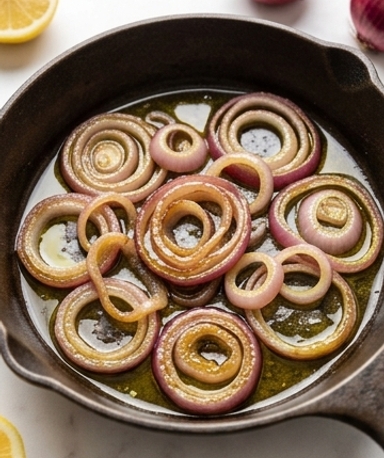
Pan-Seared Red Onions
Mediterranean
Side Dish
Tender and slightly caramelized red onions, ready in 10 minutes. The express garnish that transforms any everyday dish.
Ingredients
- 2 medium (about 300g) red onions
- 2 c.s. (30ml) olive oil
- 1 pinch sea salt
- 1/2 lemon, fresh juice
- 1 c.s. (optional) balsamic vinegar
Instructions
- 1Peel the onions, trim the ends, and slice them into thin half-moons of 3-4 mm.
- 2Heat an empty pan over high heat for 1 minute, then pour in the olive oil.
- 3Add the onions and salt. Stir once, then leave untouched for 2-3 minutes.
- 4Turn the onions over, lower the heat slightly, and continue cooking for 2-3 minutes until they are golden like light caramel.
- 5Remove from heat and add the lemon juice (or balsamic vinegar). Stir and serve immediately.
Notes
• Storage: pan-seared onions keep for 3-4 days in the refrigerator in an airtight container. Reheat over low heat with a lid.
• Flavor variation: add a sprig of fresh thyme at the start of cooking, or a pinch of ground cumin at the end for a spicier version.
• If the onions stick to the bottom, add 1 tbsp of cold water and stir to release the caramelized juices — do not turn up the heat.
Nutrition Facts (per serving, estimated)
| 185 kcalCalories | 2gProtein | 12gCarbs | 14gFat |