Pan-seared cod is the kind of dish you order at a restaurant thinking you can’t pull it off at home. That’s a misconception. Twenty-five minutes, one pan, and you get fish with a crackling crust topped with a lemon butter sauce that shines like satin.
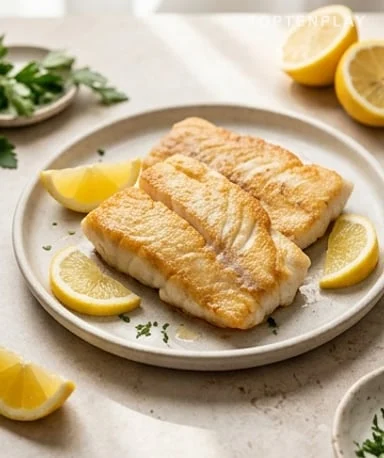
The moment the fillet hits the hot pan, that brief and intense sizzle, it’s the signal that the crust is forming. The white flesh begins to turn white on the sides, a sign that you absolutely must not touch it. Two minutes later, the butter arrives and transforms the pan’s fond into something that smells of hazelnut and restaurant. It’s this precise moment we’re trying to replicate—and it’s much simpler than you think.
Why you’ll love this recipe
Ingredient Notes
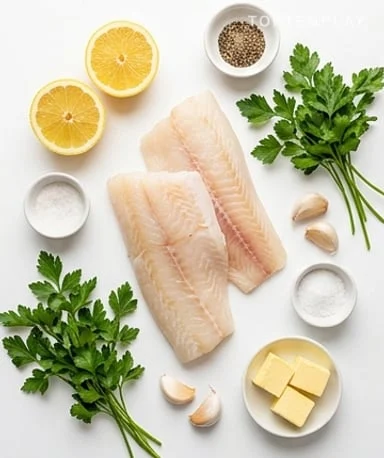
Everything you need for perfect fish: fresh fillets, butter, a lemon, garlic, and some herbs.
- Cod : Choose fillets of uniform thickness—that guarantees even cooking. Frozen is perfect: thaw in the fridge the day before and pat dry thoroughly with paper towels. A damp fillet won’t brown, it steams.
- Butter : Good unsalted butter, not margarine. The sauce stands or falls on the quality of the butter. A knob for cooking, two cold knobs for the sauce—that’s the difference between a silky emulsion and a greasy puddle.
- Lemon : A fresh lemon, not bottled. The zest of half a lemon in the sauce really changes something—a slight bitterness that balances the butter’s richness without making everything acidic.
- Garlic : A crushed clove rather than minced. It should perfume the sauce without dominating. If it browns in the pan, start over—burnt garlic leaves a bitter aftertaste that won’t go away.
- Flour : One tablespoon is enough to lightly coat the fillets. That’s the invisible veil that gives the thin, crackling crust without weighing down the fish.
Dry to brown
This is the step everyone skips and everyone regrets. Cod is a watery fish—if the surface remains damp, the pan loses temperature and the fillet steams instead of browning. Press firmly with paper towels on both sides. Season with salt and pepper, then dip in a thin layer of flour and tap off the excess. You should have a matte, slightly powdery surface. That’s what will react to the heat and form the crust.
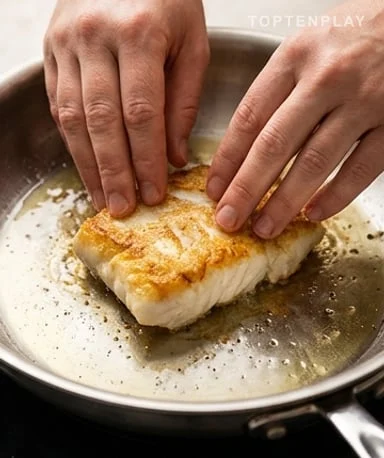
The no-touch rule
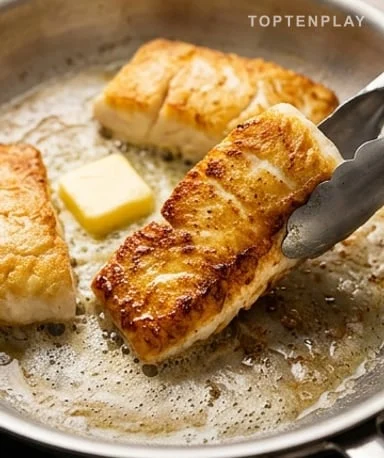
Oil over high heat, wait until the surface begins to shimmer slightly. Place the fillet presentation side down, and don’t move it. No shifting, no compulsive checking. In one and a half to two minutes depending on thickness, the fish will release itself from the pan—it signals when it’s ready. Flip it, add a knob of butter that will foam immediately around the edges, and cook for another minute. The flesh should remain pearly, almost translucent in the center: it will finish cooking on the plate.
The sauce in 90 seconds
Remove the fish to a warm plate. In the same pan over medium heat, sauté the crushed garlic for ten seconds in the cooking juices. Pour in a splash of lemon juice—it sizzles, it deglazes, and it picks up everything stuck to the bottom with flavor. Off the heat, add two knobs of cold butter and stir until emulsified. The sauce should be short, shiny, with a slightly caramelized bottom that smells of hazelnut. Spoon over immediately without delay.
On the plate
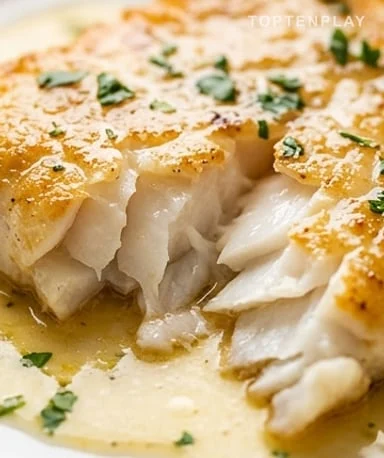
Pan-seared cod doesn’t wait: serve as soon as the sauce is ready. Over a bed of white rice, mashed potatoes, or simply with bread to mop up the sauce. A little chopped flat-leaf parsley on top, some lemon zest if you have it, and that’s it. The sauce does the work—no need to do more.
Tips & Tricks
- Take the fish out of the fridge 15 minutes before cooking. A cold fillet cools down the pan instantly and compromises the crust.
- The butter for the sauce must be cold and added off the heat. Warm butter separates and gives a greasy sauce instead of a silky one.
- If your fillet is more than 3 cm thick, finish in the oven at 180°C for 3 minutes after searing—the heat penetrates without burning the surface.
- Add lemon zest in addition to the juice in the sauce. It brings aromatic depth without adding extra acidity.
Does frozen cod work for this recipe?
Yes, absolutely. Thaw it in the refrigerator the day before and pat it very thoroughly with paper towels before flouring. It’s residual moisture that prevents the crust from forming, not freezing itself.
How do I know if the cod is cooked through?
The flesh should flake into large pieces under slight pressure and remain pearly—not translucent, not dry. A 2 cm thick fillet cooks in 3 to 4 minutes total. If in doubt, a thermometer should read 55-60°C.
Why does my fish stick to the pan?
Two possible reasons: the pan wasn’t hot enough at the start, or you tried to move the fillet too soon. A well-seared fish releases naturally when the crust is formed. Wait until it releases itself before flipping.
Can I replace cod with another fish?
Yes. Pollock, hake, or ling cod work very well with this technique and sauce. Avoid very thin fish like sole, which can’t handle high heat without falling apart.
Can I prepare the sauce in advance?
No, this sauce doesn’t hold. Emulsified butter separates quickly and loses its silky texture. Make it at the last minute directly in the cooking pan—it’s 90 seconds, it’s worth it.
What should I serve with this cod for a complete meal?
Plain basmati rice absorbs the sauce perfectly without competing with the fish. Olive oil mashed potatoes or steamed green beans also work very well. Avoid acidic sides that would overwhelm the butter sauce.
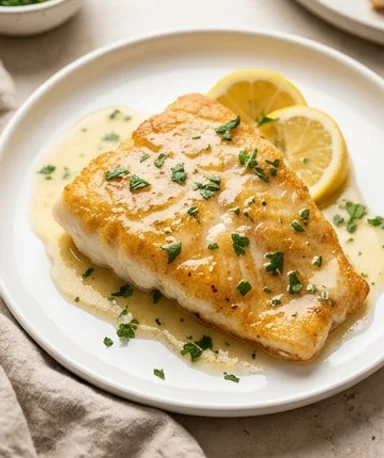
Pan-Seared Cod with Lemon Butter Sauce
French
Fish
Golden cod fillets with a light crust, topped with a lemon butter sauce built in 90 seconds in the same pan. An elegant weekday dish, ready in 25 minutes.
Ingredients
- 4 fillets cod (about 150g each, uniform thickness)
- 2 tablespoons flour
- 2 tablespoons neutral oil (sunflower or grapeseed)
- 60g unsalted butter, divided (20g + 40g)
- 2 cloves garlic, peeled and crushed
- 1 lemon (juice + zest)
- 1 small handful fresh flat-leaf parsley, chopped
- to taste fine salt and freshly ground black pepper
Instructions
- 1Remove the fillets from the refrigerator 15 minutes before cooking to bring them to room temperature.
- 2Dry each fillet thoroughly on both sides with paper towels. Season generously with salt and pepper.
- 3Pour the flour into a shallow dish. Dredge each fillet in it, pressing lightly, then tap off the excess.
- 4Heat the oil in a large pan over high heat until slightly smoking. Place the fillets presentation side down, without overlapping.
- 5Cook without touching for 1 minute 30 seconds to 2 minutes, until the fillets release themselves from the pan.
- 6Flip the fillets, add 20g of butter. Baste the fish with the melted butter for 1 minute. Transfer the fillets to a warm plate.
- 7Reduce heat to medium. In the same pan, sauté the crushed garlic for 10 seconds in the cooking juices.
- 8Pour in the lemon juice and scrape the bottom of the pan to release the caramelized bits.
- 9Remove the pan from the heat. Add the 40g of cold butter and stir vigorously until you get a smooth, shiny sauce.
- 10Stir in the lemon zest and chopped parsley. Spoon the sauce over the fillets immediately and serve without delay.
Notes
• Drying is the most important step: a damp fillet steams instead of browning.
• The butter for the sauce must be cold and added off the heat—that’s what creates the emulsion. Warm butter gives a greasy, separated sauce.
• For a thick fillet (more than 3 cm), finish in the oven at 180°C for 3 minutes after searing for even cooking without burning the surface.
• Lemon zest adds aromatic depth that juice alone doesn’t give—don’t skip it.
Nutrition Facts (per serving, estimated)
| 310 kcalCalories | 27gProtein | 4gCarbs | 20gFat |