We often imagine pan-seared entrecôte as a chef’s dish, precise to the degree and easy to mess up. In reality, it’s mainly a straightforward comfort food recipe: good meat, a very hot pan, bubbling butter, and a few minutes of attention.
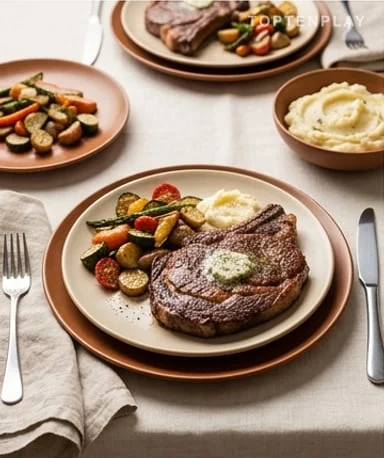
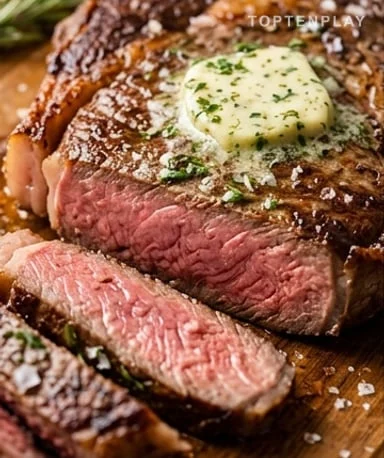
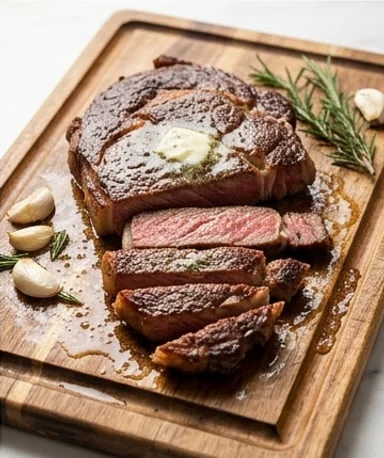
The crust should catch the eye even before the first bite, browned in spots, shiny with juice and butter. When the crushed garlic hits the pan, the aroma becomes round, almost nutty, with the resinous scent of thyme or rosemary. Upon slicing, the knife goes through a crispy surface then a tender, pink, juicy interior. It’s simple but not ordinary.
Why you’ll love this recipe
Ingredient Notes
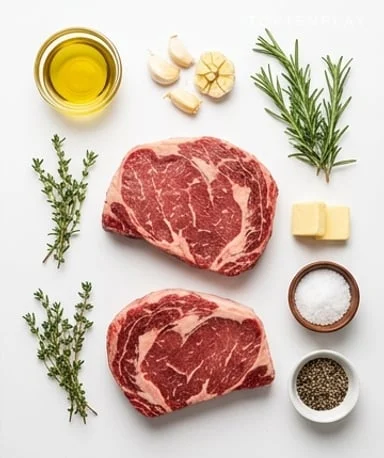
Few ingredients, but they must be good: marbled meat, garlic, herbs, butter, and freshly ground pepper.
- Beef entrecôte steaks : They are the heart of the dish, so choose thick ones, ideally about 3 to 4 cm, with visible marbling. Meat that’s too thin cooks before it has time to form a nice crust.
- Olive oil or avocado oil : The oil starts the sear and helps the meat surface brown quickly. If your heat is very high, avocado oil is practical as it withstands heat better.
- Unsalted butter : It brings the nutty, enveloping flavor, especially when basting the meat at the end of cooking. Add it after the first sear to prevent it from burning too quickly.
- Crushed garlic : Garlic flavors the butter without needing to be finely chopped. Simply crush the cloves with the flat of the knife: they release their aroma without turning into bitter little bits.
- Rosemary or thyme : These herbs give a woody note that goes very well with the fat of the entrecôte. Use fresh if possible, or use sparingly in dried form as their aroma can quickly dominate.
- Salt and pepper : Salt helps build a savory crust, while pepper adds depth. Salt generously just before cooking and keep freshly ground pepper for a sharper heat.
Cold meat is a no-go
Take the steaks out of the refrigerator about 30 minutes before cooking, especially if they are thick. A cold center cooks less evenly: the outside colors quickly, but the inside stays too cold and you end up prolonging the cooking at the wrong time. Then dry the surface with paper towels, because moisture creates steam and prevents the crust from forming. The meat should feel dry, supple, slightly shiny but never wet. It’s a small step, but it really changes the sound in the pan: you want a sharp sear, not a soft sizzle.
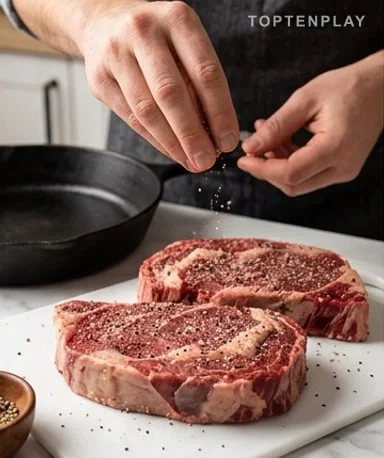
Salt without hesitation
Season both sides with salt and pepper just before cooking. The entrecôte is thick, rich, and its fat needs bold seasoning to not taste flat. The salt will stay on the surface and contribute to that brown, almost caramelized crust that smells like grilled meat from the first minutes. Don’t rub too long, just press to adhere. If you like a hint of heat, a pinch of chili flakes works well, but keep it light so as not to steal the show from the beef flavor.
The pan should be almost intimidating
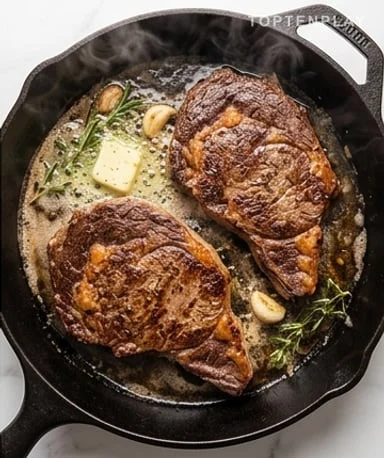
Choose a heavy pan, ideally cast iron, and let it heat up before adding oil. When the oil becomes fluid and shiny, place the steaks and leave them undisturbed for several minutes. This is the moment when many people panic and fiddle with the meat, but you need to give it time to stick and then release naturally. You should hear a steady sizzle, see the edges brown, and smell a deep grilled aroma. If the pan smokes aggressively, lower the heat slightly; if it stays quiet, it wasn’t hot enough.
Herb butter brings real comfort
After flipping the steaks, add butter, crushed garlic, and herbs. The butter will foam, turn golden, and capture the aroma of garlic and rosemary. Slightly tilt the pan and baste the meat with a spoon, over and over, to nourish the hot surface. This gives a rounder, more indulgent finish, with that nutty butter aroma filling the kitchen. Watch the color: golden brown is perfect; black and acrid means lower the heat.
Resting is non-negotiable
Remove the steaks from the pan and let them rest for at least 5 minutes on a cutting board. During this time, the juices redistribute in the meat instead of running out onto the plate at the first cut. The surface stays warm, slightly shiny, and the aroma becomes softer, less aggressive than in the pan. Then slice against the grain for more tender bites. Serve with the cooking juices, roasted vegetables, or a hot mashed potato, because this recipe loves simple sides.
Tips & Tricks
- Use a thermometer if you rarely cook entrecôte, as a few degrees quickly change the texture between a juicy heart and too firm meat.
- Don’t overcrowd the pan, as two steaks stuck together drop the temperature and create steam instead of a well-seared crust.
- Add butter only after flipping the meat, as it flavors better at the end of cooking and is less likely to burn.
- Slice against the grain, as this shortens the fibers and gives a more tender bite, even on a well-marked piece.
What thickness to choose for a pan-seared entrecôte?
Aim for 3 to 4 cm thick. A piece that’s too thin cooks before it has time to form a real golden crust.
Should I take the entrecôte out of the fridge before cooking?
Yes, let it come to room temperature for about 30 minutes. The cooking will be more even and the center will stay more tender.
How to know if the entrecôte is rare?
The most reliable is a thermometer: around 52 to 54°C internal for rare after resting. Without a thermometer, rely less on luck and more on thickness and cooking time.
Why add butter at the end of cooking?
Butter burns quickly on high heat. By adding it after the first sear, it foams, flavors the meat with garlic and herbs, and gives a rounder finish.
What to serve with a pan-seared entrecôte?
Roasted potatoes, homemade mash, green beans, or a well-dressed salad work very well. The idea is to have a simple side that absorbs the juices without overpowering the meat’s flavor.
Pan-Seared Beef Entrecôte
French
Main course
A thick entrecôte seared over high heat, basted with butter, garlic, and herbs to achieve a golden crust, a juicy heart, and a true comfort food plate.
Ingredients
- 2 pieces of about 300g each thick beef entrecôte steaks
- 2 tablespoons olive oil or avocado oil
- 30g unsalted butter
- 2 cloves crushed garlic
- 2 sprigs fresh rosemary or thyme
- 1 teaspoon fine salt or fleur de sel
- 1/2 teaspoon freshly ground black pepper
Instructions
- 1Take the steaks out of the refrigerator about 30 minutes before cooking, then pat them dry thoroughly with paper towels.
- 2Season both sides generously with salt and pepper just before cooking.
- 3Heat a heavy pan, ideally cast iron, with oil over medium-high heat until very hot.
- 4Place the steaks in the pan and let them sear without moving for 4 to 5 minutes, until a deep golden crust forms.
- 5Flip the steaks, add butter, crushed garlic, and herbs to the pan.
- 6Baste the meat regularly with the foaming butter for another 4 to 5 minutes, depending on desired doneness.
- 7Check doneness if possible with a thermometer: about 52-54°C for rare, 57-60°C for medium.
- 8Transfer the steaks to a cutting board and let them rest for 5 minutes before slicing against the grain.
- 9Serve with cooking juices, roasted vegetables, mashed potatoes, or a well-dressed salad.
Notes
• A well-dried surface on the meat colors better and avoids steaming in the pan.
• Do not move the steak too much during searing: the crust needs time to form.
• Add butter after flipping the meat to avoid burning it.
• The exact time depends on the thickness of the steak and the heat intensity.
Nutrition Facts (per serving, estimated)
| 520 kcalCalories | 42gProtein | 1gCarbs | 39gFat |