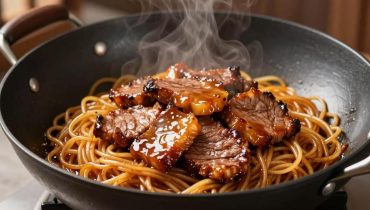
📌 Pad Woon Sen: how to succeed with these Thai glass noodles in 8 minutes flat
Posted 18 March 2026 by: Admin
Thai Glass Noodles: A Discovery By Mistake
The mistake starts innocently in the Asian aisle. Glass noodles and rice vermicelli look identical in their packaging – white, ultra-fine, almost indistinguishable. Only the microscopic “bean thread” inscription betrays the difference, drowned among the characters on the $0.85 pack for 200 grams.
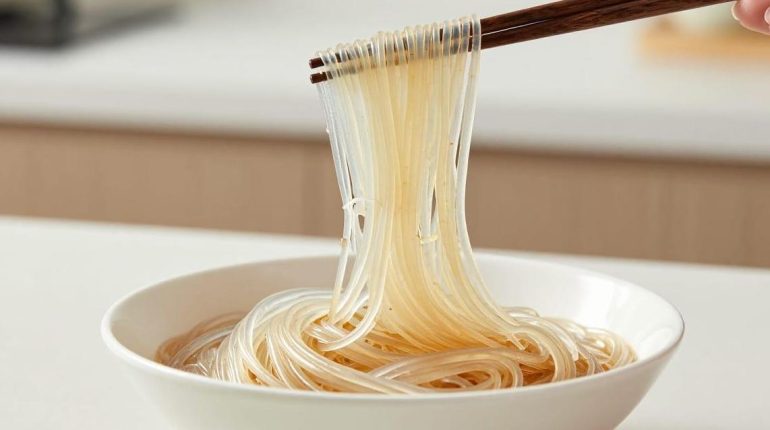
Yet, once hydrated, the truth emerges. Glass noodles become transparent like crystal, hence their name. Slippery, elastic, they are made from mung bean starch. Rice vermicelli remain opaque, brittle, lacking that characteristic rubbery texture.
The flavor? Neutral in both cases. This taste kinship explains their interchangeability in most recipes, including the Pad Woon Sen we are exploring today. Good news for anyone who grabbed the wrong package.
Preparing glass noodles is child’s play: 2 to 3 minutes of soaking in boiling water is enough. A quick rinse in cold water removes excess starch, preventing them from clumping into a compact mass. This buying error turned into a culinary opportunity opens the way to a little-known family dish, absent from Thai restaurant menus in the West.
Pad Woon Sen: A Little-Known Thai Family Dish
This authentic dish escapes the menus of Western Thai restaurants. Discovered on Hot Thai Kitchen, Pad Woon Sen belongs to the category of home recipes, those passed down from generation to generation without ever being definitively codified.
No canonical version exists. Every Thai kitchen has its own interpretation, varying sauces and accompaniments according to the pantry and tastes. Only a few pillars remain untouchable: translucent glass noodles, scrambled eggs incorporated at the last moment, and a sauce oscillating between dominant salty and a discreet sweet touch.
The name itself reveals its simplicity. “Pad” means stir-fried, “Woon Sen” refers to glass noodles. A literal translation for a dish that is prepared in 8 minutes flat, from start to finish. This speed of execution is the very DNA of the recipe, designed for busy weeknights where the desire for authentic flavors persists despite fatigue.
The apparent complexity of Thai flavors masks a reassuring reality: few ingredients are enough. The magic happens elsewhere, in the precise dosage of powerful condiments that every Thai household keeps in its cupboards. Concentrated sauces capable of transforming neutral noodles into a taste explosion, without requiring hours of preparation or an endless shopping list.
The Ingredient Arsenal: Maggi Seasoning, The Secret Weapon
The powerful condiments that transform this dish bear a name well-known in some circles but often overlooked: Maggi Seasoning. This brown sauce, present in every Thai home, resembles soy sauce but delivers superior umami intensity thanks to a long-demonized ingredient: monosodium glutamate.
MSG has gone through decades of bad reputation before the US FDA restored the scientific truth. Consumed in normal doses, it poses no danger. Better yet: this compound exists naturally in tomatoes, cheese, and miso. Thai kitchens never gave up on this flavor enhancer, unlike Western trends that banned it out of excessive precaution.
At the Australian Coles supermarket, a bottle costs a few dollars and keeps for years. Its use goes far beyond Pad Woon Sen: classic Banh Mi sandwiches, garlic noodles, or any Thai stir-fry gain depth with a simple tablespoon substituted for the usual soy sauce.
The winning trio is completed with oyster sauce, which brings umami, sweetness, and thickening simultaneously, and fish sauce, the true salt of Thai cuisine. The latter smells strong in the bottle, but its funky odor disappears completely during cooking to leave only an aromatic complexity without a marine note.
Thai Cooking Technique And Dozer’s Legacy
The egg scrambling method reveals the pragmatic Thai approach: rather than using multiple containers, you push the ingredients to one side of the pan, pour the eggs into the freed space, then mix everything together. This classic technique saves washing up and unnecessary handling, while preserving the constant heat essential for stir-fries.
Equipment conditions success. A 30cm non-stick pan allows you to cook family portions without vegetables and chicken releasing their water instead of searing. Traditional woks, too narrow for more than three portions, force the dreaded method: cook the meat, remove it, cook the vegetables, remove them, scramble the eggs, remove them. For those with smaller utensils, the recipe offers a detailed workaround in the notes.
This direct approach reflects the philosophy of the RecipeTin Eats site, which has just reached 500,000 meals given via its food bank RecipeTin Meals. The author considers this initiative part of the legacy of Dozer, her dog present during the publication of her first recipe, a faithful companion during all the nights of cookbook deadlines. “He refused to go to bed before me,” she testifies. Dozer embodied that stubborn loyalty that now flows through every dish prepared for those in need.