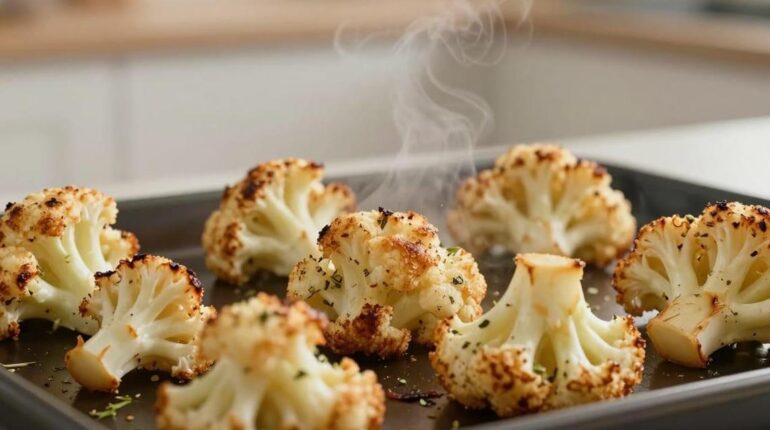
📌 Oven-roasted cauliflower: this technique guarantees a golden crust and a melting interior worthy of a meat dish
Posted 16 January 2026 by: Admin
The Recipe That Transforms Cauliflower Into A Crispy Alternative
Forget everything you know about bland and characterless cauliflower. This oven-roasted cauliflower recipe revolutionizes the approach to the vegetable by transforming it into a spectacular dish, capable of rivaling your favorite meat preparations. The secret lies in a precise cooking technique that generates an irresistible golden crust enveloping a heart that remains tender.
Versatility is the major asset of this preparation. Serve it as a crispy snack for an aperitif, as a refined side dish to enhance your meats, or dare to make it a full vegetarian main course. This flexibility of use explains its growing success in modern kitchens.
The aromatic intensity comes from a strategic combination of spices: garlic powder, smoked paprika, dried oregano. These ingredients fuse during cooking to create an explosion of flavors that transcends the simplicity of the base vegetable. The optional addition of grated parmesan increases the crunch factor, transforming each bite into an addictive textural experience.
This plant-based alternative proves that a simple cauliflower, correctly treated, can become the unexpected protagonist of your table, diverting attention from traditional animal proteins by its taste presence alone.
The Arsenal Of Ingredients For An Optimal Result
The success of this culinary transformation relies on a rigorous selection of ingredients. The base remains a medium cauliflower cut into regular florets, allowing for even cooking. Three tablespoons of olive oil provide the coating necessary for caramelization, while the balance of seasonings determines the final aromatic depth.
The spice palette reveals a meticulous taste strategy. One teaspoon of garlic powder brings aromatic power, complemented by half a teaspoon of smoked paprika which injects that distinctive woody dimension. Onion powder (1/2 teaspoon) and dried oregano (same dosage) build the Mediterranean complexity of the flavor profile.
The dosage of salt and pepper reflects a search for balance: half a teaspoon of salt against a quarter for black pepper. This proportion avoids over-salting while enhancing the natural flavors of the vegetable.
The ingredient that tips the recipe toward excellence remains the grated parmesan. This optional quarter cup acts as a crunch catalyst, creating a golden crust of incomparable texture during cooking. This Italian cheese radically transforms the sensory experience, fully justifying its status as a differentiating element for lovers of contrasting textures.
Personalization At The Service Of Taste
This recipe hides its true strength in its adaptability. Smoked paprika, mentioned as optional, is actually the lever of aromatic intensity that distinguishes a standard preparation from a memorable version. Its addition injects a woody depth that evokes wood-fired grilling, radically transforming the taste perception of the vegetable.
Parmesan illustrates this same philosophy of personalization. Integrated into the initial coating, it creates a crispy shell during cooking that contrasts with the tenderness of the cauliflower. This optional addition allows for adjusting the intensity according to preferences, offering purists a pure plant version, and cheese lovers a maximum textural experience.
The final garnishes open up an unlimited field of experimentation. Fresh parsley brings an herbaceous note that refreshes the whole, lemon wedges inject an acidity that cuts through the richness of the spices, while personalized sauces (tahini, spiced yogurt, balsamic vinaigrette) completely redirect the flavor profile. This creative freedom transforms a basic recipe into a culinary platform where each cook leaves their signature.
Adaptability is not a compromise, but the very essence of this preparation: a structured canvas that invites personal expression while guaranteeing an impeccable technical result.
Operating Mode And Practical Instructions
The phrase “see next page” reveals a deliberate editorial strategy: creating narrative tension before the crucial phase. This segmentation responds to a logic of engagement, where the promise of detailed instructions maintains the reader’s attention and values the technical dimension of the preparation.
The announced steps follow a classic but rigorous architecture. The process begins by preheating the oven to a high temperature (generally 220°C), a sine qua non condition to trigger the Maillard reaction that generates the much-sought-after golden crust. Coating the florets in the oil-spice mixture requires meticulous handling: every surface must be uniformly covered to guarantee even cooking.
The arrangement on the tray is an often underestimated technical point. The florets require sufficient spacing to allow heat circulation and avoid the steam effect that would compromise the crispness. Cooking time ranges between 25 and 35 minutes, with a flip halfway through to expose all sides to direct heat.
This methodological rigor explains why the recipe promises a reproducible result: each parameter is calibrated to transform an ordinary vegetable into an exceptional culinary experience. The step-by-step structure eliminates hazardous improvisation, replacing uncertainty with technical mastery accessible even to novice cooks.