We often imagine BBQ ribs as a specialist dish, with smoke, gear, and constant monitoring. In reality, the oven version does almost all the work itself: a good layer of spices, slow cooking, then a sauce that sticks just enough under the broiler.
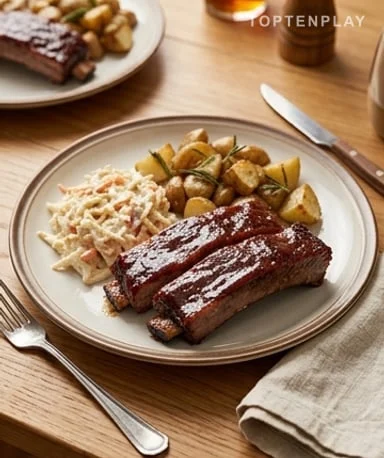
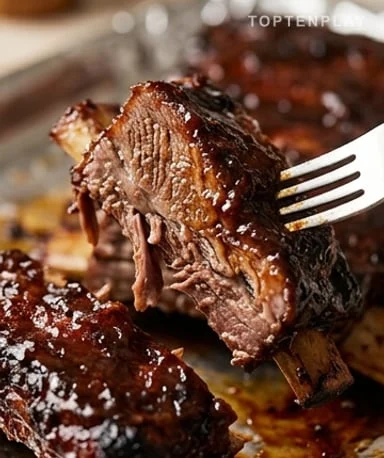
When it comes out of the oven, the meat has that mahogany brown color that immediately signals something serious. The rub smells of smoked paprika, warm garlic, and lightly caramelized brown sugar. When you cut between the bones, the fibers come apart with a tender resistance, not dry. The sauce should shine, but not drip like heavy syrup.
Why you’ll love this recipe
Ingredient Notes
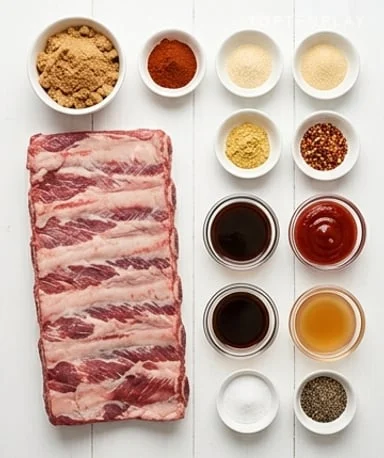
A good homemade rub, simple BBQ sauce, and beef ribs: no need to go overboard.
- Beef ribs : They bring the chew, fat, and deep flavor that pairs well with a sweet-smoky BBQ sauce. Choose meaty pieces with visible but not huge fat layer; lamb ribs can work in a pinch, with slightly shorter cooking time depending on thickness.
- Brown sugar : It helps the rub caramelize and gives that warm, almost molasses note on the edges of the meat. Use moist brown sugar if possible; otherwise, light brown sugar with a small spoonful of molasses works well.
- Smoked paprika : This gives the most convincing BBQ illusion without wood fire, with a round, smoky aroma during cooking. Choose sweet smoked paprika to control heat, then add chili separately if you want to turn up the level.
- Mustard powder : It awakens the beef fat and gives the rub depth without dominating. If you don’t have it, a thin layer of mild mustard on the meat before the spices also works, but use little to avoid a too-wet surface.
- Ketchup : It serves as the sauce base: tomato, sugar, acidity – everything is there to cling to the meat. Choose a not-too-sweet ketchup, otherwise reduce the brown sugar slightly to keep a shiny rather than cloying sauce.
- Cider vinegar : It cuts the richness of the meat and prevents the sauce from becoming flat. If you want a brighter acidity, add a few drops of lemon at the end of mixing, but not too much to avoid breaking the round BBQ profile.
The rub must be generous
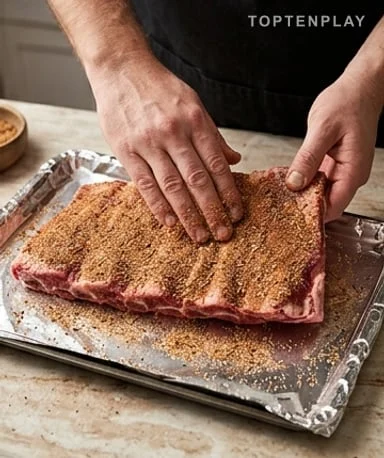
Start by drying the ribs with paper towels, because a wet surface dilutes the spices and prevents proper crust formation. Mix brown sugar, smoked paprika, garlic, onion, mustard, salt, pepper, and a pinch of chili until you get a dark red powder that smells of gentle heat and spice shop. Massage this rub over all surfaces, pressing into the crevices near the bones, where the sauce will later settle. This step is not decorative: it seasons the surface, absorbs some moisture, and prepares that slightly granular crust that will make all the difference after broiling.
Slow cooking always wins
Place the ribs meat-side up on a foil-lined baking sheet, then cover loosely with a second sheet. At 150 °C, the heat progresses gently, without brutalizing the fibers, and after a while you should smell roast beef mixed with smoked paprika. The classic mistake is to try to speed up: too high a temperature colors quickly, but leaves firm meat around the bone. Instead, cook until the tip of a knife enters easily and the meat begins to recede slightly on the bones.
The sauce should stick, not drown
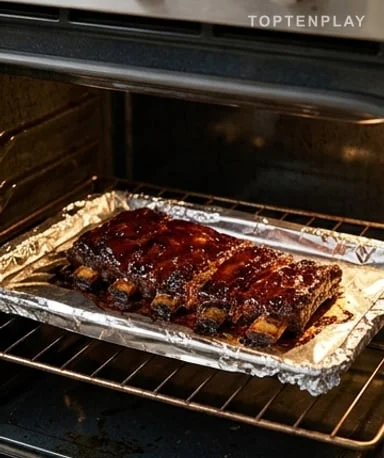
During the final cooking, mix ketchup, cider vinegar, brown sugar, Worcestershire sauce or soy sauce, smoked paprika, a little water, and a touch of liquid smoke if you have it. The right texture is like a coating sauce: it flows from the spoon in a thick ribbon, not a compact block. When the ribs are tender, remove the foil and brush generously, but don’t turn the pan into a sweet pool. A regular layer is enough, because the broiler will concentrate the sugars and give that shiny, dark, almost lacquered surface.
The broiler makes the real finale
The broiling is short but crucial. Watch the pan, because the line between deep caramel and burnt sugar can be crossed in a minute, especially on thin edges. You want to see small bubbles in the sauce, darker spots, and smell warm caramelized tomato rather than a bitter note. Remove the ribs as soon as the surface becomes shiny and slightly sticky to the brush.
Resting is non-negotiable
Let the meat rest for about ten minutes before cutting, even if the smell makes waiting truly painful. This rest allows juices to redistribute instead of running onto the board at the first cut. Cut between the bones with a sharp knife, then add a little sauce on the side rather than covering everything. You should still see the spice crust, juicy fibers, and caramelized edges.
Tips & Tricks
- Remove the membrane on the back of the ribs if present, because it becomes elastic during cooking and blocks some of the seasoning.
- Taste the sauce before brushing: if it seems too sweet when cold, it will be even more so once reduced under the broiler.
- Cover the meat well during slow cooking, because trapped steam helps tenderize the fibers without drying the surface.
- Plan more time than necessary rather than the opposite, because ribs can wait covered for a few minutes, while undercooked meat remains firm and disappointing.
How do I know if the beef ribs are cooked enough?
The meat should recede slightly on the bones and a knife tip should enter without resistance. If it still pulls or feels elastic, extend covered cooking in 20-minute increments.
Can I prepare the ribs in advance?
Yes, it’s even convenient. You can slow-cook them, keep them cool, then brush with sauce and broil just before serving.
What if I don’t have liquid smoke?
It’s not a problem. Slightly increase the smoked paprika and add a dash of soy sauce to enhance the deep, salty side.
Why cover the meat during cooking?
The foil traps moisture and helps the meat become tender without drying. Without covering, the surface colors too quickly before the fibers have time to soften.
How to reheat leftovers without drying them?
Place the ribs in a covered dish with a spoonful of water or sauce, then reheat at 140 °C. Finish uncovered for a few minutes if you want to restore a stickier surface.
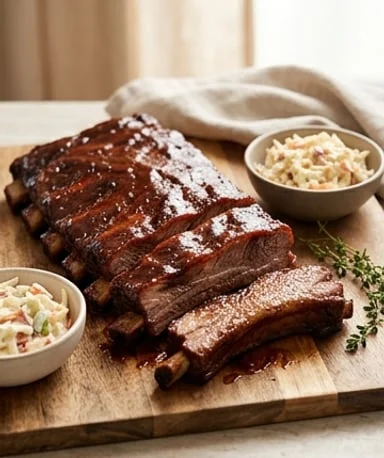
Oven-BBQ Beef Ribs with Homemade Rub
American
Main course
Beef ribs slow-cooked in the oven, rubbed with a smoky-sweet rub and then lacquered with a wine-free homemade BBQ sauce. A simple, tender, and well-caramelized version of the BBQ classic.
Ingredients
- 1.8 kg meaty beef ribs
- 55 g brown sugar for the rub
- 2 tbsp smoked paprika
- 1 tbsp mustard powder
- 2 tsp garlic powder
- 2 tsp onion powder
- 1 tsp fine salt
- 1 tsp ground black pepper
- 1/2 tsp sweet chili or chili flakes
- 240 g ketchup
- 60 ml cider vinegar
- 35 g brown sugar for the sauce
- 1 tbsp soy sauce
- 1 tsp smoked paprika for the sauce
- 60 ml water
- 1 tsp liquid smoke, optional
Instructions
- 1Preheat the oven to 150 °C. Line a large baking sheet with aluminum foil.
- 2Pat the beef ribs dry with paper towels. Remove the membrane from the back if present.
- 3Mix the brown sugar, smoked paprika, mustard powder, garlic, onion, salt, pepper, and chili.
- 4Rub this mixture all over the ribs, pressing into the crevices.
- 5Place the ribs meat-side up, cover with another sheet of foil loosely, then bake for 2 hours 45 minutes to 3 hours.
- 6During the final cooking, mix the ketchup, cider vinegar, brown sugar, soy sauce, smoked paprika, water, and liquid smoke.
- 7When the meat is tender, remove the foil and brush the ribs generously with the sauce.
- 8Switch the oven to broil and return the pan to the middle rack for 5 to 10 minutes, until the surface is shiny and caramelized.
- 9Let rest for 10 minutes before cutting between the bones and serving with the remaining sauce.
Notes
• The exact time depends on the thickness of the ribs: if they are very meaty, add 20 to 30 minutes of covered cooking.
• Watch carefully during broiling, as the sauce contains sugar and can burn quickly.
• For a milder sauce, reduce the chili and add 1 tbsp water.
• Leftovers keep for 3 days in the refrigerator in an airtight container.
Nutrition Facts (per serving, estimated)
| 650 kcalCalories | 45gProtein | 24gCarbs | 42gFat |