April is back, asparagus is reappearing on the stalls, and it’s honestly the best signal to get the big skillet out. This recipe is for those evenings when you’re hosting without wanting to spend two hours in the kitchen. A dinner that impresses without making it look like you tried.
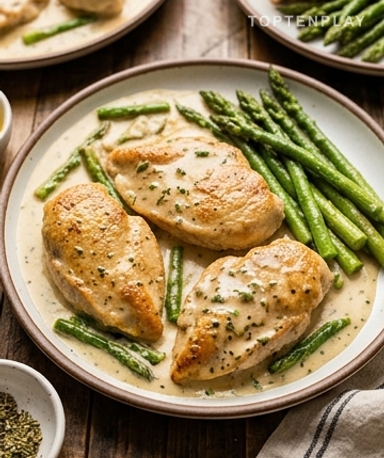
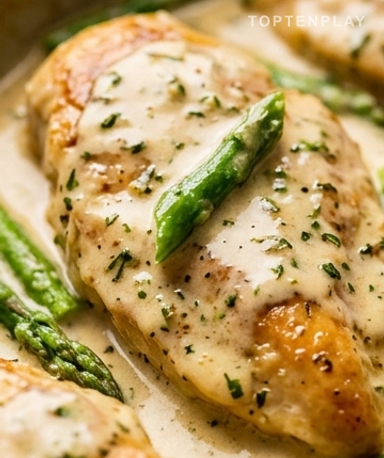
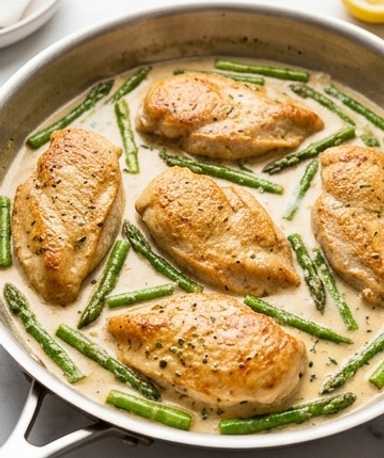
On the plate, it looks exactly like what you hope for after a busy day. Golden chicken fillets with a bright caramel sheen, bathing in an ivory cream sauce with a slight pearly finish. The asparagus, still bright green, holds its texture in the middle of it all. And that lemon you can smell even before diving in—a fresh acidity that cuts through the richness of the cream just right.
Why you’ll love this recipe
Ingredient Notes
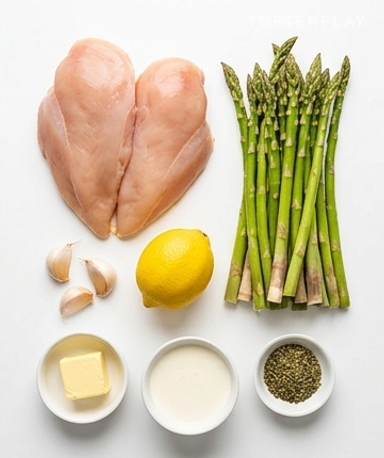
Everything you need for this spring dinner: fresh asparagus, two chicken breasts, cream, garlic, and a lemon.
- Chicken Breasts : Two breasts are enough for four people provided you slice them lengthwise. Choose them of similar size for even cooking—if one is twice as thick as the other, it will still be raw when the other is already dry.
- Fresh Asparagus : Choose thin to medium ones. Very large stalks are often woody in the center. To find the tender part without a knife, snap them by hand at the base—they break naturally where the fibrous part starts.
- Heavy Cream : No low-fat versions here. 30% fat cream is what prevents the sauce from curdling under heat. Take it out of the fridge twenty minutes before cooking—cold cream hitting a hot pan is a guaranteed recipe for a separated sauce.
- Crushed Whole Garlic : Not minced, crushed. The difference is real. Crushed garlic gently infuses the butter and gives an enveloping depth of flavor. Minced garlic burns fast and gives a bitterness we don’t want in this sauce.
- Fresh Lemon : Not bottled juice. A real yellow lemon, squeezed at the last moment. The fresh acidity is what wakes up the whole sauce at the end of cooking—it’s a detail that completely changes the perception of the dish.
The preparation that changes everything
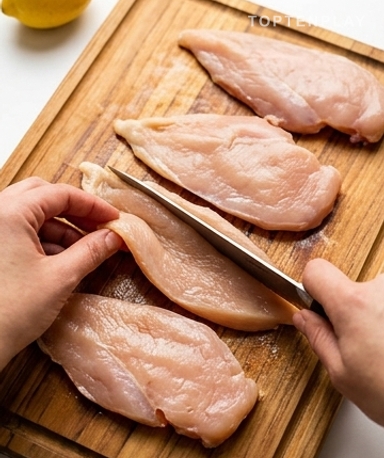
Before touching the pan, prepare everything. It seems obvious but it really changes the cooking. Slice the breasts lengthwise with a sharp knife—two breasts become four fillets about 1.5 cm thick. Peel the garlic cloves and crush them flat with the bottom of a glass. Cut the asparagus into 3-4 cm pieces. Measure the cream, take it out of the fridge. When the pan is hot, you won’t have time to look for anything.
Searing, no rush
Heat oil and butter together in a large skillet over medium-high heat until the butter foams then subsides. Place the floured fillets without crowding them. The sizzle should be immediate and distinct, a bit like the sound of rain on a window. Four minutes without touching them—don’t move the chicken, let it do its work. Flip, another four minutes. The top should be a light caramel, not dark brown. Remove the fillets, cover them with foil while you prepare the sauce.
The sauce builds itself
Lower the heat to medium and add butter to the still-hot pan. The crushed garlic goes in first. It should melt gently into the butter for one minute—you’ll smell a slightly garlicky brown butter aroma filling the kitchen. Then the broth, cream, garlic powder, onion powder, dried dill, and basil. The sauce will reduce in 8 to 10 minutes over low heat. It should simmer, never boil rapidly. When it lightly coats the back of a spoon, it’s ready.
Asparagus and the final minute
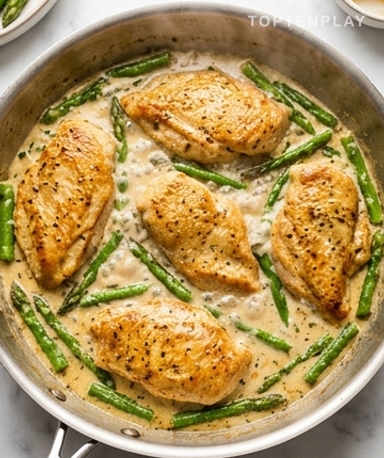
Put the chicken back in the sauce, then add the asparagus on top. Cover and cook for another 3 to 4 minutes. The asparagus must stay an intense electric green—as soon as they start turning a dull olive green, it’s been one minute too long. Squeeze the lemon directly into the pan just before serving. The acidity wakes up the whole dish at once, as if the sauce was suddenly brought into focus. Serve immediately in shallow bowls, with basmati rice or good bread to soak up the sauce.
Tips & Tricks
- Don’t skip the flour on the chicken. It creates a micro-crust that holds the juices in during searing, and the few grams that stay stuck to the bottom of the pan help the sauce thicken naturally without having to add anything else.
- If your sauce starts to separate (small white clumps floating in the fat), the heat was too high. Lower it immediately and whisk vigorously—in most cases, it comes back together seamlessly.
- To serve guests without stress, you can prepare the ingredients in advance and sear the chicken 30 minutes before arrival. The sauce and asparagus are done in ten minutes at the last moment.
Can this dish be prepared in advance for hosting?
Yes, partially. You can sear the chicken and prepare all ingredients in advance. The sauce and asparagus are done in ten minutes at the last moment—this really is best for keeping the asparagus crisp and the sauce smooth.
How to store and reheat leftovers?
Leftovers keep for 2 days in the fridge in an airtight container. To reheat, use a skillet over very low heat with a splash of broth to loosen the sauce. The microwave works but the sauce may slightly separate.
The sauce separated—what happened?
The almost systematic cause is heat that’s too high. Cream doesn’t handle high temperatures well. If it happens, immediately lower the heat and whisk vigorously—in most cases the sauce reforms. Prevention: never let it reach a rolling boil after adding the cream.
Can I use light cream or milk?
Light cream can work but the sauce will be thinner and the risk of separation is higher. Whole milk is not recommended for this recipe. 30% fat heavy cream remains the best option for a stable and creamy sauce.
What to replace asparagus with when out of season?
Thin green beans work very well with the same cooking times. Thickly sliced zucchini is also a good option. Fresh spinach can be added at the end of cooking—it wilts in 1 minute in the hot sauce.
What side dish to serve with this creamy chicken?
Simple basmati rice is the ideal side to absorb the sauce. Short pasta (penne, farfalle) also works very well. If you want to keep it light, good quality bread is more than enough.
One-Pan Creamy Lemon Chicken with Asparagus
American
Main Course
Golden chicken fillets simmered in a creamy lemon and garlic sauce with crisp asparagus. A spring dish ready in 40 minutes in a single skillet.
Ingredients
- 2 (about 600g) chicken breasts
- 1 tsp salt
- 1 tsp freshly ground black pepper
- 30g (¼ cup) all-purpose flour
- 2 tbsp vegetable oil
- 30g (2 tbsp) salted butter
- 30g (2 tbsp) salted butter (for the sauce)
- 4 garlic cloves, peeled and crushed
- 60ml (¼ cup) heavy cream, at room temperature
- 240ml (1 cup) chicken broth
- ½ tsp garlic powder
- ½ tsp onion powder
- ¼ tsp dried dill
- ¼ tsp dried basil
- 450g (1 bunch) fresh asparagus, cut into 3-4 cm pieces
- 1 lemon
Instructions
- 1Slice each chicken breast in half lengthwise to get 4 thin fillets. Season with salt and pepper and coat with flour on both sides.
- 2Heat oil and 30g of butter in a large skillet over medium-high heat until the butter foams. Sear the fillets for 4 minutes on each side until golden brown.
- 3Remove chicken, cover with foil and set aside. Lower heat to medium.
- 4Add 30g of butter to the skillet, then the crushed garlic cloves. Sauté for 1 minute while stirring.
- 5Pour in broth and cream. Add garlic powder, onion powder, dill, and basil. Let simmer over low heat for 8 to 10 minutes until slightly thickened.
- 6Return the fillets to the sauce, place asparagus on top. Cover and cook for 3 to 4 minutes.
- 7Squeeze the lemon into the pan, taste and adjust salt. Serve immediately.
Notes
• Storage: leftovers keep for 2 days in the refrigerator in an airtight container. Reheat over very low heat with a splash of broth to loosen the sauce.
• Vegetable variations: out of season, replace asparagus with thin green beans or sliced zucchini. Same cooking time.
• Make-ahead: chicken can be seared 30 minutes in advance. The sauce and asparagus take 10 minutes at the very last moment before serving.
Nutrition Facts (per serving, estimated)
| 530 kcalCalories | 31gProtein | 13gCarbs | 28gFat |