What if the best cookie recipe you ever made didn’t even require turning on the oven? These no-bake chocolate and peanut butter cookies are the answer to any urgent sweet craving. Eight ingredients, one saucepan, one refrigerator.
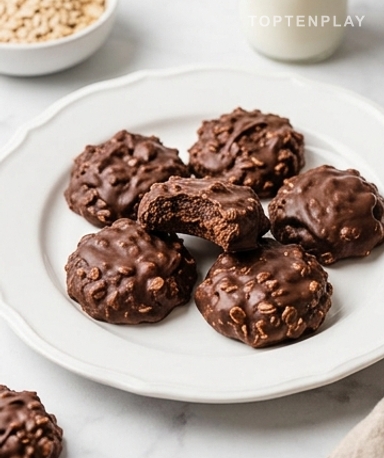
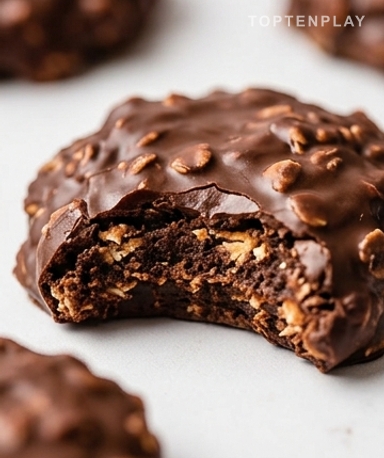
The first thing you notice is the color: a deep brown, almost black, like a chocolate bar just before it melts. The oats surface here and there, lumpy and matte, contrasting with the slightly glossy sheen of the chocolate mass. When you bite in, there’s a split second of resistance—just enough time to feel the peanut butter making its move—before it gives way. The scent has been there from the start: cocoa, vanilla, and something warm and sweet that lingers in the room long after.
Why you’ll love this recipe
Ingredient Notes
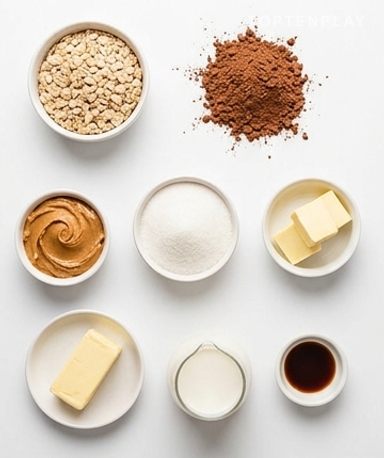
Eight pantry staples are all you need for these irresistible cookies.
- Cocoa powder : It does two things at once: flavors and thickens. Don’t swap it for melted chocolate—the final texture won’t be the same. Dutch-processed or natural, both work here since there are no leavening agents in the recipe.
- Peanut butter : Go for classic commercial peanut butter, not the natural version that separates into two layers in the jar. Natural can make the texture grainy and unstable. If you only have natural, stir it thoroughly before measuring, and it should hold up.
- Oats : Instant oats (quick oats) provide better cohesion—the cookies hold together more easily. Rolled oats work too, but the result will be rustier and slightly more fragile. Both are good; it’s just a matter of how they feel in your hand.
- Sugar : Ordinary granulated white sugar, in the exact amount specified. No brown sugar, no reductions. This is one of those rare recipes where sugar proportions truly impact the set: too little, and the cookies stay soft and sticky.
- Butter : A good unsalted butter is all you need. Avoid margarines—they change the melting point and can make the whole batch too soft after cooling. Butter also provides that slightly creamy finish that balances the cocoa’s bitterness.
The saucepan does all the work
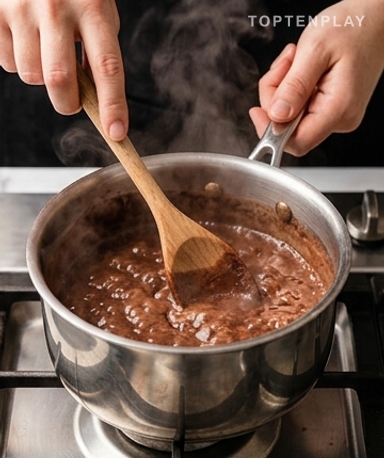
Start in a medium saucepan—something that holds about three liters, not a small skillet. The butter, sugar, milk, and cocoa go in together over medium heat. At first, the mixture is spotty, with stubborn cocoa lumps. Whisk gently. Gradually, the butter melts, the sugar dissolves, and it all takes on a liquid, glossy consistency of a deep chocolate brown—like a dark caramel just before it turns. The scent of cocoa begins to rise. Stir until you see the first full bubbles in the center.
One minute. No more, no less.
As soon as the mixture is truly boiling—not just a few shy bubbles, but a full, active rolling boil—stop stirring and start a timer for exactly sixty seconds. This is the critical moment. Too short, and the cookies stay soft and won’t hold together. Too long, and they crumble and go dry as soon as you touch them. If you have a kitchen thermometer, the target is 107°C. The smell at this stage becomes intense: concentrated cocoa, a note of scorching caramel, almost jam-like.
Assemble, and fast
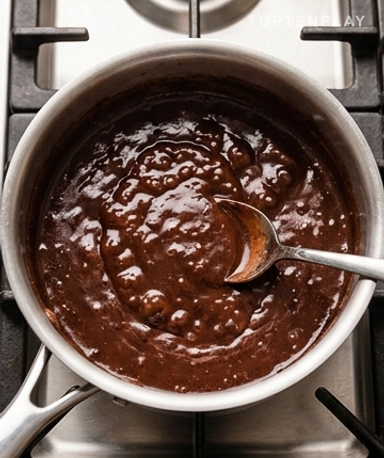
As soon as you pull it off the heat, the peanut butter, vanilla, and salt go into the pan. Don’t wait. The peanut butter melts into the hot mass creating golden ribbons, then incorporates completely within seconds of mixing. Then come the oats. The texture changes completely: the mass becomes thick, heavy, almost compact. Mix until every oat flake is well coated and none are left dry at the bottom.
Waiting is the hardest part
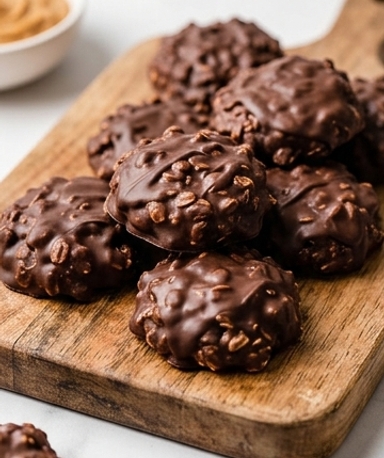
Drop spoonfuls onto parchment paper using a tablespoon. They’ll still be warm, slightly steaming, and will slump a bit under their own weight. Into the refrigerator for thirty minutes. Not the countertop—the cold is what sets the structure. After half an hour, the cookies are firm, matte on the surface, and peel cleanly away from the paper without leaving a trace.
Tips & Tricks
- Prep your parchment paper before you even turn on the stove. The mixture thickens very quickly after removal from heat and becomes hard to shape if you waste thirty seconds looking for supplies.
- If you don’t have a thermometer, count one minute of a full, active boil—not a simmer. This is the only real challenge of the recipe, and once you recognize the look, it’s effortless.
- These cookies keep for five days in the refrigerator in a sealed container. At room temperature, they soften after a few hours if the room is warm—not a disaster, but they lose some of their structure.
Why are my cookies soft and not solidifying?
The mixture likely didn’t boil long enough or hard enough. A simmer isn’t enough—you need a full active boil for one whole minute, or a temperature of 107°C. This is the only critical point: if this threshold isn’t reached, the structure won’t form.
My cookies crumble as soon as I touch them. What happened?
The mixture boiled too long, over-concentrating the sugar. Above 107°C, the texture becomes dry and grainy after cooling. One minute on the clock from the first full boil is the rule—no more.
Can I use natural peanut butter?
Yes, provided you stir it very thoroughly before measuring to reintegrate the separated oil. Commercial peanut butter is more reliable for texture, but well-mixed natural works in most cases.
How should I store these cookies, and for how long?
In the refrigerator in an airtight container, they keep for 5 days easily. You can also freeze them for up to 3 months—just thaw for 30 minutes at room temperature before serving. At room temperature, they soften after a few hours in a warm room.
Can I replace the peanut butter for an allergen-free version?
Yes. Sunflower butter or almond butter work well as a direct replacement, same quantity. The taste obviously changes, but the texture remains similar. Soy nut butter is also a good option for those with nut allergies.
Can I make these cookies in advance?
Absolutely. They are even better after a night in the fridge—the texture firms up and the flavors concentrate. You can prepare them the day before without any issues.
No-Bake Chocolate Peanut Butter Cookies
American
Dessert
Fudgy chocolate and peanut butter cookies, ready without turning on the oven. Eight ingredients, one pot, thirty minutes in the fridge.
Ingredients
- 115g (½ cup) unsalted butter
- 300g (1½ cups) granulated sugar
- 120ml (½ cup) milk
- 30g (¼ cup) unsweetened cocoa powder
- 130g (½ cup) creamy peanut butter
- 1 teaspoon vanilla extract
- ¼ teaspoon salt
- 270g (3 cups) instant oats
Instructions
- 1In a 3L saucepan, combine butter, sugar, milk, and cocoa over medium heat, whisking until the butter is melted and the mixture is smooth.
- 2As soon as the mixture comes to a full boil in the center, stop stirring and let boil for exactly 1 minute (target: 107°C on a thermometer).
- 3Remove from heat immediately. Stir in the peanut butter, vanilla, and salt until completely combined.
- 4Add the oats all at once and mix until all flakes are thoroughly coated.
- 5Drop rounded tablespoons of the mixture onto a tray lined with parchment paper.
- 6Let set in the refrigerator for 30 minutes before serving.
Notes
• Storage: 5 days in the refrigerator in an airtight container, or up to 3 months in the freezer.
• For a nut-free version: replace peanut butter with sunflower butter, same quantity.
• For a gluten-free version: use certified gluten-free oats—no other changes needed.
Nutrition Facts (per serving, estimated)
| 130 kcalCalories | 3gProtein | 19gCarbs | 6gFat |