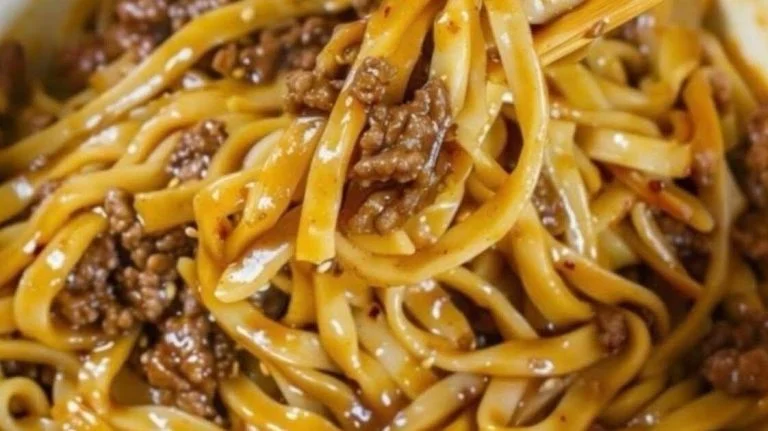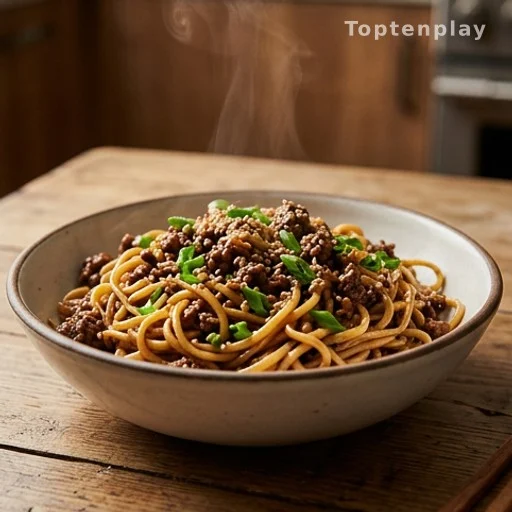
The recipe was developed by a home cook aged 73 who lives alone and has made simplicity a non-negotiable. «The best weeknight dinners are the ones that deliver maximum comfort with absolute minimal fuss,» she writes, framing the dish as a direct, faster, and healthier alternative to takeout in a cardboard box.
The noodle choice is deliberately flexible. Lo mein, ramen, or standard spaghetti all work. For those avoiding gluten or cutting carbohydrates, rice noodles or zucchini noodles are listed as direct substitutes, making the recipe accessible across a wide range of dietary needs.
The soy-and-brown-sugar glaze: the science behind the shine
The defining element of the dish is its glaze: ½ cup low-sodium soy sauce combined with ½ cup packed brown sugar. When added to browned ground beef over high heat, the mixture triggers a caramelization reaction between the sugars and the amino acids in both the soy sauce and the meat.
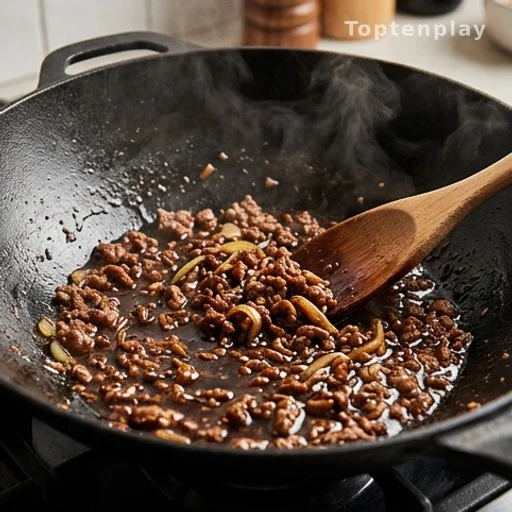
The result, as described in the recipe, is «a thick, glossy, restaurant-quality glaze that clings perfectly to every single noodle.» The process mirrors the Maillard reaction used in professional kitchens to build depth of flavor and visual appeal simultaneously.
Sesame oil — just one tablespoon — is identified as the «secret ingredient» that gives the finished dish its nutty, authentic aroma. Brown sugar is the preferred sweetener for texture, though honey or maple syrup are offered as alternatives, with the note that brown sugar produces the most consistent, glossy result.
The low-sodium specification for the soy sauce is flagged as «crucial» in the recipe, explicitly tied to blood pressure management. Coconut aminos are listed as a soy-free substitute for those with dietary restrictions.
Why Mongolian-style sauces work so well at home
Mongolian beef dishes became popular in American Chinese restaurants in the 1970s and 1980s, known for their combination of soy sauce, sugar, and aromatics over a high-heat protein. The home version simplifies the technique by using ground beef instead of sliced flank steak, dramatically cutting prep time while preserving the signature sweet-savory glaze. Low-sodium adaptations have grown in popularity as more home cooks factor blood pressure management into everyday meal planning.
Garlic and ginger: flavor and cardiovascular benefits in every bite
The recipe calls for 4 cloves of minced garlic and 1 tablespoon of freshly grated ginger — quantities the author describes as generous and intentional. Both ingredients are classified in the recipe as natural vasodilators, meaning they help relax blood vessels, reduce inflammation, and promote steady blood flow.