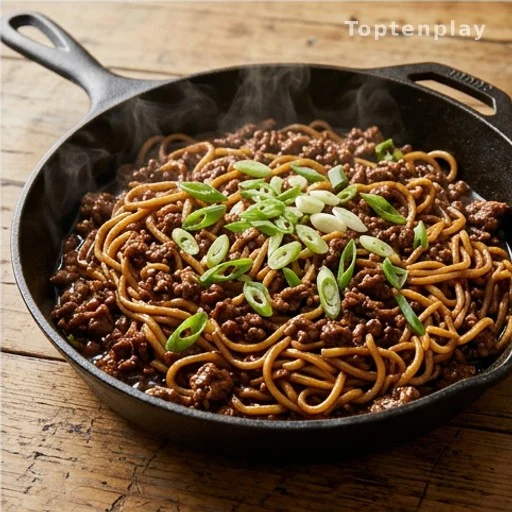
That distinction matters for anyone expecting something close to the stir-fried lamb dishes found in Inner Mongolia. What the recipe actually delivers is a soy-hoisin-ginger sauce that coats noodles and ground beef in a glossy, umami-forward glaze — closer in spirit to lo mein than to anything served on the Mongolian steppe.
Understanding that framing removes any expectation gap. The dish is not trying to be traditional; it is trying to be fast, filling and flavourful — and on those three counts, it succeeds.
What is American-Chinese cuisine?
American-Chinese cuisine emerged in the 19th century as Chinese immigrants adapted their cooking to local ingredients and tastes. Dishes like lo mein, General Tso’s chicken and Mongolian beef became diner staples with little connection to their nominal geographic origins. The category prioritises bold, accessible flavours over regional authenticity.
Six ingredients, one pan: the $8 weeknight formula
The recipe calls for 8 oz of spaghetti or lo mein noodles, 1 lb of ground beef, half a cup of soy sauce, a quarter cup of brown sugar, 2 tablespoons of hoisin sauce, and 3 cloves of minced garlic — plus a tablespoon of fresh grated ginger. Everything fits into a single skillet, which keeps cleanup to a minimum.
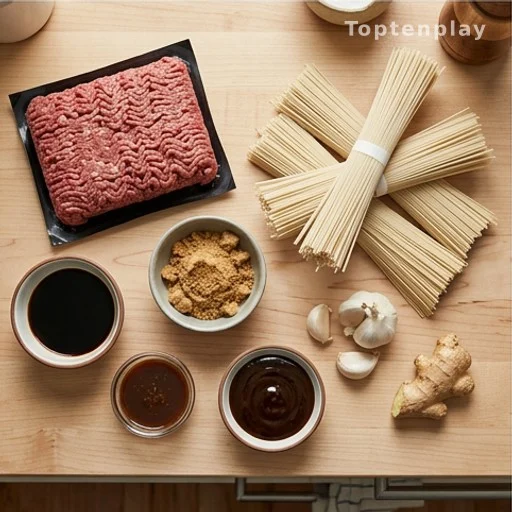
The total cost comes in under $8 for four generous servings, making this one of the more economical one-pan meals available to a home cook. Optional additions — a teaspoon of sesame oil, red pepper flakes, or sesame seeds — add depth without significantly raising the price.
For those following a gluten-free diet, the swap is straightforward: replace standard soy sauce with tamari, which carries the same salty-umami profile without the wheat. The rest of the recipe requires no adjustment.
Al dente noodles and lean beef: the two technique decisions that matter
Two preparation choices have an outsized impact on the final result. The first is noodle texture: the recipe specifies cooking spaghetti or lo mein al dente, because the noodles continue to absorb moisture once they hit the hot sauce in the skillet. Overcooked noodles at this stage will turn mushy before the dish reaches the table.
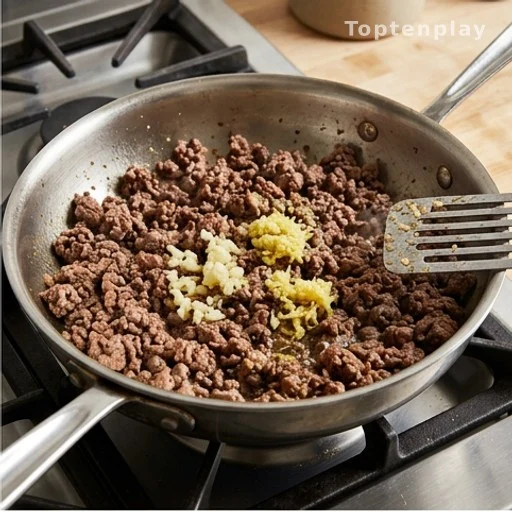
The second is the fat content of the beef. Using 90/10 lean ground beef — 90% lean, 10% fat — limits the amount of grease that needs to be drained after browning. Excess fat dilutes the sauce and prevents it from achieving the glossy, clingy consistency that defines the dish.