Couscous tabbouleh is fine. Millet is better. Not because it’s a trend — but because these small round grains stay slightly crunchy to the bite, carry flavors without drowning them, and truly change the game in a dish we’ve all eaten a hundred times. A recipe that is anything but complicated, as long as you respect two or three key points.
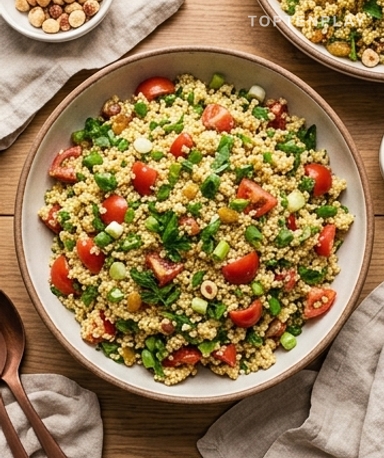
In the bowl, it’s a patchwork of textures and bold colors. The millet grains, golden like wet sand, sit alongside chunks of bright red tomato that have already begun to release their juices. The plumped raisins shimmers, and the herbs — a mix of parsley and mint — lean towards a near-neon green. The scent rising from the bowl is the preserved lemon: salty, tangy, with that floral undertone that lingers. And the bits of toasted hazelnuts on top smell like cooled brown butter.
Why you’ll love this recipe
Ingredient Notes
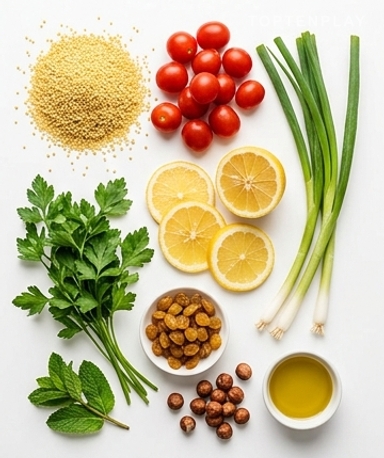
All the tabbouleh ingredients gathered: yellow millet, preserved lemons, aromatic herbs, raisins, and hazelnuts.
- Hulled yellow millet : Found in health food stores or the organic section of supermarkets. Yellow millet is milder than dark golden millet — less bitter, with a finer texture. Rinse it quickly under cold water before cooking; no soaking needed: it cooks in exactly 15 minutes.
- Salt-preserved lemons : This is the key ingredient, and it should not be confused with sugar-preserved lemons used in pastry. Look for salt-preserved lemons in Middle Eastern groceries or the canned goods aisle. Mince them very finely, skin included. The white inner pulp is often very salty — taste before adjusting the salt in the dish.
- Toasted hazelnuts : If you buy them raw, toast them yourself in a dry pan over medium heat for 3-4 minutes, stirring constantly. They are ready when the skin cracks and they smell like warm praline. Chop them coarsely — irregular pieces, not powder, otherwise you lose all the crunch.
- Raisins : Zante currants (small, black, slightly tart) are perfect here. If yours are dry and hard, let them soak for 10 minutes directly in the lemon juice before assembling: they plump up, soak in the flavor, and become much more interesting.
Cooking millet without making it mushy
This is the only delicate step. Boil the water separately while you toast the millet dry in a bit of olive oil — 30 seconds over medium heat, until the grains begin to smell like roasted hazelnuts and take on a slightly amber color like light caramel. Pour in the boiling water, cover, and turn the heat to the absolute minimum. Fifteen minutes. Without lifting the lid every two minutes. At the end, there should be no water left at the bottom, and the grains should still be slightly crunchy — exactly what we want. Spread it out immediately in a large dish and stir with a fork so it cools without clumping.
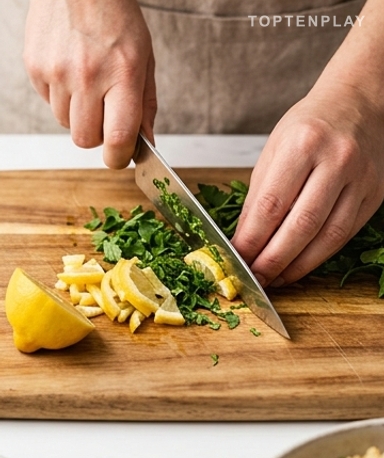
While it cooks
Knife on the board: fresh herbs, green onions, and those preserved lemon slices that need to be minced as finely as possible. This is where the final taste is truly decided. The mixed mint and parsley provide that intense green seen in the bowl — chop them at the last minute so they don’t darken. Cut the tomato into small, regular cubes, around 7-8 mm: not too big, but not turned into mush. The juice it releases while resting becomes part of the sauce.
Assembly — quick and easy
The millet must be truly cold before going into the bowl. Add herbs to lukewarm millet and they will soften, losing their bite and color. Once everything is in — millet, tomatoes, preserved lemon, green onions, herbs, raisins, lemon juice, olive oil — mix well. Taste. Adjust salt sparingly: the preserved lemon has already contributed a lot. The chopped hazelnuts go on top at the last moment to stay crunchy.
One hour in the fridge is the rule
Not negotiable. In the refrigerator, the millet grains finish absorbing the lemon juice and olive oil. The dish that comes out cold from the fridge is completely different from what you just assembled: the flavors have melded, the millet has soaked up all the acidity, and the raisins are fully plumped. Two hours is even better. Ideally, prepare this tabbouleh the day before — it’s truly another dimension.
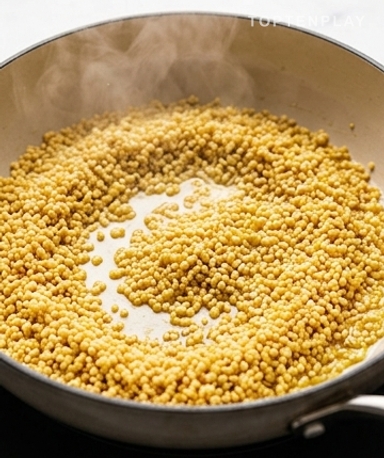
Tips & Tricks
- Don’t salt without tasting first — preserved lemon is often very salty, and it’s easy to over-season. Be light-handed with salt, always at the end of mixing.
- Add the chopped hazelnuts just before serving, never during the resting phase in the fridge. A hazelnut that has spent a night in a damp bowl becomes soft — it loses all its appeal.
- If you prepare this tabbouleh the day before, save a small drizzle of olive oil and a few fresh herbs to add a fresh kick just before serving.
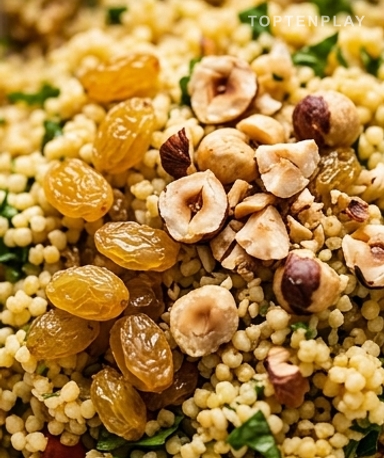
Can I replace millet with another grain?
Quinoa is the best alternative: same small grains, same texture after cooking. Couscous semolina also works, but the texture will be softer and less interesting. Adjust cooking time according to the chosen grain.
How long does this tabbouleh keep?
Up to 3 days in the refrigerator in an airtight container. It even improves in flavor the next day once the millet has absorbed the dressing. Always wait to add the hazelnuts: put them on top just before serving.
Where can I find salt-preserved lemons?
In Middle Eastern grocery stores or the canned goods section of supermarkets, often near olives and antipasti. Avoid sugar-preserved pastry lemons; it’s not the same flavor. Alternatively, a tablespoon of finely grated lemon zest with a pinch of salt can work in a pinch.
How do I prevent the millet from being too soft or sticky?
Two rules: sauté it for 30 seconds in oil before adding water (grains stay firmer), and spread it out immediately in a wide dish as soon as it’s cooked to stop the heat. Never let it sit in a covered pot.
Can I make this tabbouleh the day before?
It’s actually recommended. A tabbouleh rested overnight is significantly better than one served immediately — the grains truly absorb the lemon juice and olive oil. Reserve the hazelnuts and a drizzle of fresh oil for serving time.
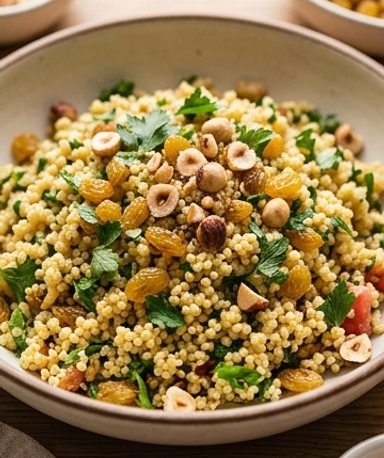
Millet Tabbouleh with Preserved Lemon
Mediterranean
Salad
A light and fragrant tabbouleh made with hulled yellow millet, salt-preserved lemons, fresh herbs, and toasted hazelnuts. Best prepared a day in advance.
Ingredients
- 200g hulled yellow millet
- 1 litre water
- 1 tbsp olive oil (for cooking)
- 120ml olive oil (for dressing)
- 1 large (around 200g) beefsteak tomato
- 3-4 slices (around 40g) salt-preserved lemons
- 6 green onions (scallions)
- 1 bunch flat-leaf parsley
- 1 handful fresh mint
- 70g raisins
- 60g toasted hazelnuts
- 80ml fresh lemon juice (about 2 lemons)
- salt and freshly ground pepper
Instructions
- 1Bring 1 litre of water to a boil. Rinse the millet quickly under cold water.
- 2Heat 1 tbsp of olive oil in a large pan over medium heat. Add the millet with a pinch of salt, sauté for 30 seconds while stirring.
- 3Pour in the boiling water, cover, and cook over very low heat for 15 minutes without lifting the lid. No water should remain at the bottom at the end.
- 4Spread the millet in a large dish, fluff with a fork, and let cool completely.
- 5Cut the tomato into 7-8 mm cubes. Finely mince the preserved lemons (including the skin). Slice the green onions, parsley, and mint.
- 6In a large bowl, mix the cold millet with tomatoes, preserved lemons, green onions, herbs, raisins, lemon juice, and 120ml of olive oil.
- 7Taste and adjust seasoning. Cover and refrigerate for at least 1 hour.
- 8Coarsely chop the hazelnuts and sprinkle them over the tabbouleh just before serving.
Notes
• Storage: 3 days in the refrigerator in an airtight container. Always add hazelnuts at the last moment to keep them crunchy.
• Make ahead: this tabbouleh is better prepared the day before. Before serving, add a drizzle of olive oil and some fresh herbs to refresh it.
• Variation: replace hazelnuts with toasted flaked almonds, or add some diced cucumber for an even fresher version.
Nutrition Facts (per serving, estimated)
| 575 kcalCalories | 10gProtein | 51gCarbs | 35gFat |