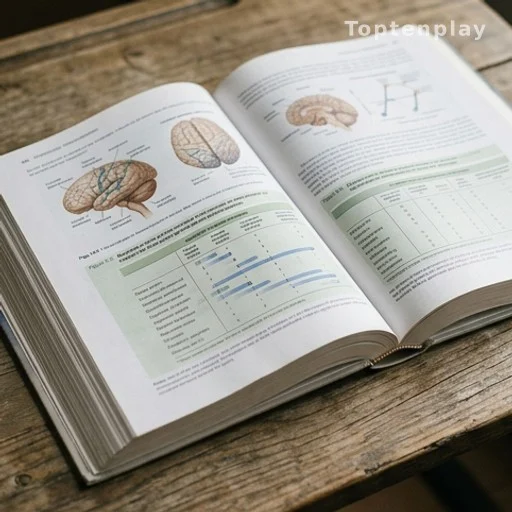
Modern psychology has largely moved away from the term, however. The reason is fundamental: the mind does not develop or decline in a single, linear trajectory. Cognitive functioning is shaped by a wide range of factors — genetics, education, stress levels, sleep, social connection, and daily mental habits — that shift constantly throughout life.
Reframed as cognitive vitality or psychological maturity, the concept becomes far more useful. It stops being a label and starts being a set of measurable, trainable capacities. That shift matters, because it means the state of your mind today is not a sentence — it is a starting point.
Cognitive flexibility and emotional regulation: the two pillars under daily pressure
Cognitive flexibility is the ability to adapt your thinking, shift perspectives, and solve problems creatively when circumstances change. It is what allows a person to learn a new skill after a career setback, or to reconsider a long-held opinion when new evidence emerges. Without it, thinking becomes rigid and responses become predictable in unhelpful ways.

Practical ways to strengthen it are deliberately low-tech: trying a new hobby, taking a different route to work, or beginning to learn a foreign language. Each of these forces the brain out of its established grooves and builds new connective pathways.
Emotional regulation sits alongside flexibility as one of the most consequential pillars. It is not about suppressing feelings but about managing them — responding thoughtfully rather than reacting automatically. Research consistently links strong emotional regulation to better relationships, greater resilience under stress, and sharper decision-making. Mindfulness practice, deep breathing exercises, journaling, and professional mental health therapy are all documented methods for building this capacity over time.
A concept with a contested history
The notion of mental age dates back to early twentieth-century intelligence testing, when psychologists sought a simple way to benchmark cognitive development in children. It was later incorporated into IQ calculations before falling out of favor as researchers recognized that cognition is multidimensional and cannot be reduced to a single score. Today, fields ranging from clinical psychology to cognitive neuroscience focus instead on specific, measurable functions — and on the conditions that help or hinder them.
Working memory declines with age — but targeted brain training can slow the process
Working memory is the cognitive system that holds and manipulates information in the short term — following a recipe while holding a conversation, or keeping a series of instructions in mind while completing a task. Along with processing speed, it is one of the capacities that declines most noticeably as people age.

The decline is natural, but it is not inevitable at the pace many people assume. Evidence points to several accessible habits that help maintain both working memory and processing speed: solving puzzles regularly, reading aloud, and playing a musical instrument have all been associated with measurable benefits.
Suggested Posts

A promise made at 17: four friends reunite 55 years later
In the summer of 1970, four teenagers made an unlikely promise on a wooden bench by a lake: they would return to the exact…