Many people hear “potato and cheese tart” and imagine a dull canteen dish, the kind served with a tired ladle on a Tuesday afternoon. This is exactly the opposite. Done right, this tart is the dish guests ask for as they’re leaving — and no one will guess you spent less than an hour on it.
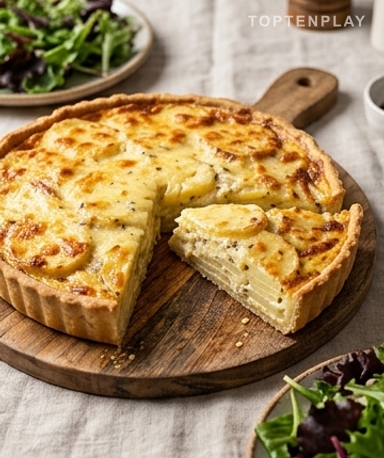
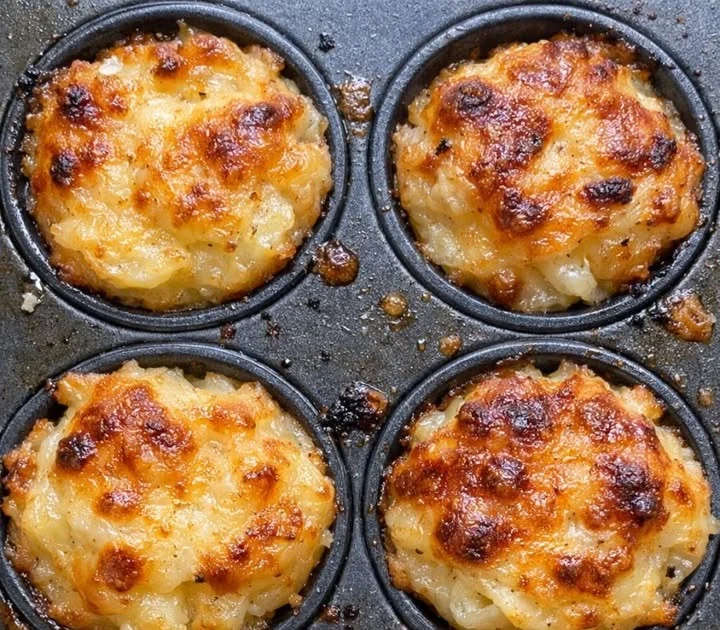
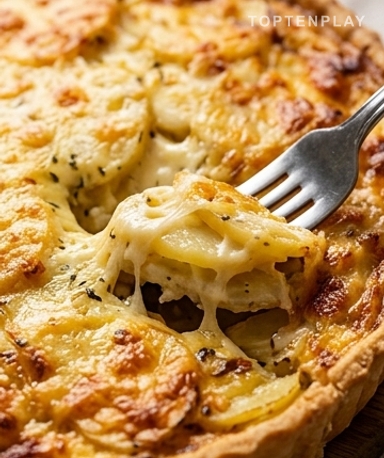
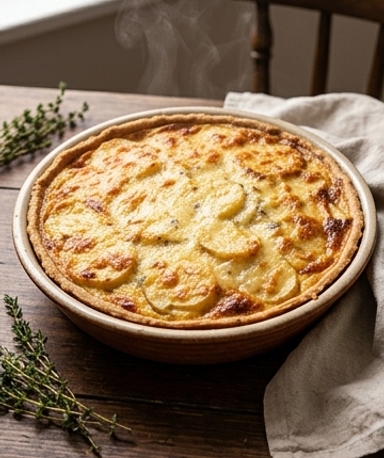
Fresh out of the oven, it has that specific light caramel color on the edges, right where the shortcrust pastry meets the gratinéed cheese. As you cut the first slice, the cheese resists for half a second before gently pulling away. The layers of potatoes are tender without being mushy, coated in a creamy mixture that smells slightly of nutmeg and garlic sautéed in butter. The sound of the fork going in — that little crunch of the crispy pastry — is proof that you’ve done a good job.
Why you’ll love this recipe
Ingredient Notes
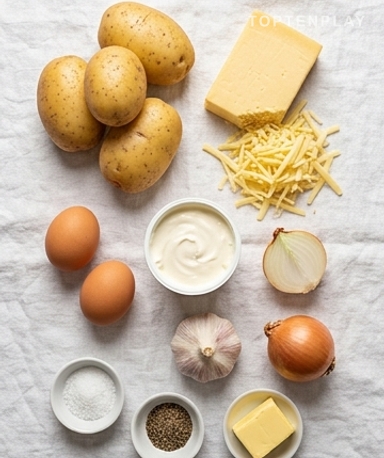
Everything needed for a comforting tart: potatoes, shredded cheese, cream, and a good shortcrust pastry.
- The potatoes : Choose waxy varieties — Charlotte, Amandine, or Roseval. They hold their shape during cooking without turning into a mushy puree at the bottom of the tart. Floury potatoes (Bintje, Agria) will fall apart and make the filling pasty. Cut them into regular slices of about 3-4 mm — neither too thick nor too thin.
- The shredded cheese : Emmental is the neutral and safe choice. But if you want more flavor, a 12-month Emmental-Comté mix changes everything — the Comté brings a slight nutty note you can really taste in the filling. Grate it yourself if you can: pre-shredded cheese is often too dry and doesn’t melt as well.
- The crème fraîche : Thick, not liquid. Thick 30% fat crème fraîche gives a filling that holds up after baking. Liquid cream makes it too damp — the pastry softens from underneath and you end up with a soggy bottom.
- The garlic : One clove, not two. Sautéed gently in butter, it loses its sharpness and releases a sweet, almost sugary fragrance that disappears into the filling without being consciously identified. Raw, it dominates everything — that’s the classic mistake.
Parboil the potatoes — not 15 minutes, not 5: exactly 10 minutes
This is the step everyone is tempted to skip. It’s the mistake that costs you. Raw potatoes directly in the tart yield a hard center, even after 45 minutes in the oven. Ten minutes in simmering salted water is enough — not a rolling boil. Check with the tip of a knife: it should enter without forcing, but the slices shouldn’t bend when you lift them. Drain them and let them cool at room temperature. If you place them in the tart while still hot and humid, the steam will soften the pastry from below.
Sauté the garlic over low heat — until it smells sweet, not until it browns
In the pan with a bit of butter, the minced garlic and sliced onion sizzle loudly at first, then settle down. It’s when the sizzling becomes a soft whisper that something good is happening. The onion becomes translucent, almost shiny. The garlic loses its aggressive edge. Remove from heat when it’s tender — not colored. Overcooked, it becomes bitter, and that bitterness will be found in every bite of the tart.
Whisk the filling until it’s truly smooth — not just mixed
In the bowl: two eggs, thick crème fraîche, salt, generous pepper, a pinch of nutmeg. Half of the shredded cheese. Really whisk it — not just three turns of the wrist. Until there are no more streaks of egg yolk, no clumps of cheese, no visible layers. The final texture should be pourable but coating, a bit like a thick custard. This mixture is what will transform ordinary potato slices into something creamy and unified.
Cover for the first 20 minutes, uncover for the last 20
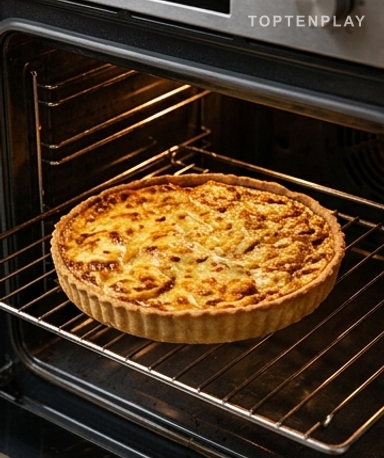
Oven at 180°C, fan setting if possible. Potatoes in even layers, onion-garlic mixture distributed, filling poured slowly to seep between layers, remaining cheese on top — generously. A loose sheet of foil on top for the first twenty minutes: the tart cooks through without the cheese burning. When you remove it halfway through, the smell coming from the oven is already that of a gratin — creamy, warm, slightly milky. In the last twenty minutes, the cheese will melt, bubble, and take on that light caramel color where it overlaps the edges.
Don’t touch anything for 10 minutes after taking it out of the oven
You’ll want to cut it immediately. Resist. The creamy filling is still partially liquid inside — not raw, but not set. Ten minutes at room temperature allows the bonds to form: the egg finishes coagulating gently, the cream tightens, and the layers bond together. The first slice will cut clean, without the filling running all over the plate. It’s the difference between a tart that presents well in front of guests and a tart that collapses into a puddle.
Tips & Tricks
- Reheat the tart the next day at 160°C for 15 minutes covered with foil — it’s as good as the first day, making it an ideal dish to prepare ahead when hosting.
- For an even crispier top, mix the topping cheese with a tablespoon of fine breadcrumbs — this creates a slightly drier, crunchy crust that contrasts with the melting filling.
- If you don’t have a tart tin, a square baking dish works great. The pastry hangs over the sides slightly, you fold the edges inward, and you get something that looks like a rustic pie. Just as delicious!
Can I prepare this tart the day before?
Yes, it’s actually recommended. Bake it fully, let it cool completely at room temperature, then wrap it and put it in the fridge. The next day, 15 minutes at 160°C covered with foil — it’s as good as the day of, sometimes even better.
Why is the bottom of my tart soggy?
Two possible reasons: the potatoes weren’t drained well enough after parboiling, or you used liquid cream instead of thick crème fraîche. To avoid this, blind bake the pastry for 8 minutes before filling — this creates a moisture barrier.
What cheese can I use if I don’t have Emmental?
Any cheese that melts well. Comté, mozzarella, Gruyère, mild cheddar — they all work. Comté brings more character, mozzarella more stretch. Avoid hard cheeses like Parmesan on their own, as they create a surface that is too dry.
Can I freeze this tart?
Yes, but the texture of the potatoes changes slightly after thawing — they become a bit softer. Freeze in individual portions, well wrapped in plastic film. Thaw in the fridge overnight and reheat in a low oven.
How can I make the recipe heartier for a full meal?
Add a layer of sautéed turkey bacon between the potatoes and the creamy filling — it adds salt and smokiness without being too heavy. Roasted red pepper cubes also work great and add a pop of color.
Can the tart be served cold?
Absolutely. It holds together very well cold and cuts cleanly once cooled. It’s a great option for a buffet or a portable meal — the pastry stays crispy for several hours if kept in the open air rather than wrapped.
Melting Cheese and Potato Tart
French
Main course
A generous savory tart with layers of tender potatoes, a creamy nutmeg-scented filling, and a golden cheese gratin. Simple, nourishing, and ready in 70 minutes.
Ingredients
- 1 shortcrust pastry (approx. 230g, homemade or store-bought)
- 700g waxy potatoes (Charlotte, Amandine, or Roseval)
- 200g shredded cheese (Emmental, Comté, Gruyère, or a blend)
- 200ml thick crème fraîche (30% fat)
- 2 eggs
- 1 medium onion
- 1 clove garlic
- 1 tbsp butter or olive oil
- 1 pinch nutmeg
- Salt and freshly ground black pepper
Instructions
- 1Preheat the oven to 180°C (fan). Peel the potatoes and cut them into thin slices of 3-4 mm.
- 2Cook the slices in a pot of simmering salted water for 10 minutes. They should be tender but still slightly firm. Drain and let cool slightly.
- 3In a pan, heat the butter over low heat. Sauté the sliced onion and minced garlic for 4 to 5 minutes without browning, until tender and fragrant. Set aside.
- 4In a bowl, whisk the eggs with the crème fraîche, salt, pepper, nutmeg, and half of the shredded cheese until the mixture is smooth and homogeneous.
- 5Roll out the shortcrust pastry into the tart tin and prick the bottom with a fork. For extra crispiness, blind bake for 8 minutes.
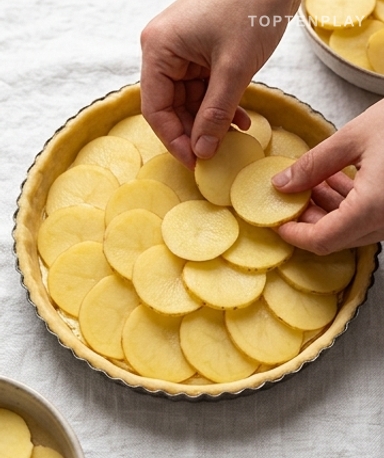
- 6Arrange the potato slices in even layers on the pastry base. Distribute the onion-garlic mixture over the top.
- 7Slowly pour the creamy mixture over the entire surface so it seeps between the layers. Sprinkle with the remaining shredded cheese.
- 8Cover with aluminum foil and bake for 20 minutes. Remove the foil and continue baking for 20 to 25 minutes, until the cheese is gratinéed to a light caramel color.
- 9Let rest for 10 minutes out of the oven before slicing and serving.
Notes
• Storage: 3 days in the refrigerator in an airtight container. Reheat at 160°C for 15 minutes covered with foil.
• Gratiné variant: mix the top cheese with 1 tablespoon of fine breadcrumbs for a drier, crunchier crust.
• Make ahead: the tart is even better prepared the day before — the flavors develop and it cuts much cleaner once cold and reheated.
Nutrition Facts (per serving, estimated)
| 420 kcalCalories | 18gProtein | 56gCarbs | 34gFat |