Puff pastry turnovers—many people believe they are strictly bakery business, something requiring specialized equipment, a professional touch, and training. The reality? A store-bought puff pastry, some spiced ground meat, and you have one of the most comforting dishes imaginable. It’s the recipe that saves a Tuesday night and impresses on a Sunday lunch.
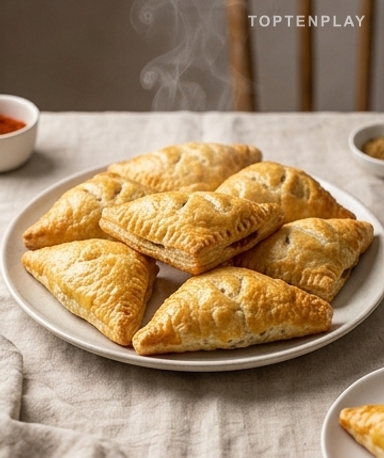
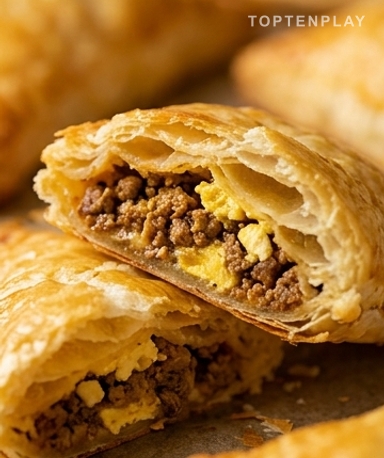
Straight out of the oven, the turnovers have this deep amber color—not the pale yellow of a timid pastry, but a warm caramel, almost mahogany in places. The pastry crackles under your fingers even before the first bite. Inside, the filling steams slightly: the meat, spiced with paprika and cumin, releases a warm, rounded scent, something between a light tagine and a high-quality burger. The eggs mixed into the warm meat provide an unexpectedly creamy texture.
Why you’ll love this recipe
Ingredient Notes
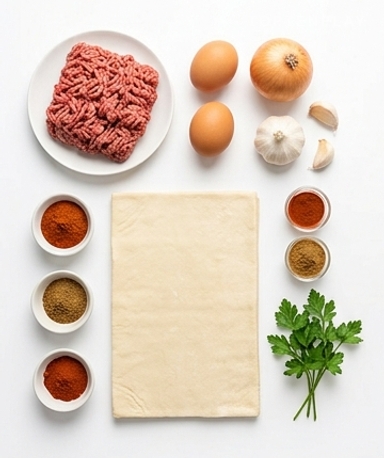
Everything you need for delicious turnovers: ground meat, eggs, puff pastry, and a few well-chosen spices.
- Ground beef : Go for 15% fat if you can find it—too lean and the filling will be dry, too fatty and it will leak into the pastry. 15% gives a just-right texture, melting without being heavy. Ground veal also works very well if you want something more delicate.
- Puff pastry : The all-butter version makes a real difference: richer, more fragrant, and it browns better. That said, the classic version works perfectly. Most importantly: it must be very cold when you work with it. If it’s warm, it sticks and won’t puff up properly during baking.
- Cumin : Marked as ‘optional’ in many recipes, but honestly indispensable here. It brings a low, almost earthy heat that balances the paprika and adds depth to the filling. Without it, the filling is okay. With it, it has character.
- Eggs (in the filling) : Two eggs cracked into the warm meat—not hot, warm—and mixed quickly. They cook in the residual heat and bind the filling without making it rubbery. This is what creates that slightly creamy interior that you can’t quite place at first.
The filling: the part everyone rushes
Most people fail their turnovers at this exact step. They cook the meat, see that it’s cooked, and stop there. The problem: ground meat releases water. A lot of water. And that water, if it stays in the filling, migrates into the pastry during baking and makes everything soggy from underneath. You must let it cook over medium heat until all the liquid has evaporated—when you hear the sizzle change tone, going from a wet bubbling to a dry, steady fry, it’s ready. The meat should be well browned and the pan almost dry. Only then do you turn off the heat.
Why I never skip the warm spices anymore
The cumin and paprika aren’t there to be exotic. They are there so the filling isn’t bland once encased in the pastry. Puff pastry, being neutral and buttery, absorbs flavors—what tastes intense in the pan will taste subtle in the finished turnover. So, season more than you think necessary. Half a teaspoon of each is the minimum. You can go up to a full teaspoon of smoked paprika for something deeper. As for the garlic, it’s non-negotiable.
Assembly: quick, but the edges are final
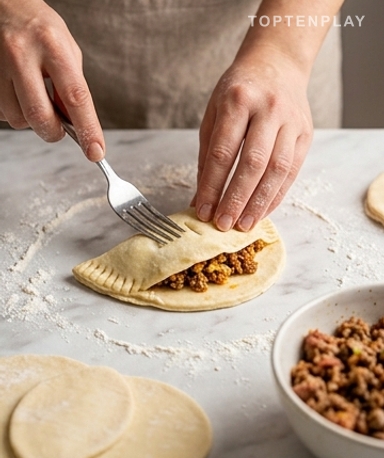
Roll out the cold dough on a clean surface. Cut circles using an inverted bowl—about twelve to fourteen centimeters in diameter for well-stuffed turnovers. One and a half tablespoons of filling in the center, no more: the classic mistake is overfilling. Fold into a half-moon, then press the edges with the tines of a fork—you’ll feel the dough compress slightly under the pressure, the two layers sealing together. This takes ten seconds. Then brush generously with egg yolk: the mahogany color you get after baking depends directly on the thickness of this layer.
Baking: let the oven do its thing
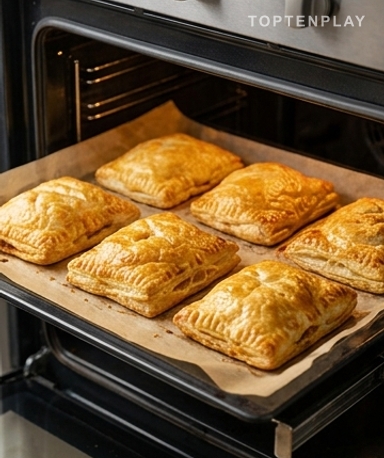
Preheated oven to 180°C, no higher. Some are tempted to raise the temperature to go faster—the pastry will burn on the surface before being cooked through. On the tray, leave space between each turnover: they puff up more than you think. Twenty to twenty-five minutes without opening the oven. Halfway through, you’ll start to smell the warm butter and spices spreading through the kitchen. When they come out, they should be firm to the touch and a uniform golden brown. Let them rest for two minutes on the tray before moving them—just after baking, the pastry is still fragile and breaks easily.
Tips & Tricks
- Do not fill the turnovers with a filling that is still hot—let it cool completely first. A hot filling soaks the cold pastry before it even reaches the oven, and you lose all the crunch.
- If your edges open during baking, the seals weren’t pressed hard enough. Lightly moisten the edges with a wet finger before using the fork—it helps the two layers of dough stick properly.
- To reheat leftovers: oven at 160°C for eight minutes, never the microwave. The microwave softens everything, and you end up with soggy dough and a cold center.
How do I prevent turnovers from opening during baking?
The main cause is insufficient sealing. Lightly moisten the edges of the dough with a wet finger before folding, then press firmly with the tines of a fork all along the edge. A filling that is too wet can also cause the turnovers to burst—ensure all liquid has evaporated from the meat before filling.
Can the turnovers be prepared in advance?
Yes, two options: prepare the filling the day before and keep it in the fridge (it will be even better the next day), or assemble the raw turnovers and refrigerate them for up to 12 hours before baking. In that case, brush them with egg yolk just before putting them in the oven, not before.
Can I freeze the turnovers?
Yes, and it’s very convenient. Freeze them raw, after assembly but before egg washing, on a tray so they don’t stick together, then transfer them to an airtight bag. Bake directly from the freezer at 180°C, adding 8 to 10 extra minutes.
How do I reheat cooked turnovers without them going soft?
Oven at 160°C for 7 to 8 minutes—do not use the microwave, which makes the pastry soggy immediately. If you’re in a hurry, a dry frying pan over medium-low heat for 3-4 minutes per side also works very well.
Can I replace the beef with another meat?
Absolutely. Ground chicken gives a lighter, milder result. Ground veal is excellent and very tender. Ground turkey also works if you want something leaner. The seasoning remains the same regardless of the meat chosen.
My puff pastry isn’t rising well—why?
The most common reason: the dough was too warm while working with it. It must stay cold until the last moment—take it out of the fridge just before rolling it out. Work quickly, and if it starts to stick or soften, put it back in the fridge for 10 minutes before continuing.
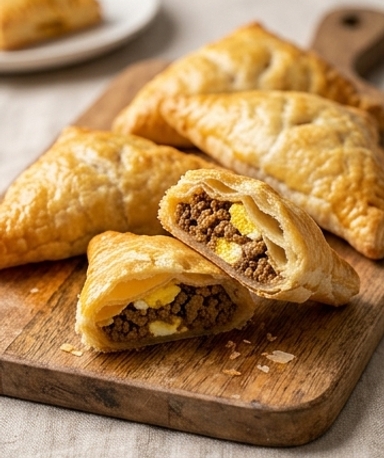
Meat & Egg Puff Pastry Turnovers
Mediterranean
Main Course
Crispy puff pastry turnovers filled with spiced ground meat and melty eggs. Fast, budget-friendly, and comforting.
Ingredients
- 250g ground beef (15% fat)
- 2 rolls all-butter puff pastry (230g each)
- 2 whole eggs
- 1 egg yolk (for glazing)
- 1 medium onion (about 80g), finely chopped
- 1 clove of garlic, crushed
- 1 c.s. vegetable oil or butter (15ml)
- ½ c.c. paprika
- ½ c.c. ground cumin
- salt and black pepper
- 1 handful fresh chopped parsley (optional)
Instructions
- 1Preheat the oven to 180°C. Finely chop the onion and crush the garlic clove.
- 2Heat the oil in a pan over medium heat. Sauté the onion for 3 to 4 minutes until translucent, then add the garlic and stir for 30 seconds.
- 3Add the ground meat, breaking it up with a spatula. Season with salt, pepper, paprika, and cumin.
- 4Cook over medium heat, stirring regularly until the meat is well browned and all liquid has evaporated. Remove from heat and let cool slightly for 5 minutes.
- 5Crack the 2 eggs into the warm meat and mix quickly. The residual heat is enough to bind them without fully cooking them. Add parsley if desired.
- 6Roll out the cold puff pastry on a work surface. Cut out circles about 12 to 14 cm in diameter using an inverted bowl.
- 7Place 1 to 1.5 tablespoons of filling in the center of each circle. Lightly moisten the edges, fold into a half-moon, and press edges firmly with a fork.
- 8Arrange the turnovers on a tray lined with parchment paper, leaving space between them. Brush with the lightly beaten egg yolk.
- 9Bake for 20 to 25 minutes until a uniform golden color is achieved. Let rest for 2 minutes on the tray before serving.
Notes
• Storage: Turnovers keep for 2 days in the refrigerator in an airtight container. Reheat in the oven at 160°C for 8 minutes—never in the microwave to maintain crispness.
• Freezing: Assemble the raw turnovers and freeze on a tray. Once solid, transfer to a freezer bag. Cook directly from the freezer at 180°C, adding 10 minutes to the baking time.
• Cheese Variation: Add 30g of grated cheese (Gruyère or Mozzarella) on top of the filling before closing the turnovers for an even meltier interior.
Nutrition Facts (per serving, estimated)
| 330 kcalCalories | 17gProtein | 18gCarbs | 26gFat |