📌 Madagascar Kalanchoe: how this succulent plant naturally relieves burns, bites, and skin discomfort
Posted 26 December 2025 by: Admin
Kalanchoe: A Succulent Plant With Ancestral Virtues
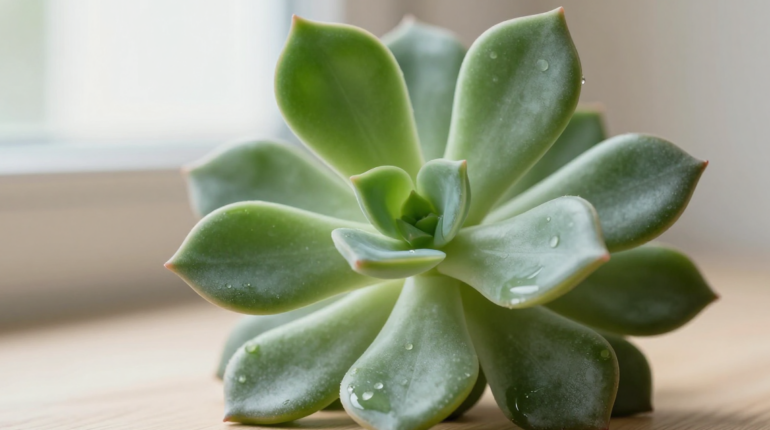
Native to Madagascar, the kalanchoe belongs to the Crassulaceae family and has more than 120 recorded species. This succulent, now cultivated in all tropical and subtropical regions, has crossed continents to establish itself in traditional pharmacopoeias worldwide.
Three varieties stand out particularly for their applications in folk medicine: Kalanchoe pinnata, nicknamed “leaf of life,” Kalanchoe daigremontiana, and Kalanchoe blossfeldiana, the latter being mainly ornamental. These popular names — “plant of life,” “mother plant,” or “miracle leaf” — testify to the extraordinary reputation this succulent has built over generations.
The chemical composition of kalanchoe reveals a remarkable concentration of active compounds: flavonoids, phenols, sterols, triterpenoids, and glycosides. These natural substances explain the antioxidant, soothing, and protective properties documented by therapeutic traditions, which have observed the exceptional regenerative capacity of this plant for centuries.
This biochemical richness gives kalanchoe a double legitimacy: that of ancestral use passed down through cultures, and that of contemporary scientific interest which is beginning to decipher its mechanisms of action. A fascinating bridge between traditional knowledge and modern research.
Natural Properties Recognized By Traditions
Traditional uses of kalanchoe rely mainly on topical applications aimed at soothing localized inflammation and bodily tension. Poultices of crushed fresh leaves constitute the most widespread ancestral method for treating areas affected by swelling, muscle tension, or minor injuries.
The action of kalanchoe on skin balance has long fascinated practitioners of traditional medicine. Its fleshy leaves, applied directly to the skin, are valued for soothing superficial irritations, minor burns, insect bites, and minor wounds. This refreshing and moisturizing nature explains its popularity in natural skin care across continents.
In several folk pharmacopoeias, infusions of kalanchoe leaves also serve to support respiratory comfort during temporary congestion or seasonal changes. This use, purely traditional, cannot however replace appropriate medical care.
The concentration of flavonoids in kalanchoe gives it documented antioxidant properties, protecting cells against oxidative stress. These natural antioxidants participate in the body’s defense mechanisms and play a role in maintaining balanced cellular aging. Some traditions even include this plant in protocols aimed at strengthening general resilience and vitality.
These applications converge toward the same observation: kalanchoe acts as a soothing and protective agent, particularly when used externally with discernment.
Modes Of Use Across Cultures
This soothing and protective action is reflected in practices of remarkable diversity depending on geographical areas. External application remains the preferred method across all traditions: crushed fresh leaves applied directly to skin irritations, swelling, minor burns, or insect bites. This topical approach concentrates the bulk of documented folk uses.
Internal use, which is much more marginal, exclusively concerns the species _Kalanchoe pinnata_ and _Kalanchoe daigremontiana_. Traditional preparations follow a precise protocol: 3 to 4 leaves infused in 2 cups of water for 5 to 10 minutes, consumed in minimal quantities and over short periods. This practice imperatively requires rigorous botanical identification and the guidance of an expert.
Cultural variations reveal fascinating specializations. In India, Ayurveda integrates kalanchoe into protocols focused on respiratory comfort and skin balance. African traditions value it for support during seasonal changes. In Latin America, it appears in popular remedies against inflammation. In Vietnam, its topical application on burns and skin irritations is a common and well-established practice.
This geographical convergence toward external use highlights an essential reality: the topical route remains the safest and best documented by traditional knowledge. Internal applications, which are in the minority and potentially risky, require expertise that only certain practitioners truly master.
Essential Precautions And Emerging Research
This traditional expertise must never overshadow the safety imperatives revealed by modern scientific analysis. Some species of kalanchoe contain powerful compounds that become toxic in high quantities, causing heart or digestive disorders during excessive ingestion. Precise botanical identification is therefore an absolute necessity before any use.
Formal contraindications concern pregnant and breastfeeding women, in whom kalanchoe can induce adverse effects. Drug interactions represent a real risk: dangerous associations with hypotensive, sedative, or anticoagulant treatments. The plant must also remain out of reach of children and pets, who are particularly vulnerable to its potential toxicity.
At the same time, preliminary scientific research explores promising avenues. Laboratory studies document the antioxidant activity of flavonoids, the antimicrobial potential of certain extracts, and the skin regenerative properties observed in vitro. This work reveals fascinating cellular mechanisms that could explain traditional uses.
However, these data remain at the exploratory stage. No clinical validation currently justifies a medical use of kalanchoe. The gap between laboratory observations and reliable therapeutic applications remains considerable. What clearly emerges is a principle of balance: simultaneously respecting ancestral knowledge and contemporary scientific requirements. Kalanchoe perfectly illustrates how nature offers remarkable resources, provided they are approached with knowledge, moderation, and enlightened discernment.