This lightly cooked trout with green asparagus works perfectly in spring, when you want a fresh but not cold dish, elegant yet feasible on an evening when you don’t want to spend three hours in the kitchen. I also see it for a weekend lunch: few steps, but a clean result on the plate.
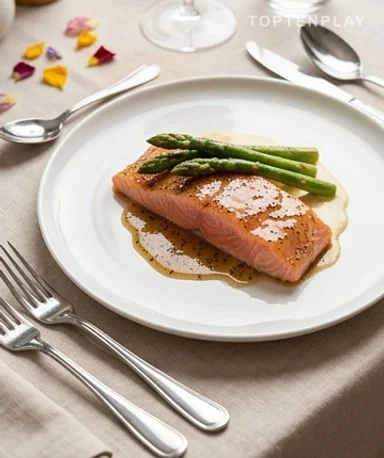
The fish remains pearly in the center, almost satiny, with flesh that flakes without drying. The asparagus brings that green crunch, slightly herbaceous, which wakes up the beurre blanc. The poppy sauce adds a bright red note, sweet-tart, without falling into heavy sweetness. During cooking, you mainly smell warm butter, ginger, and lemongrass: it’s subtle, but it changes everything.
Why you’ll love this recipe
Ingredient Notes
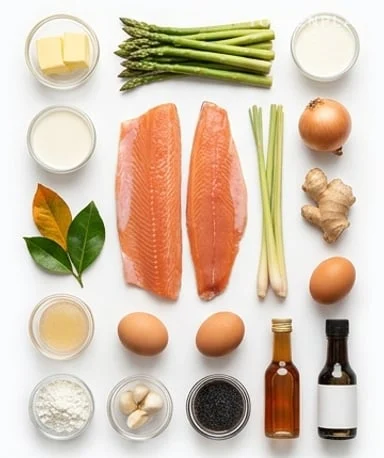
Trout, thin asparagus, butter, cream, aromatics, and poppy: a short list, but definitely restaurant-level.
- Trout fillet : It’s the heart of the dish, so you need a thick, even fillet to get a true lightly cooked result. Ask for very fresh fish, with no strong odor, firm and shiny flesh; if the fillets are too thin, reduce cooking by a few minutes.
- Green asparagus : They bring crunch, slight bitterness, and a clear color to the plate. Choose thin ones for quick cooking and a more delicate texture; out of season, very thin green beans can work as a substitute.
- Salted butter : It provides the fat, roundness, and enveloping quality of the beurre blanc. Use good quality butter, not too watery, and add it off the heat to avoid a sauce that splits.
- Vegetable broth : It replaces the alcohol base while adding depth to the sauce. Use a clear, lightly salted broth; otherwise, the salted butter and white soy sauce will make everything too salty.
- Poppy syrup and vinegar : They give the floral, red, tangy touch that sets this recipe apart from classic beurre blanc. If you can’t find them, mix a mild floral syrup with rice vinegar, keeping a light hand so as not to mask the trout.
- Ginger and lemongrass : They perfume the brine and give the fish a citrusy freshness without aggression. Lightly crush the lemongrass and cut ginger into thin slices to better diffuse the aromas.
The brine is the shortcut that adds flavor
Start by bringing water, salt, sugar, lemongrass, ginger, and berries to a boil, then let cool completely. This step seems technical, but it mainly serves to season the trout deep into the flesh without making it salty on the surface. When the brine is cold, submerge the even fillets for about an hour: the fish becomes firmer to the touch, with a fresh, citrusy smell. Never put the trout in a warm brine, as it would start to cook and lose that pearly center we’re aiming for here.
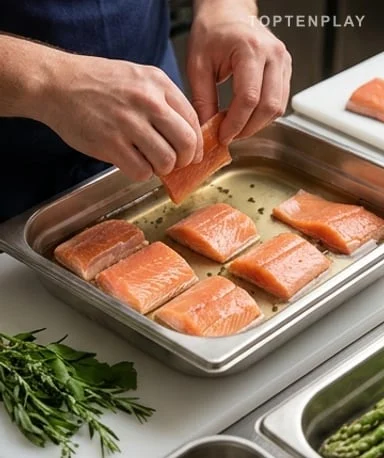
Alcohol-free beurre blanc holds up well
Gently sweat the onion in a drizzle of oil until translucent and slightly sweet-smelling. Deglaze with clear vegetable broth, a little rice vinegar, and a pinch of sugar, then reduce to concentrate the acidity. Add cream, let thicken gently, then mount with butter off the heat. The sauce should be shiny, smooth, with a milky and tangy aroma; if it boils too hard after the butter, it risks becoming greasy and messy.
Asparagus should stay green, not mushy
Steam the asparagus for a few minutes, just until the tips are tender but still bright. You want to feel a slight resistance under the knife, not get a sad puree. Reserve the tips for plating, then blend the stalks with the garlic scapes to make a vegetable cream. Egg yolks and butter give structure, but heat gently: if the base catches or smells of cooked egg, the temperature rose too fast.
Gentle cooking makes all the difference
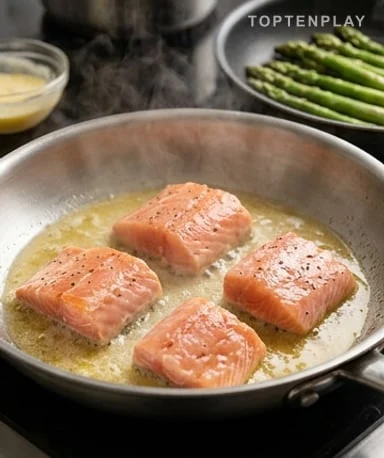
Heat clarified butter at a low temperature, around 52°C, then submerge the well-dried trout fillets. The cooking is silent, almost motionless, and that’s exactly what’s needed: no searing, no crust, just steady heat that relaxes the flesh. After about twelve minutes, the fish should be warm in the center, pearly, still juicy. If your fillets are smaller, remove them earlier; overcooked trout quickly becomes dry and loses its silky quality.
Plating should be simple and clean
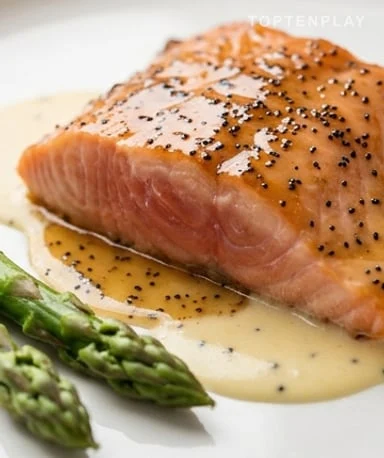
Pour the beurre blanc onto the bottom of the plate, then place the trout on top, skin removed if needed. Drizzle with the poppy sauce, in small amounts, because its color and acidity are strong. Add the warm asparagus on the fish, then a few dots of the vegetable cream around to add texture. The plate should smell of warm butter, fresh herbs, and a light floral note; if everything is drowned in sauce, you no longer taste the delicacy of the fish.
Tips & Tricks
- Thoroughly dry the fillets after brining, because excess water prevents the clarified butter from coating the fish properly and dilutes the flavors.
- Keep the beurre blanc over very low heat or in a bain-marie, because too high heat separates the fat from the acid part and makes the sauce heavy.
- Taste the poppy sauce before saucing: if it seems too sweet, add a few drops of mild vinegar to wake up the trout without overpowering it.
- Serve in warm plates, because the fish is cooked at a low temperature and cools quickly; a cold plate immediately ruins the pleasure of the lightly cooked texture.
Can you make this lightly cooked trout without a thermometer?
Yes, but it’s less precise. Cook the trout over very low heat in clarified butter and remove it as soon as the flesh becomes pearly and barely flakes under pressure.
What can I substitute for poppy if I can’t find it?
Use a mild floral syrup with a little rice vinegar. The idea is to keep a shiny, slightly floral and tangy sauce, without covering the delicate taste of the trout.
Can I prepare elements in advance?
Yes, the brine, asparagus cream, and poppy sauce can be made in advance. Keep the cooking of the trout and the mounting of the beurre blanc for the last moment, otherwise the texture loses finesse.
Is lightly cooked trout really cooked?
It is cooked at a low temperature, so the flesh remains tender, pinkish, and moist. If you prefer more cooked fish, extend by a few minutes, but avoid strong heat that dries it out.
Can I replace green asparagus?
Yes, thin green beans, snow peas, or young zucchini work well. Choose a green vegetable that retains some crunch to balance the beurre blanc.
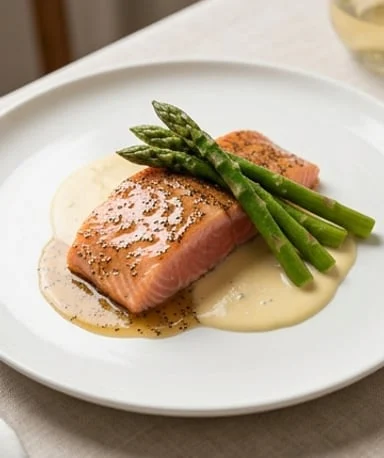
Lightly Cooked Trout with Green Asparagus, Poppy, and Alcohol-Free Beurre Blanc
French
Main course
A tender and pearly trout, gently cooked in clarified butter, served with green asparagus, a tangy poppy sauce, and an alcohol-free beurre blanc.
Ingredients
- 600g boneless trout fillet
- 1L water
- 100g fine salt
- 50g sugar
- 1 lemongrass stalk, crushed
- 10g fresh ginger, sliced
- 500g clarified butter
- 500g thin green asparagus
- 4 garlic scapes or 1 small mild garlic clove
- 75g egg yolks
- 75g unsalted butter
- 3g gelatin
- 1 small onion
- 150ml clear vegetable broth
- 2 tablespoons rice vinegar
- 1 teaspoon sugar
- 160ml heavy cream
- 60g cold salted butter, diced
- 40g poppy syrup
- 40g poppy vinegar or mild rice vinegar
- 100ml white soy sauce
- 1 teaspoon cornstarch
- 1 garlic clove, crushed
Instructions
- 1Prepare the brine by bringing water, salt, sugar, lemongrass, and ginger to a boil, then let cool completely.
- 2Cut the trout into 4 even fillets, submerge them in the cold brine for 45 minutes, then drain and dry thoroughly.
- 3Steam the green asparagus for 5 minutes. Reserve the tips for plating and blend the stalks with the garlic scapes.
- 4Heat the asparagus puree, pour it over the egg yolks while mixing, then add the hydrated gelatin and unsalted butter to obtain a smooth cream.
- 5Sweat the chopped onion in a drizzle of oil, add broth, rice vinegar, and sugar, then reduce by half.
- 6Add the cream, let thicken slightly, then off the heat, whisk in the cold salted butter to get a shiny beurre blanc.
- 7For the poppy sauce, heat the syrup, vinegar, white soy sauce, and garlic. Add the cornstarch diluted in a little cold water and let thicken gently.
- 8Heat the clarified butter to about 52°C, submerge the trout fillets and cook for 10 to 12 minutes depending on thickness.
- 9Quickly reheat the asparagus tips in a small knob of butter.
- 10Plate the beurre blanc, place the trout on top, drizzle with poppy sauce, add asparagus, and a few dots of the cream.
Notes
• The brine must be cold before adding the trout, otherwise the fish starts cooking too early.
• The beurre blanc should not boil after adding the butter, otherwise the sauce may split.
• For a simpler version, serve without the asparagus cream and keep only the steamed tips.
• The poppy sauce should be used sparingly: too much sauce masks the delicacy of the fish.
Nutrition Facts (per serving, estimated)
| 620 kcalCalories | 34gProtein | 18gCarbs | 46gFat |