This is the kind of dessert you whip up on a Friday night when it’s too hot to turn on the oven and you want something fresh for the weekend. No baking. No stress. Just a bit of patience while the fridge does the work for you.

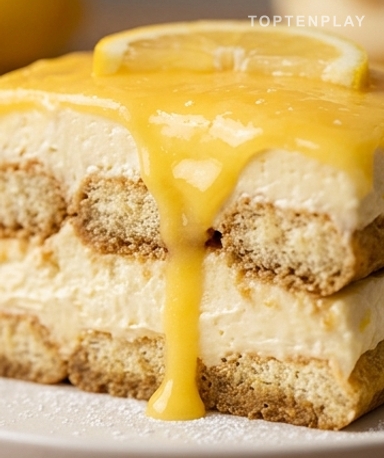
When taken out of the fridge, the surface is a bright pale yellow—almost like sunshine frozen in cream. The lemon curd shines slightly, taut and smooth like a mirror. Under the first layer, the biscuits have absorbed the lemon syrup and become melt-in-the-mouth, almost silky under the fork. The mascarpone cream is dense without being heavy—you taste the lemon first, a sharp acidity that cuts through the sweetness of the powdered sugar.
Why you’ll love this recipe
Ingredient Notes
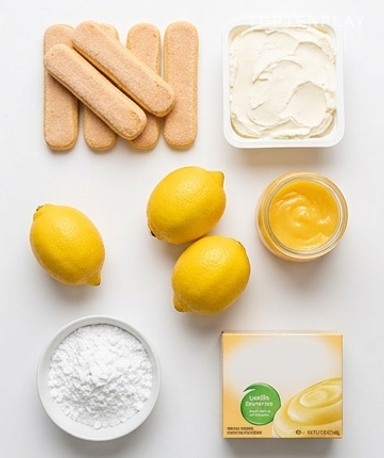
Ingredients for lemon tiramisu: ladyfingers, velvety mascarpone, fresh lemons, and lemon curd.
- Mascarpone : The base of it all. Use it at room temperature—taken out 30 minutes before—otherwise, it will grain under the whisk and the cream will be lumpy. Absolutely avoid low-fat versions: they release water and the cream collapses.
- Lemon curd : It brings a lemony intensity that juice alone can’t provide. A store-bought jar works perfectly—the Bonne Maman brand is decent, a homemade version even better. It’s used both in the cream and for topping, so plan for a large jar.
- Ladyfingers (savoiardi) : Real Italian savoiardi are preferable to French ladyfingers: they are firmer and absorb the syrup better without falling apart. You can find them in Italian grocers or in the cookie aisle of supermarkets. One second of soaking on each side—no more.
- Instant vanilla pudding : The somewhat unexpected ingredient. It gives the cream perfect structure without having to make a full pastry cream. One box is enough, found in the baking aisle. It’s what gives that creamy yet firm consistency.
Take the mascarpone out 30 minutes before starting
This is the only true prerequisite for this recipe. Cold mascarpone is stubborn—it resists the whisk and you end up with lumps in the cream. At room temperature, it becomes supple, almost silky, and incorporates in seconds. While it waits on the counter, prepare your lemon syrup: juice of two lemons, three spoons of sugar, 100 ml cold water. Mix until completely dissolved. The scent is already there—fresh and bright, as if you just cut a lemon in half on the board.
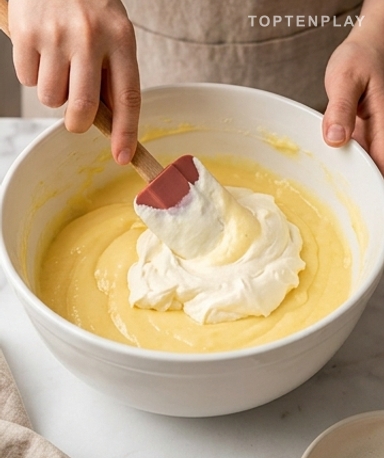
Start with the pudding, not the mascarpone
Pour the cold milk over the pudding powder and whisk for five minutes. The texture changes gradually—liquid at first, then increasingly firm, like a light pastry cream. Then incorporate the lemon curd, mixing gently. Reserve 1.5 cups of this mixture for the final topping. In another bowl, whisk the mascarpone with powdered sugar to soft peaks, then add the lemon juice. You’ll hear the change: the whisk starts to leave clear tracks in the mass. Fold the two preparations together gently—no sudden movements, or you’ll deflate all the whisking work.
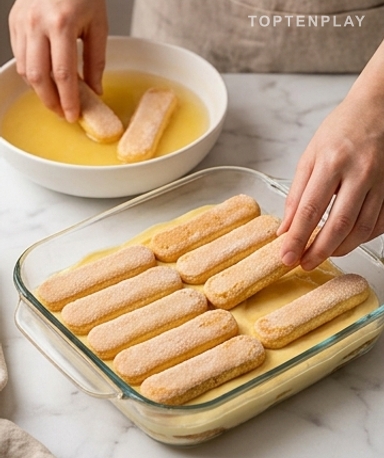
One second of soaking—not two
The lemon syrup is ready, and so are the cookies. The temptation to let them soak longer is real. Resist. An over-soaked cookie becomes a waterlogged sponge and turns the entire bottom layer into mush. One second per side is the rule—the cookie should still offer slight resistance when you place it in the dish. It will continue to moisten in contact with the cream during the resting hours, which is exactly what we want: melting inside, coherent outside.
Assemble the layers, then don’t touch a thing
Soaked cookies as the first layer. Half of the mascarpone cream on top—spread it with a flat spatula from the center to the edges, pressing lightly so it fills the gaps between the cookies. Second layer of cookies, second layer of cream. Pour the reserved lemon curd and smooth it over the entire surface. The color should be uniform, sun-yellow, slightly shiny. Apply plastic wrap, put it in the fridge. Minimum 6 hours. A whole night is even better. It’s the cold that marries the flavors, sets the cream, and brings the cookies to that perfect texture that cannot be rushed.
Tips & Tricks
- For visible layers and a polished visual effect, assemble the tiramisu in individual glasses—guests see exactly what they’re eating even before dipping the spoon.
- If you want a more intense lemon scent, add a teaspoon of finely grated zest directly into the mascarpone cream—it completely changes the depth of flavor compared to juice alone.
- Don’t skip the lemon curd on top even if you’re in a hurry—it’s what gives that shiny, tangy surface that contrasts with the richness of the cream and finishes the dessert visually.
Can I prepare this tiramisu the day before?
Yes, and it’s even recommended. After a night in the fridge, the cookies reach the perfect texture and the flavors meld much better than after only 2 hours of rest. It’s the ideal dessert to prepare on Saturday for Sunday.
My mascarpone became grainy during whisking. What to do?
This is almost always a temperature issue. Mascarpone that is too cold behaves like solid fat and separates under the whisk. Place the bowl for a few seconds over a warm water bath and whisk gently—the cream usually recovers well.
Can I replace the lemon curd if I don’t have any?
You can replace it with very fine lemon jam passed through a blender, but the result will be less tangy. Another option: zest of 2 lemons + 2 tablespoons of sugar + 50g melted butter, blended together. It’s not perfect but it works in a pinch.
How long does it keep in the refrigerator?
3 days maximum, well-covered with plastic wrap. Beyond that, the cookies start to release moisture and the cream loses its hold. Do not freeze—mascarpone doesn’t handle freezing well and the texture will be grainy upon thawing.
Can I use classic ladyfingers instead of Italian savoiardi?
Yes, but be quicker when soaking—French ladyfingers are lighter and absorb syrup twice as fast. Half a second per side will be enough to prevent them from collapsing.
How do I get clean layers when cutting?
Two conditions: at least 8 hours of rest in the fridge, and a hot spatula run under hot water then wiped dry before each cut. The cold sets the cream enough so the layers remain distinct when slicing.
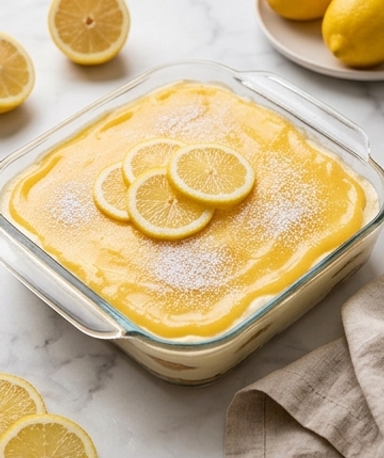
Lemon Tiramisu
Italian
Dessert
A no-bake tiramisu, creamy and tangy, with a shiny lemon curd layer and a light lemon mascarpone cream. Ready in 40 minutes, perfect after a night in the fridge.
Ingredients
- 280g savoiardi ladyfingers (about 28 cookies)
- 500g mascarpone, at room temperature
- 80g powdered sugar
- 96g instant vanilla pudding (1 standard packet)
- 240ml whole milk, cold
- 300g lemon curd (200g for the cream + 100g for the topping)
- 3 lemons (juice only — about 90ml in total)
- 45g granulated sugar (for the syrup)
- 100ml cold water (for the syrup)
Instructions
- 1Prepare the lemon syrup: mix the juice of 2 lemons with the granulated sugar and cold water until completely dissolved. Set aside.
- 2In a stand mixer bowl, whisk the pudding powder with cold milk for 5 minutes until creamy. Fold in 200g of lemon curd, mix gently.
- 3Reserve 350ml (about 1.5 cups) of the pudding-lemon curd mixture for the final topping.
- 4In a large bowl, whisk the room-temperature mascarpone with powdered sugar to soft peaks. Add the remaining lemon juice and whisk to stiff peaks.
- 5Gently fold the pudding mixture into the mascarpone cream using a spatula—no sudden movements.
- 6Dip the ladyfingers for 1 second on each side into the syrup and arrange them in a layer in a 23×23 cm dish.
- 7Spread half of the mascarpone cream over the cookies, smoothing it to the edges. Repeat with a second layer of soaked cookies, then the remaining cream.
- 8Mix the remaining lemon curd (100g) with the reserved pudding mixture, pour over the top and smooth evenly.
- 9Cover with plastic wrap and refrigerate for at least 6 hours—a whole night gives the best result.
Notes
• Make ahead: this tiramisu can be prepared up to 24 hours in advance. It keeps for 3 days in the refrigerator well-covered.
• For more elegant individual portions, assemble the tiramisu in glasses—the layers are visible on the sides.
• For a more intense lemon flavor, add 1 teaspoon of finely grated lemon zest to the mascarpone cream before incorporating the pudding.
Nutrition Facts (per serving, estimated)
| 495 kcalCalories | 7gProtein | 57gCarbs | 26gFat |